← Back to Work

Grade-4 Science — Textbook Illustrations

A complete set of clean, bright, print-ready illustrations for a full Grade-4 science textbook — chapter openers, classroom scenes, science diagrams and two recurring hero characters, across all 13 chapters.

TextbookGrade 4ScienceEditorialCharacter Design

A full-book illustration project for a Grade-4 science textbook — spanning all 13 chapters, from how we find out what is true to how we are changing our planet. The work includes chapter openers, classroom and outdoor scenes, clear science diagrams (the water cycle, photosynthesis, the solar system, the digestive system, forces and energy), and two recurring hero characters who guide students through the whole book.

Every illustration was built in a single consistent style — bright, clean, fully-saturated colour with crisp editorial shapes, faceless diagrams that leave room for a designer’s labels — then upscaled and prepared at 300 DPI for print.

Created for Jaipuria Possibilities EduTech.

Chapter 1 — How Are We Changing Our Planet?
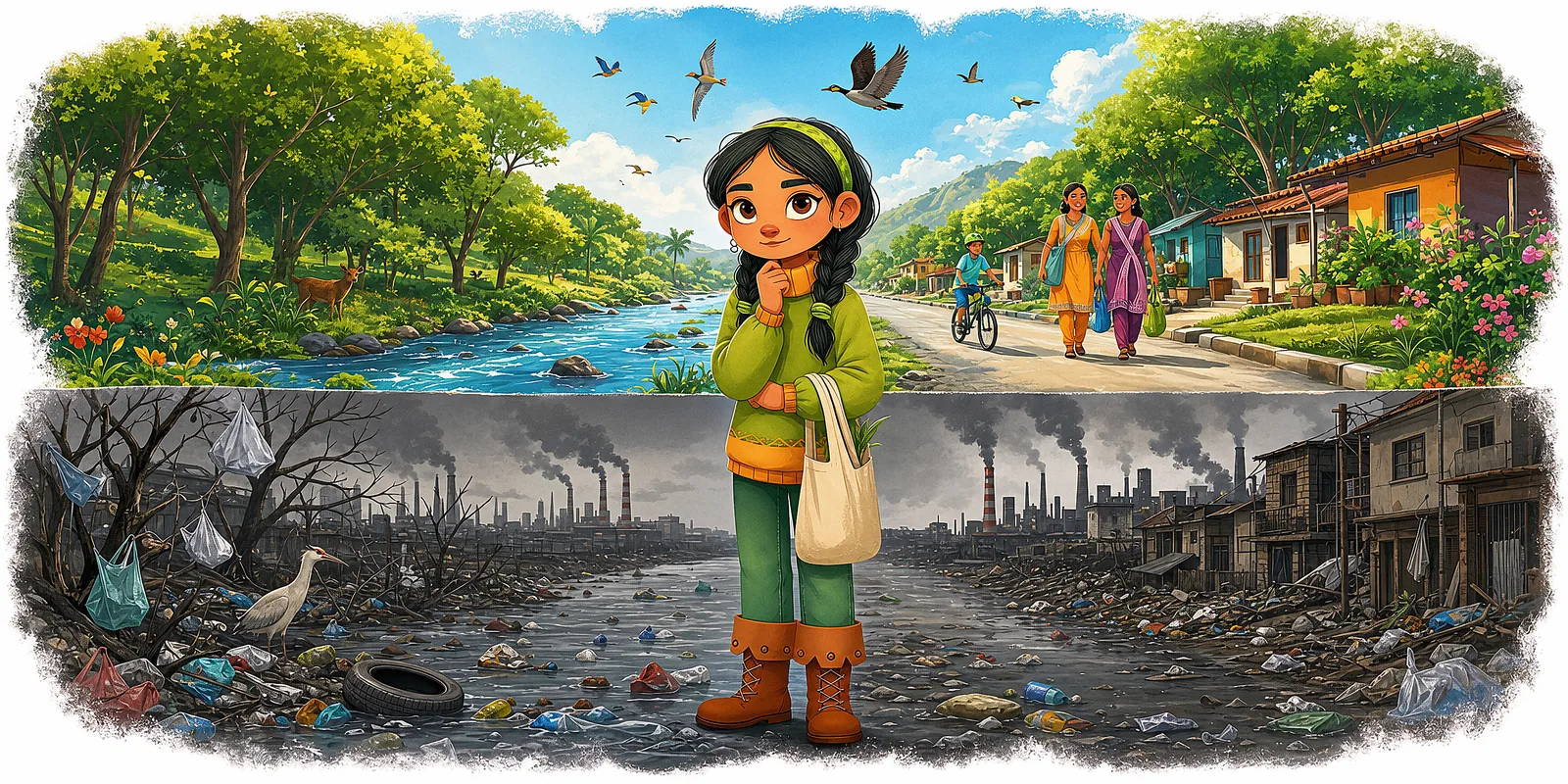
Chapter opener: a child standing between a polluted world and a green, healthy one.
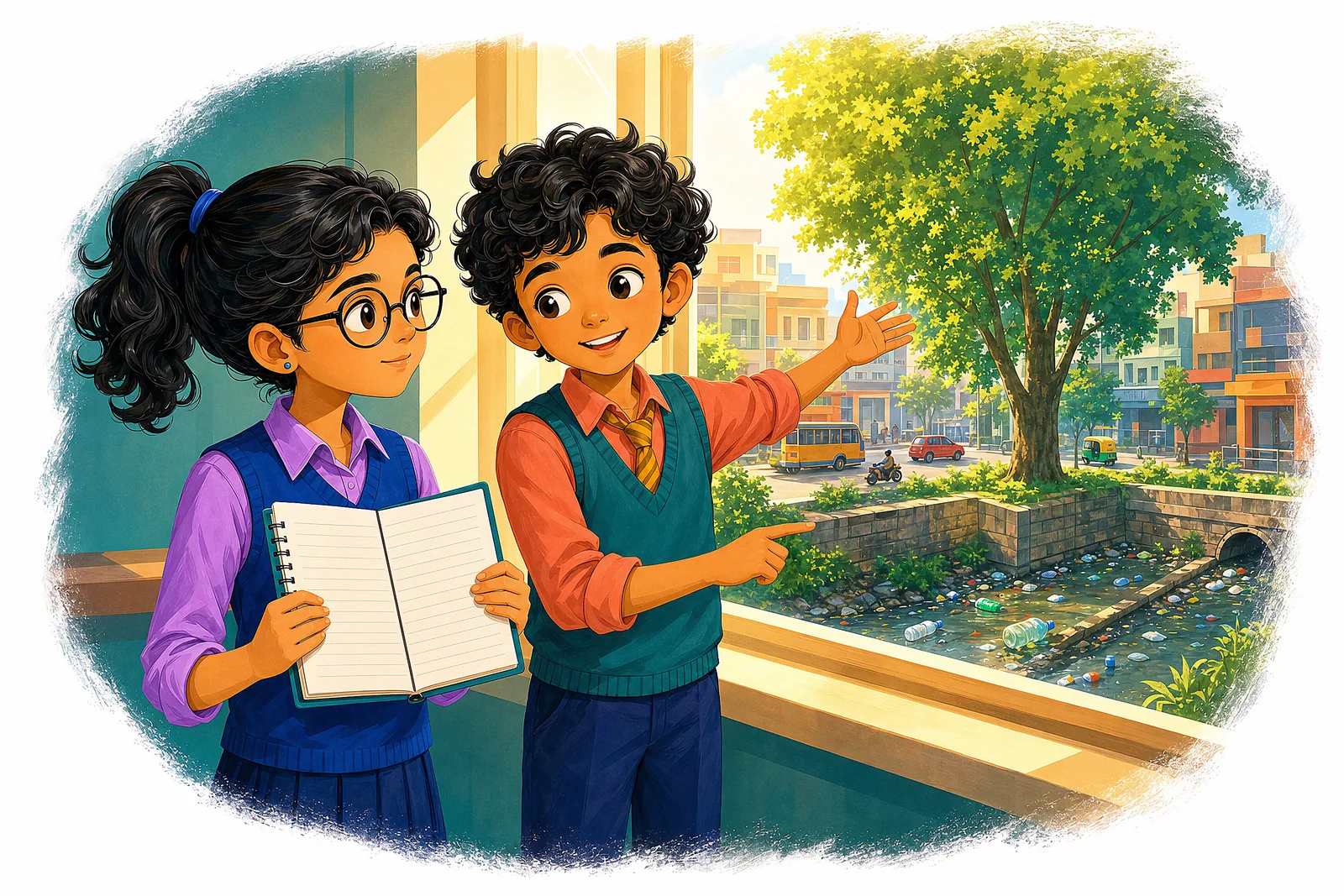
Two children looking out at a cleaner, greener neighbourhood they can help build.
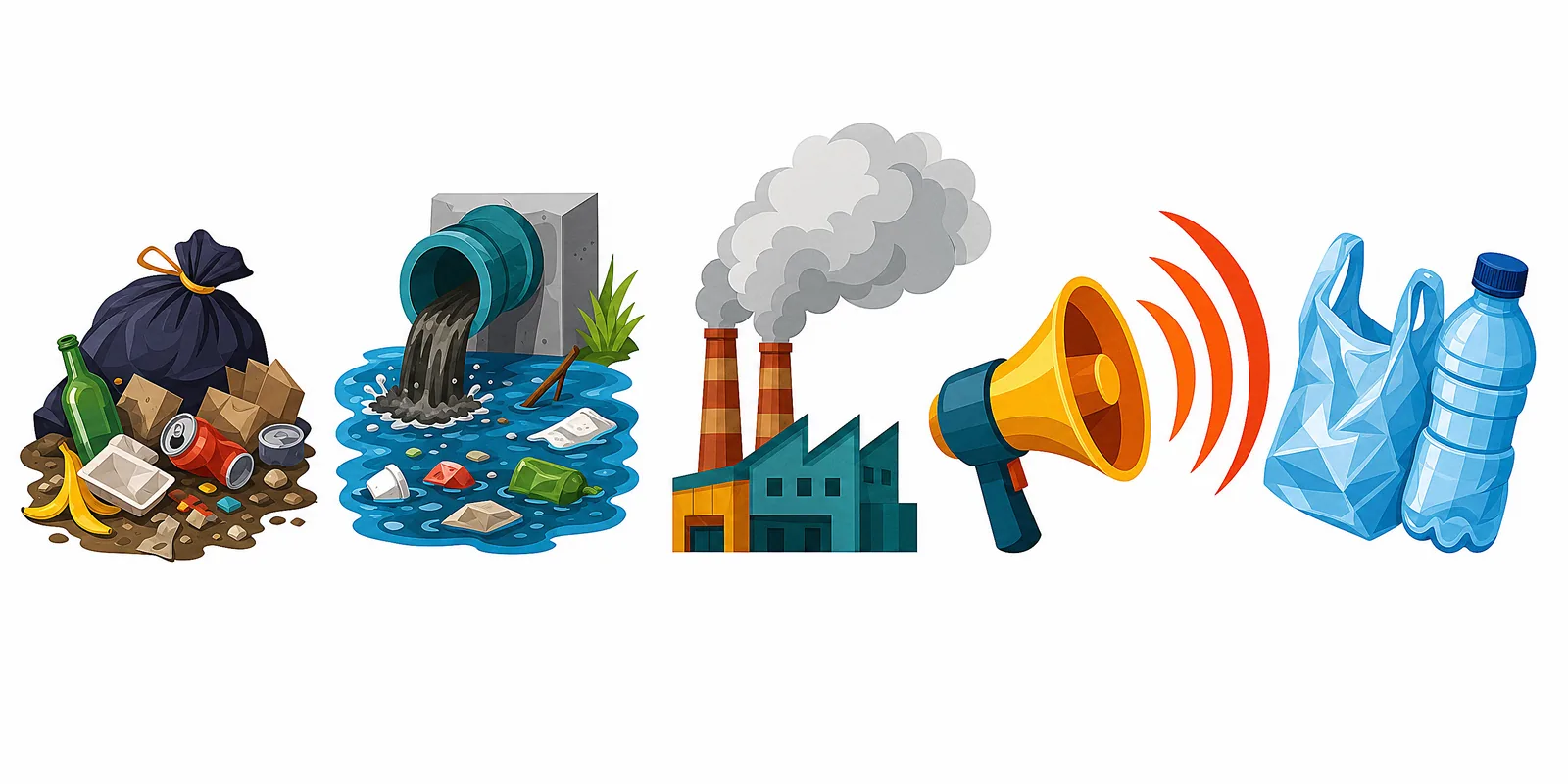
The main types of pollution harming the planet — waste, water, air and noise.
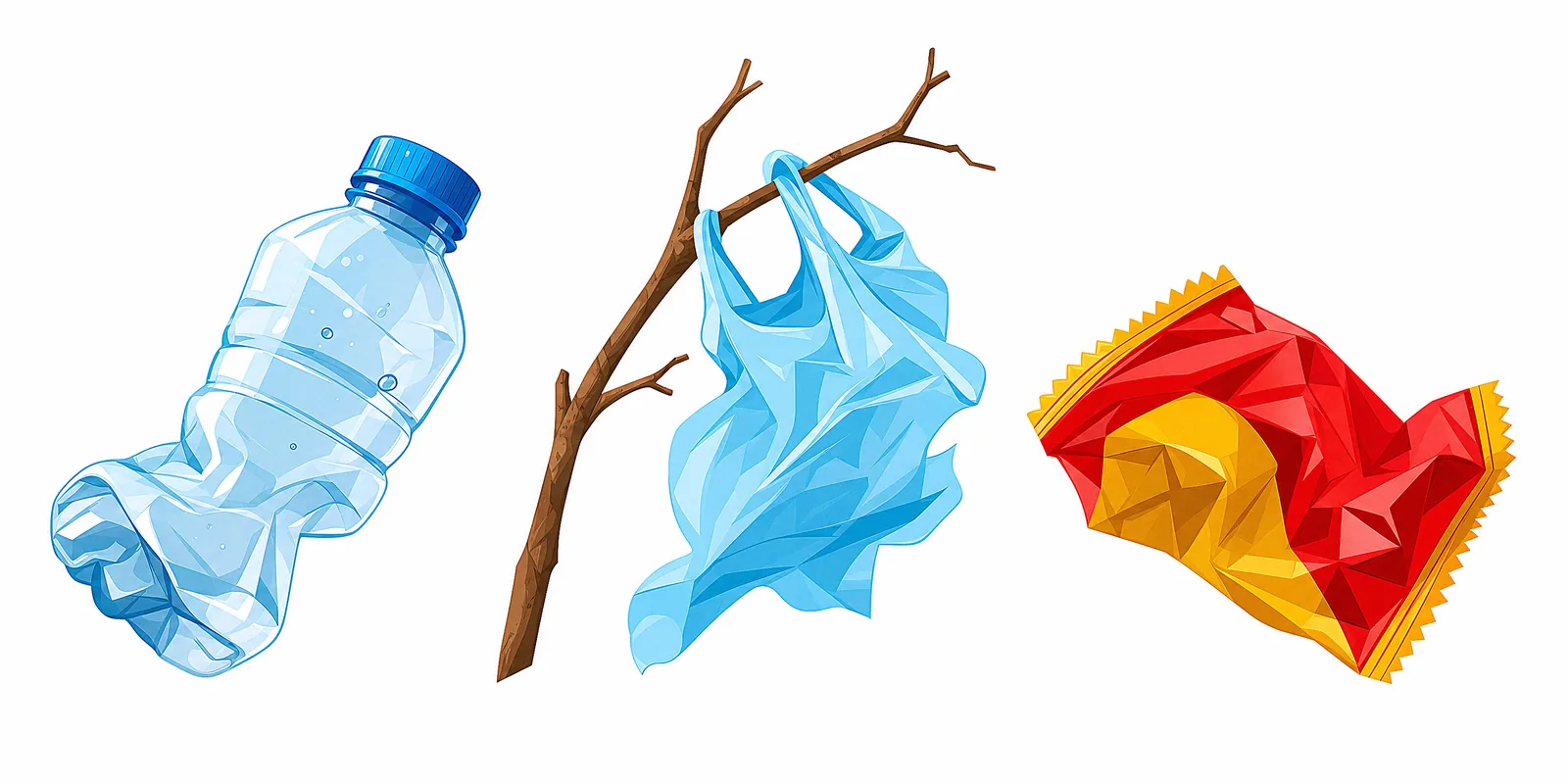
Plastic waste — how long it lasts and the harm it does.
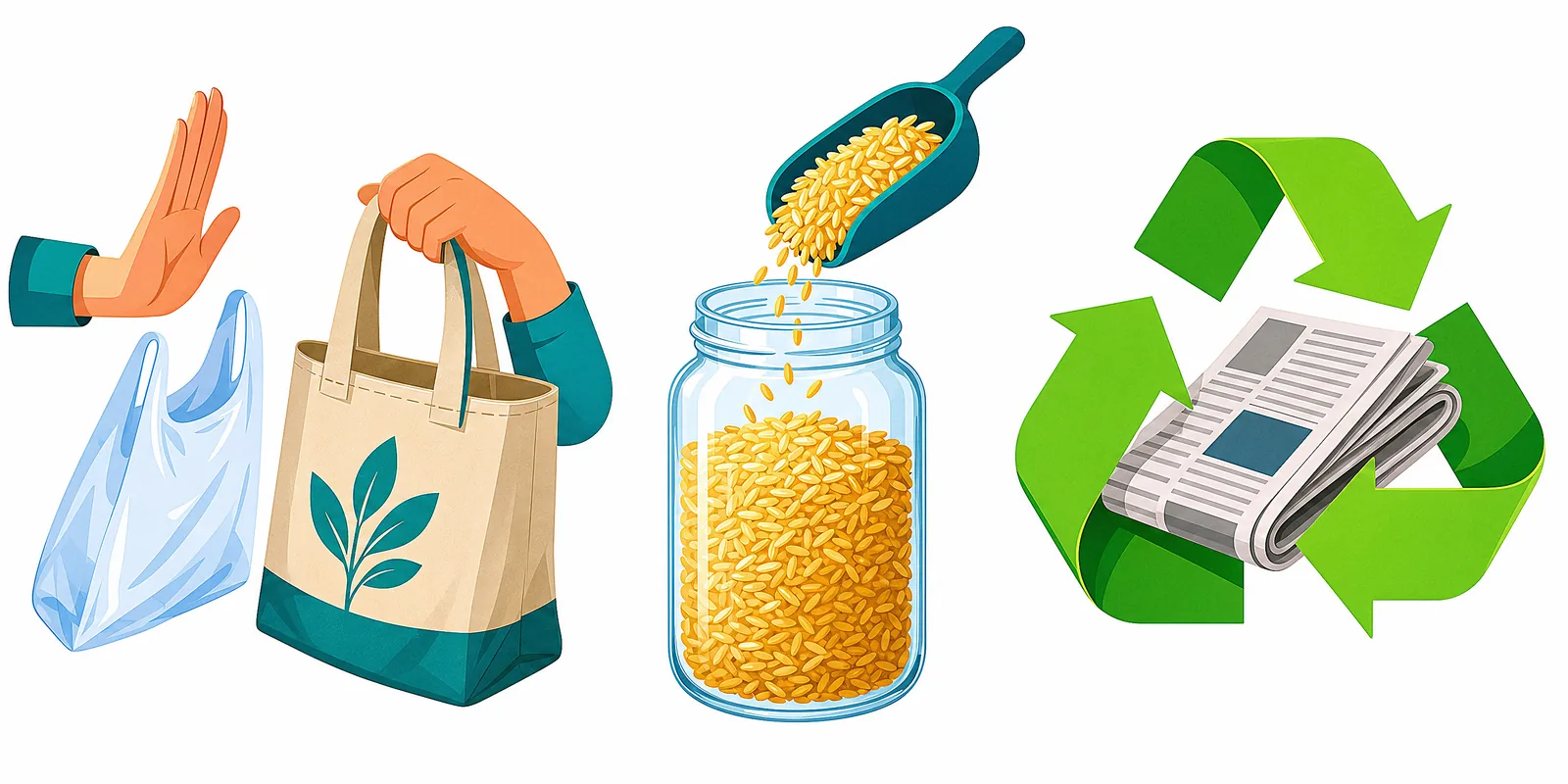
The three Rs — reduce, reuse and recycle — a simple way to help the planet.
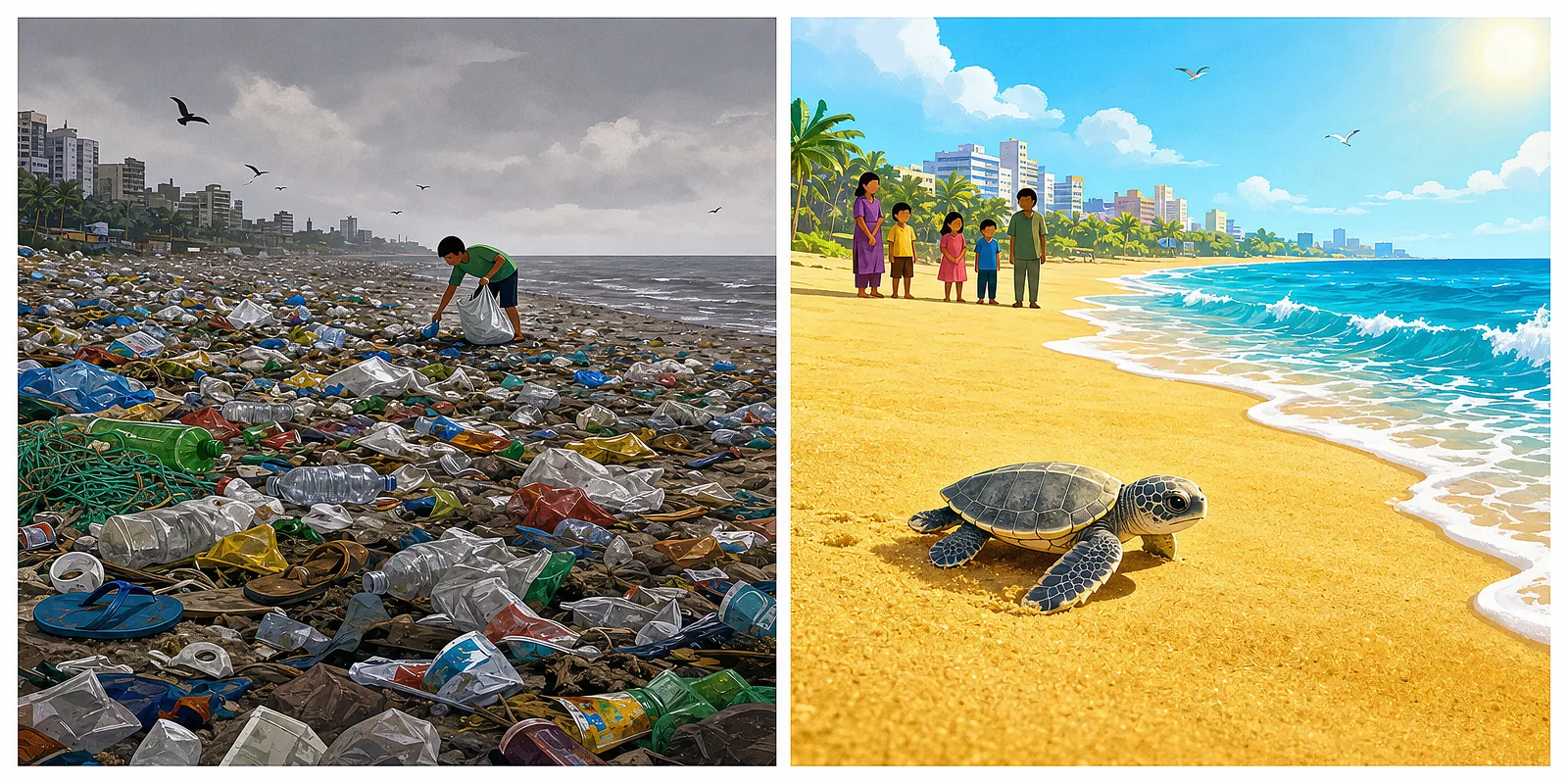
The Versova beach clean-up — a real story of people turning a garbage-choked beach back into a home for turtles.

Chapter 2 — What Makes Things Move and Work?
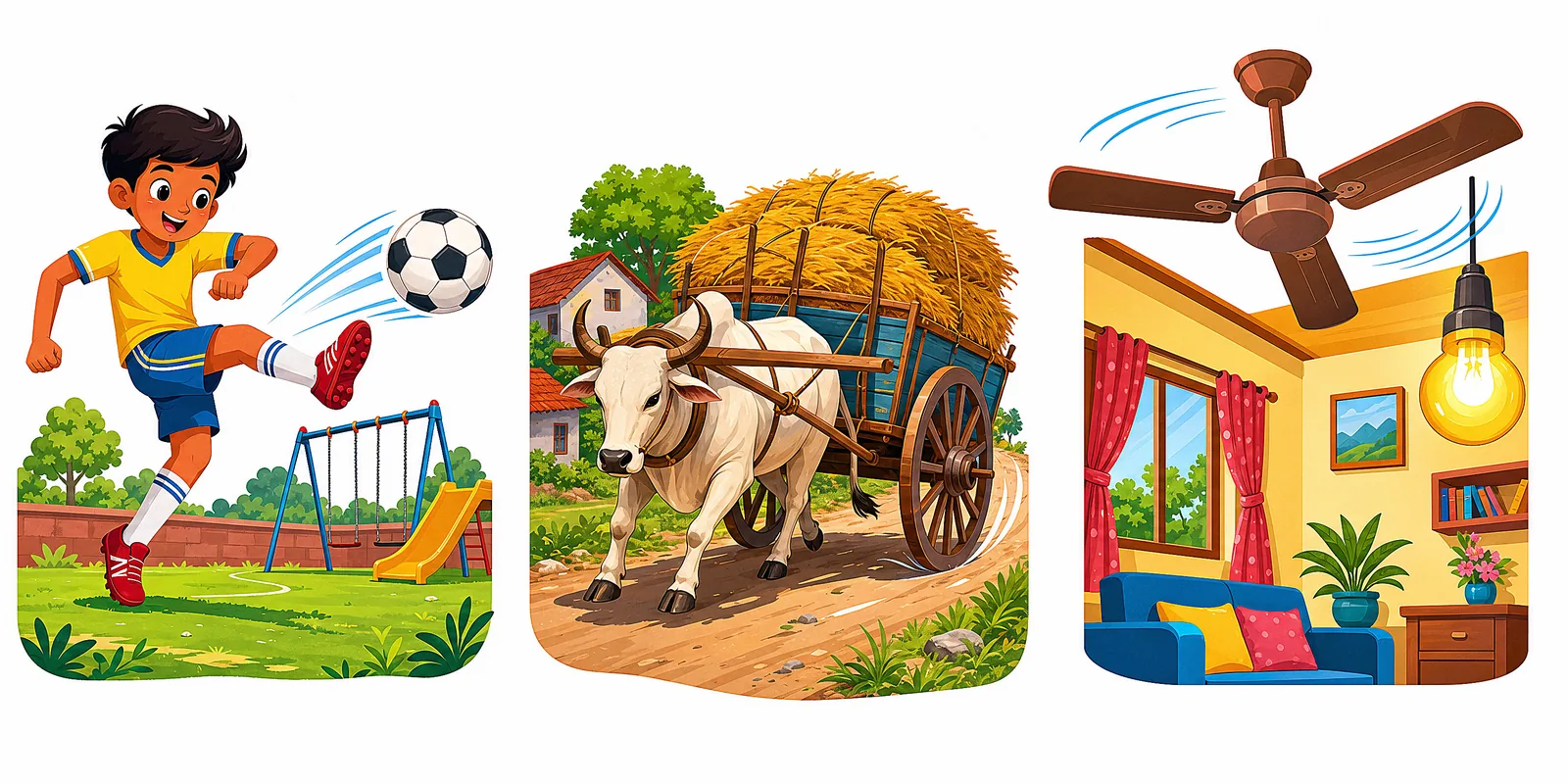
Chapter opener on the forces and energy that make things move and work.
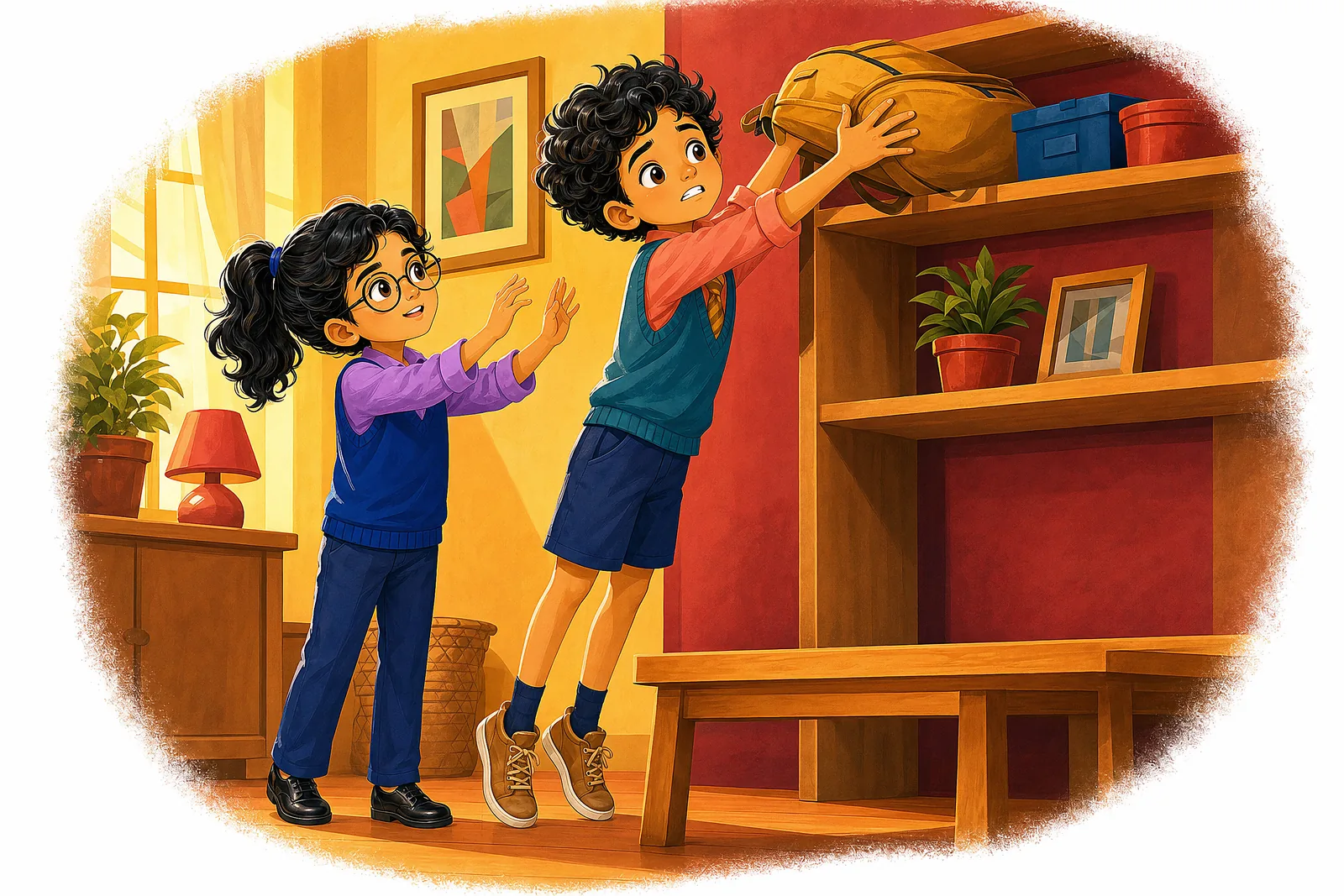
A classroom scene beginning the lesson on force and energy.
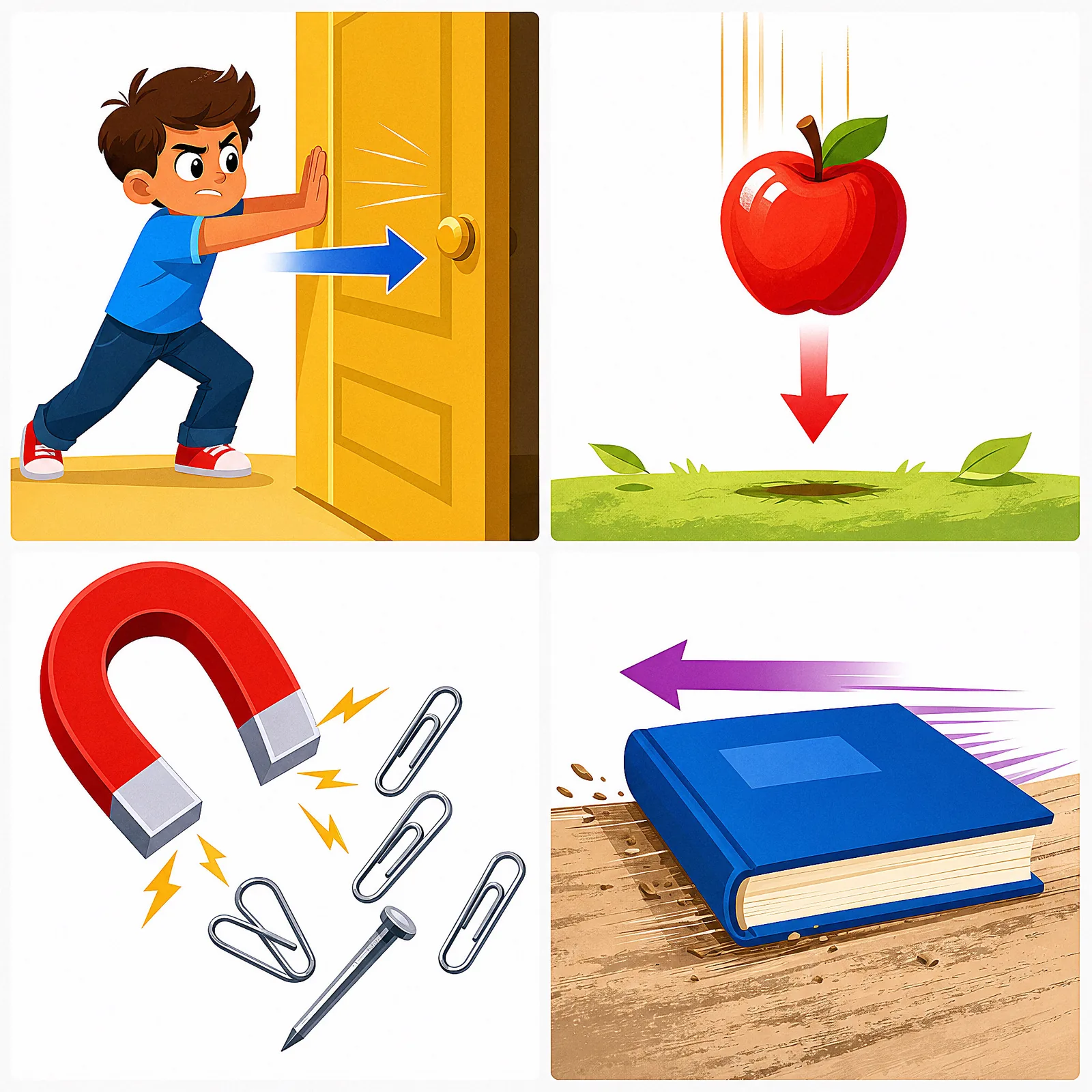
Four everyday forces — a push, a pull, gravity and magnetism — shown in action.
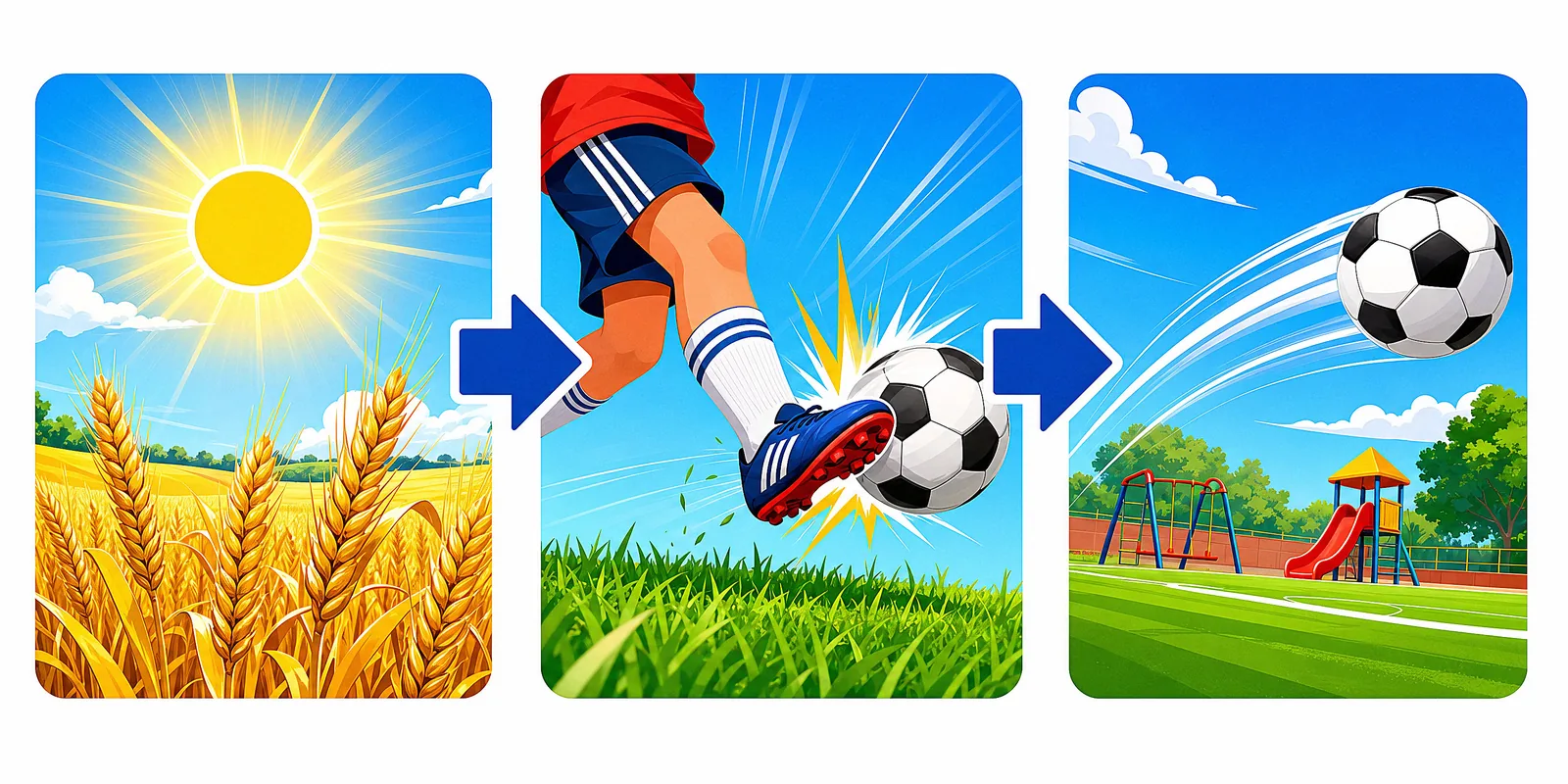
An energy chain — the sun's energy travelling all the way to a kicked football.
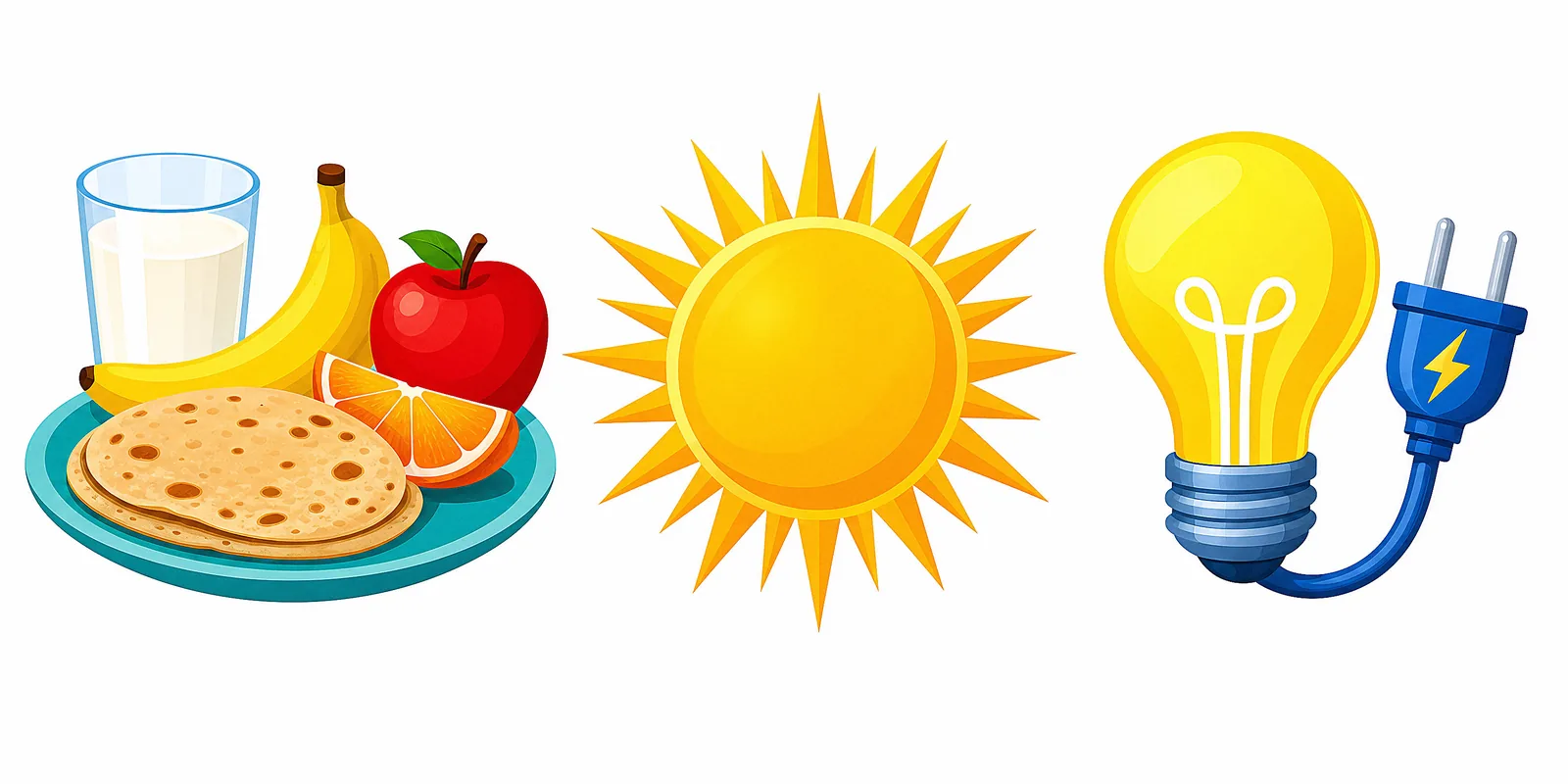
Where our energy comes from — food, sunlight and electricity.

Chapter 3 — Why Are We Losing Our Soil?
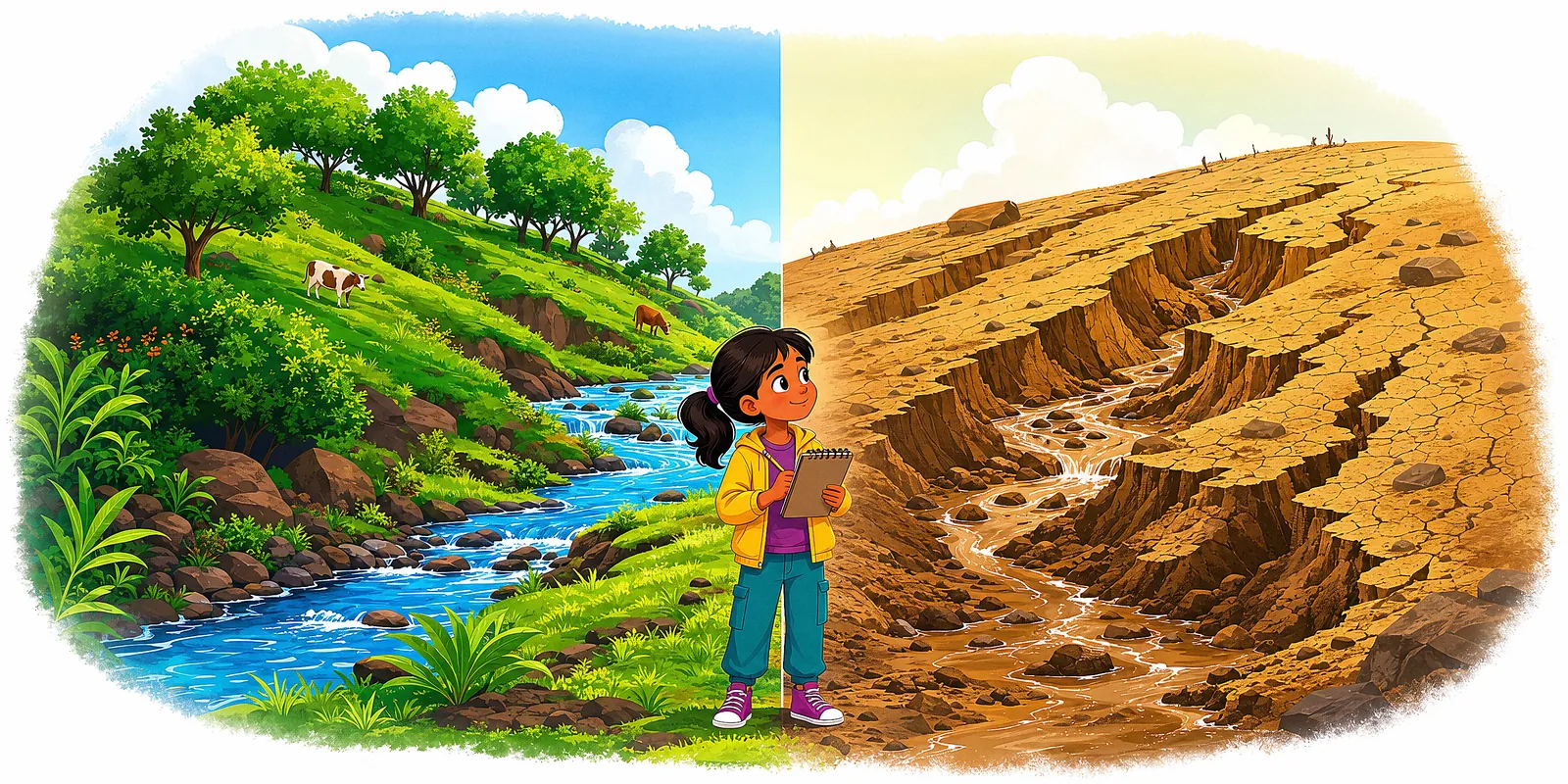
Chapter opener contrasting green, living land with bare, eroded soil.
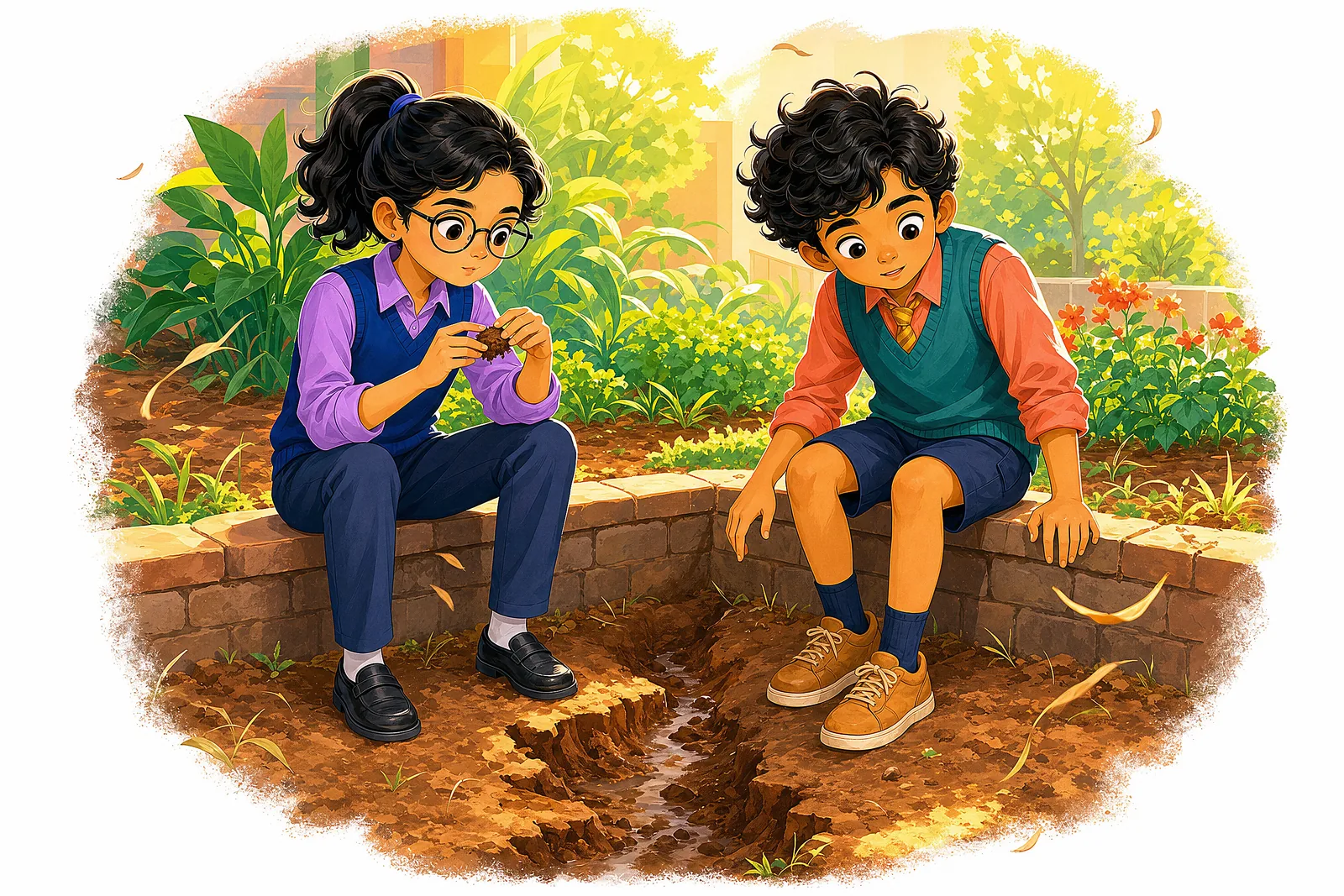
Two children exploring garden soil up close.
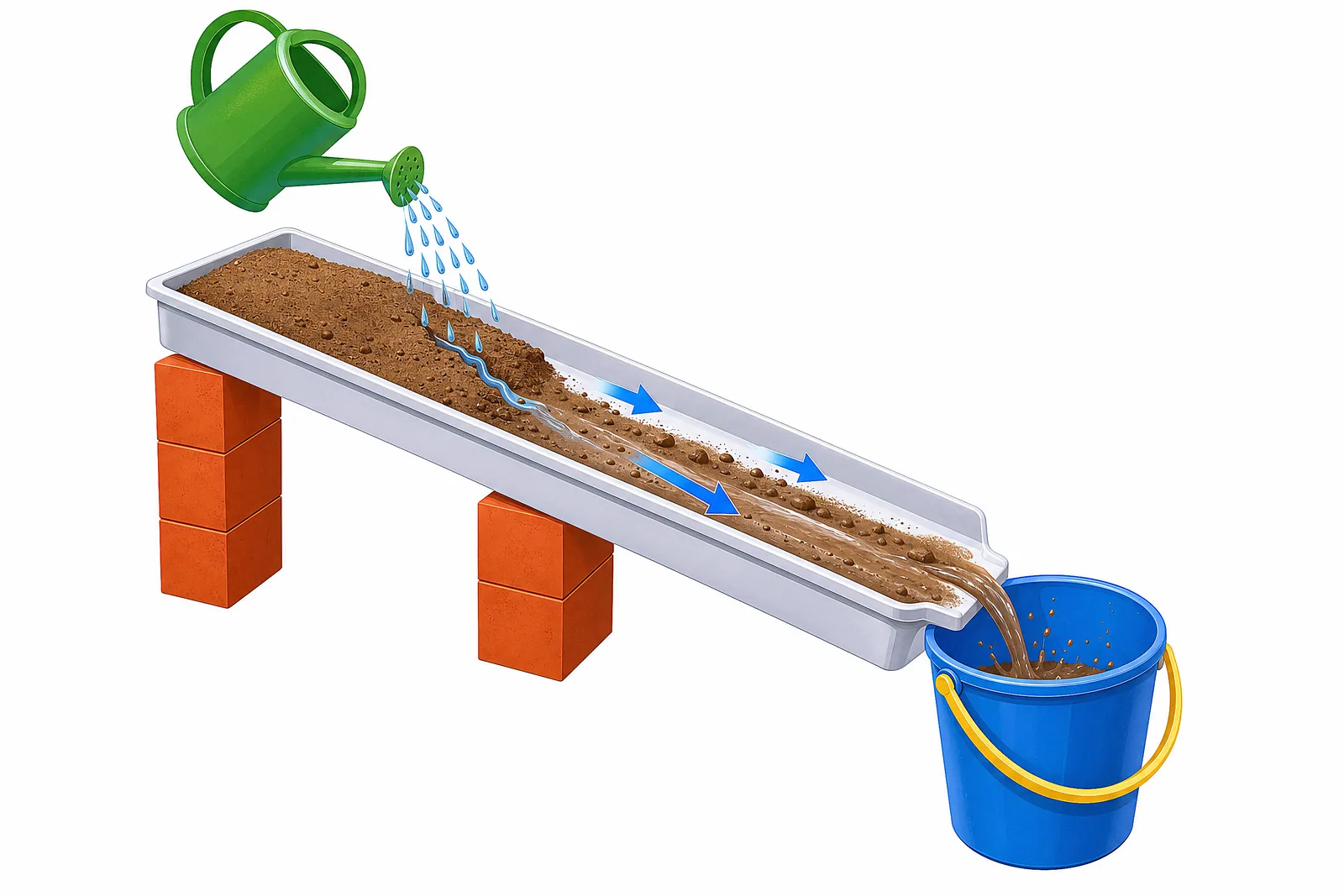
A hands-on experiment showing how water washes loose soil away.
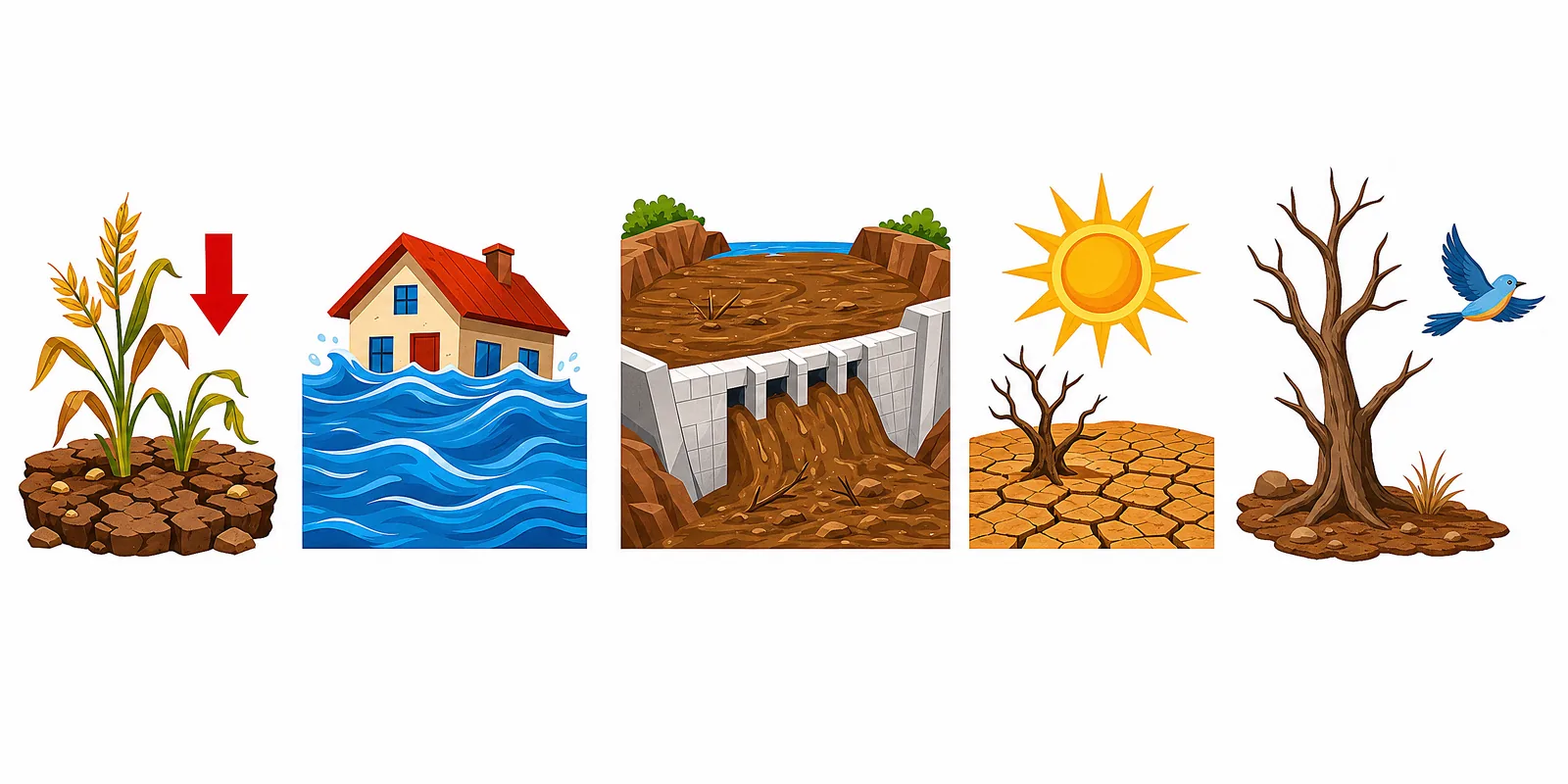
The effects of losing soil — failing crops, floods and barren land.
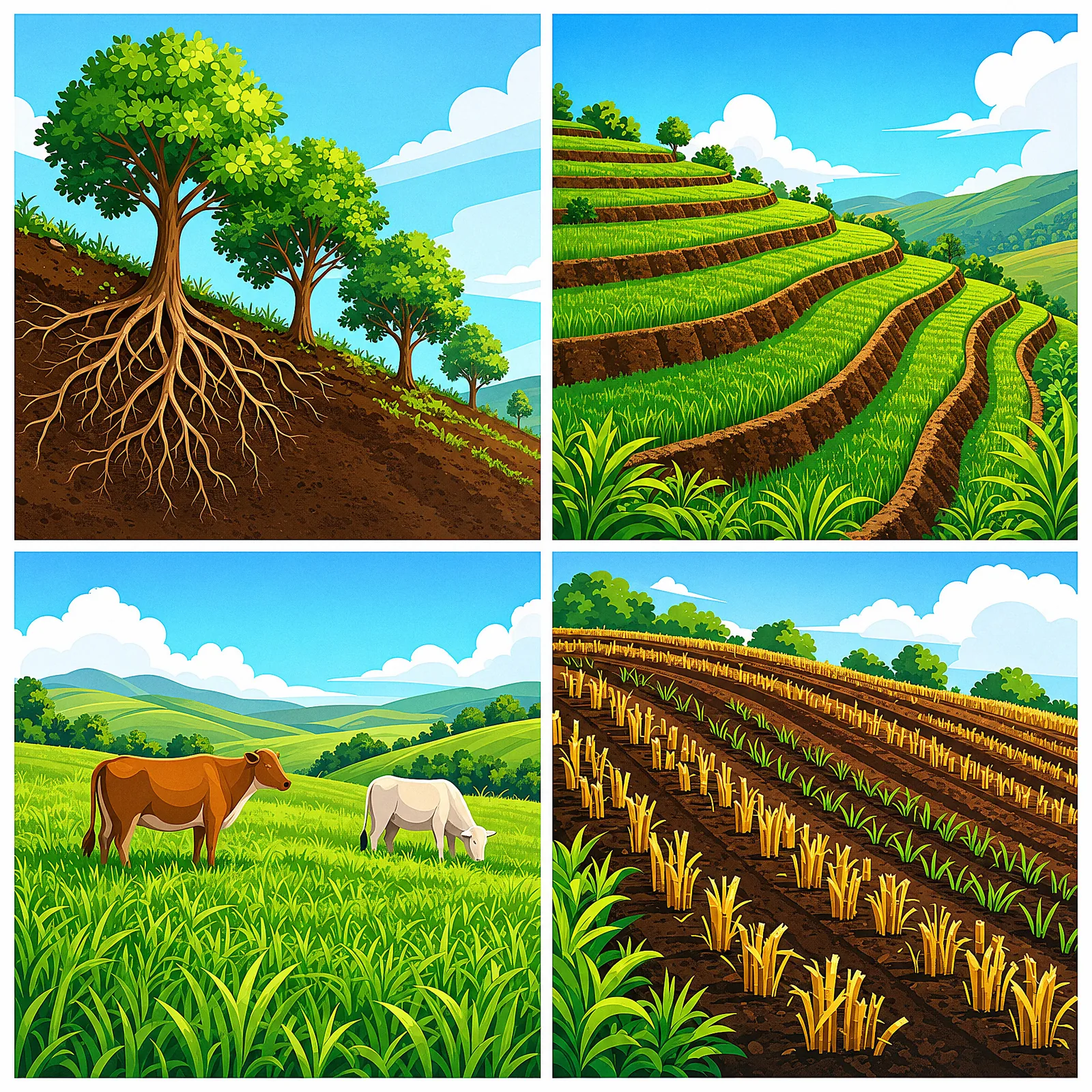
Four ways to protect soil — tree roots, terraced fields, ground cover and careful farming.
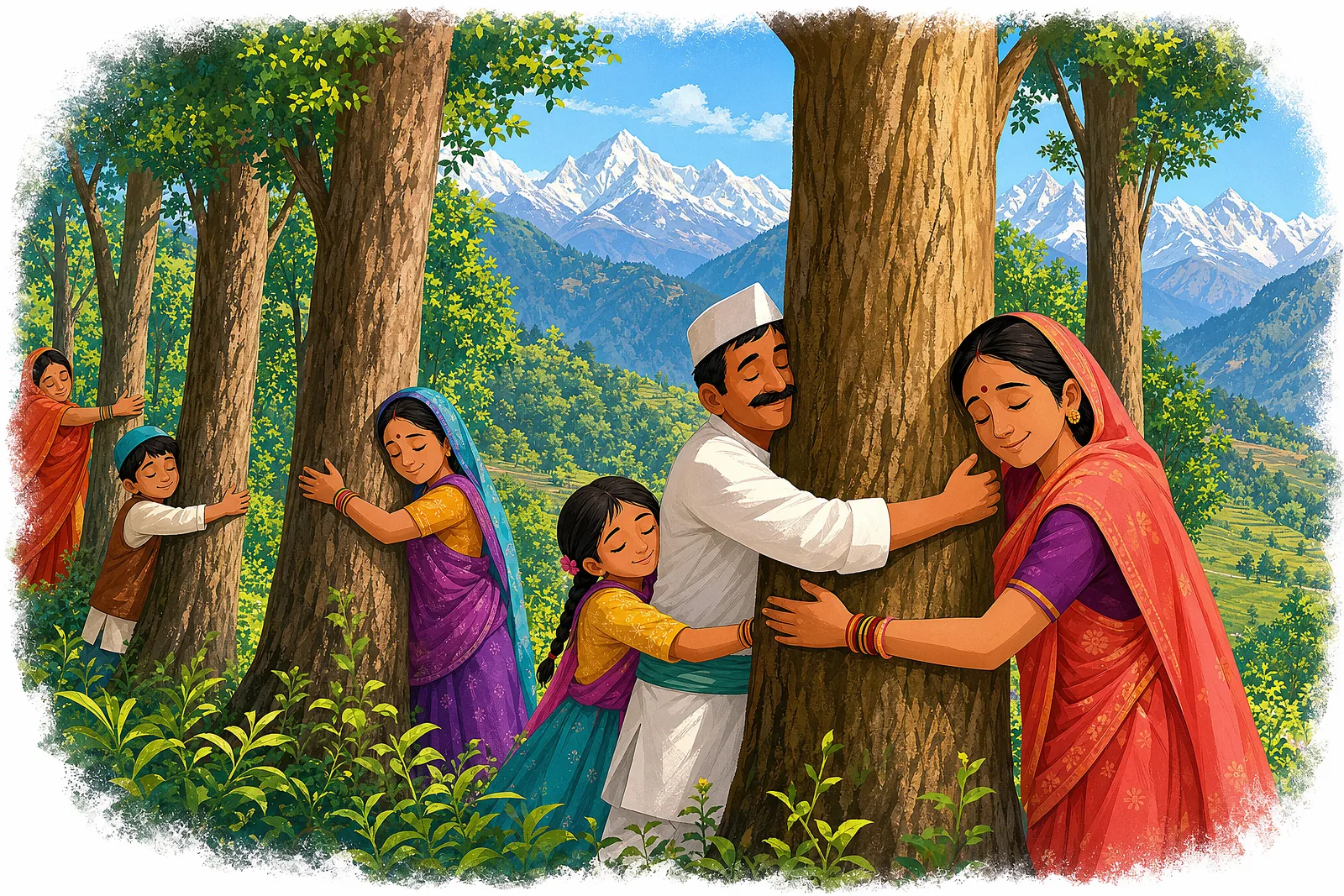
The Chipko movement — villagers hugging trees to save them, a true story of protecting nature.

Chapter 4 — What's Out There in the Night Sky?
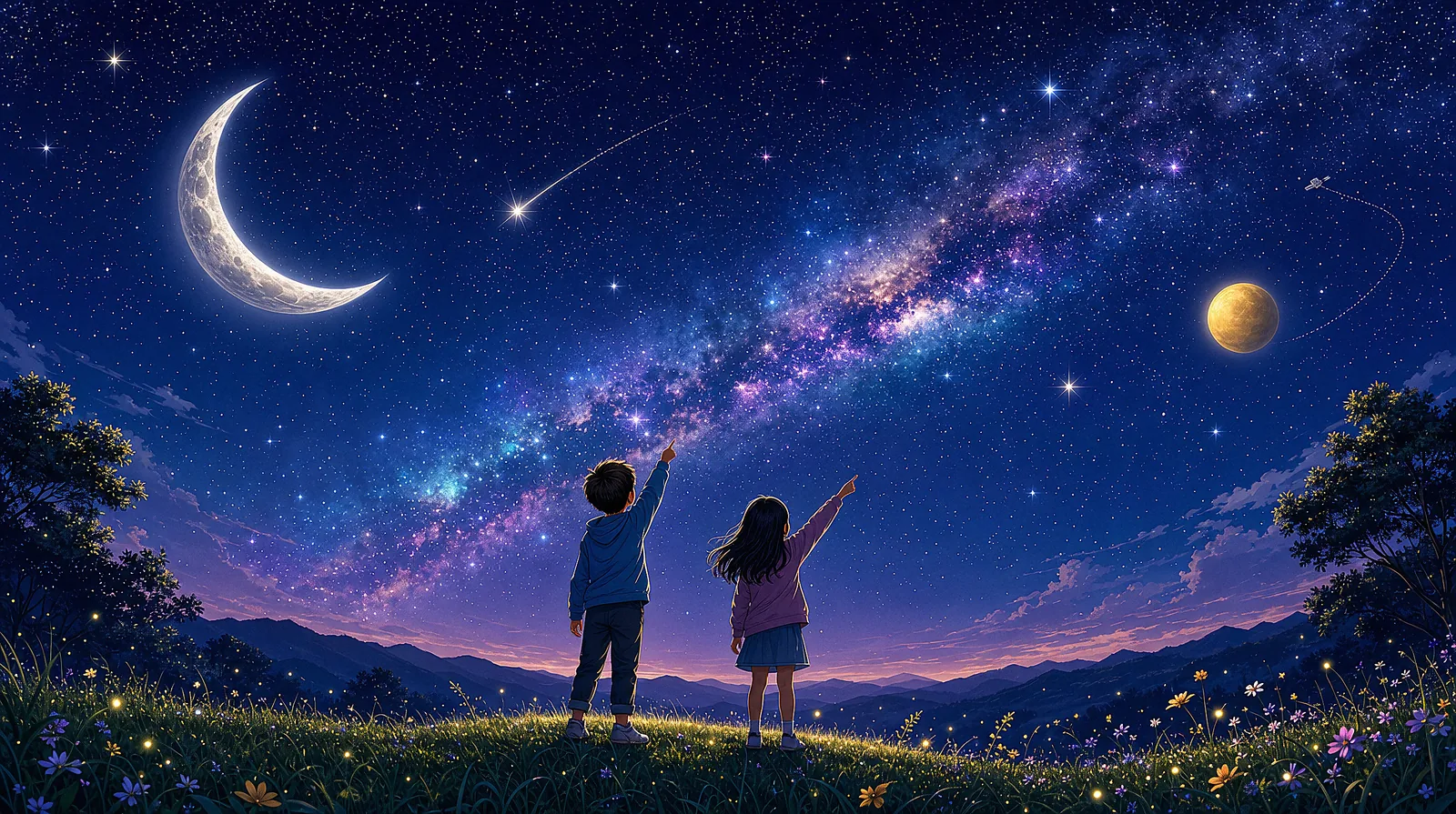
Chapter opener: two children gazing up at a glowing Milky Way, moon and planets. A showpiece of the book.
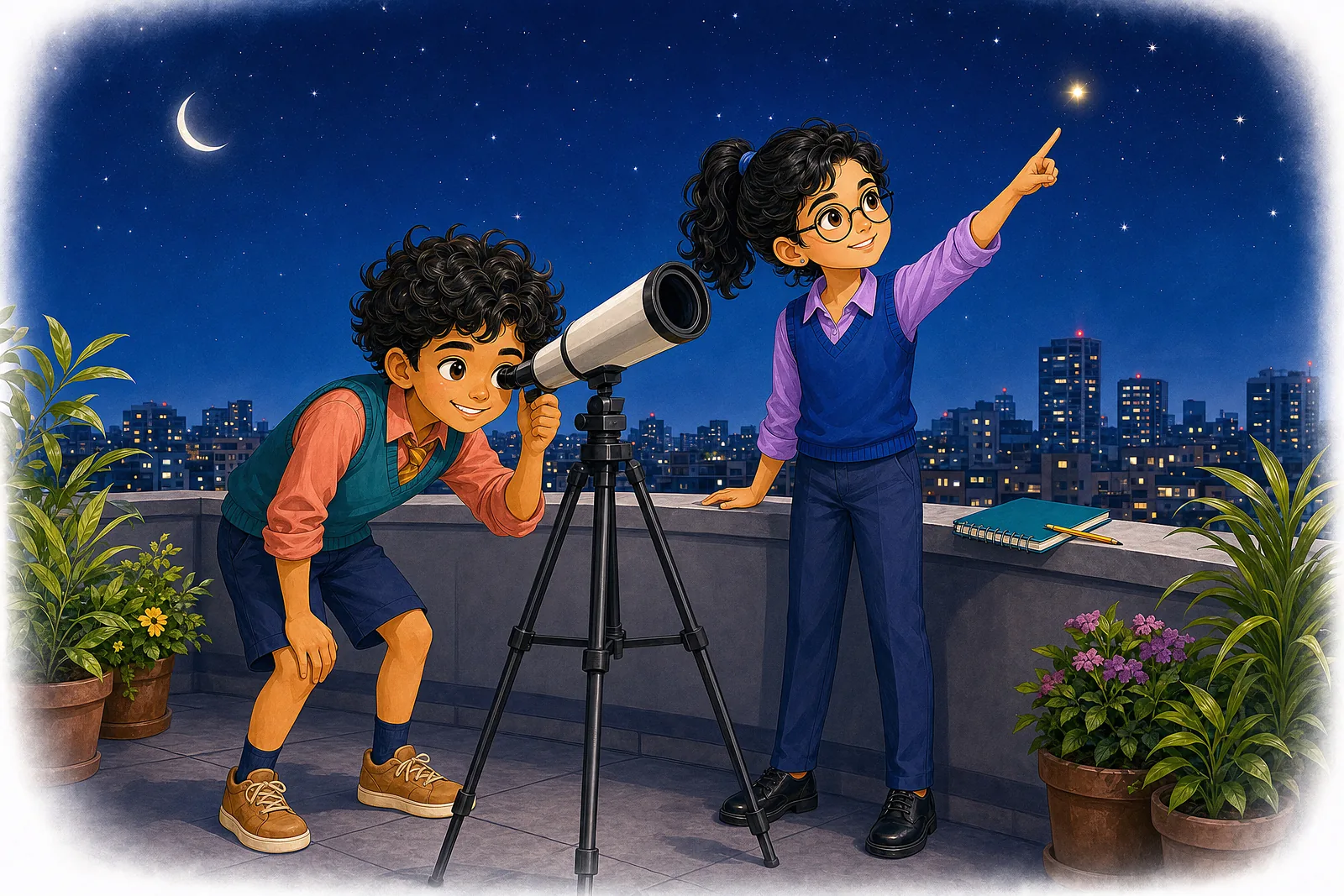
A rooftop stargazing scene with a telescope, ready to explore the sky.
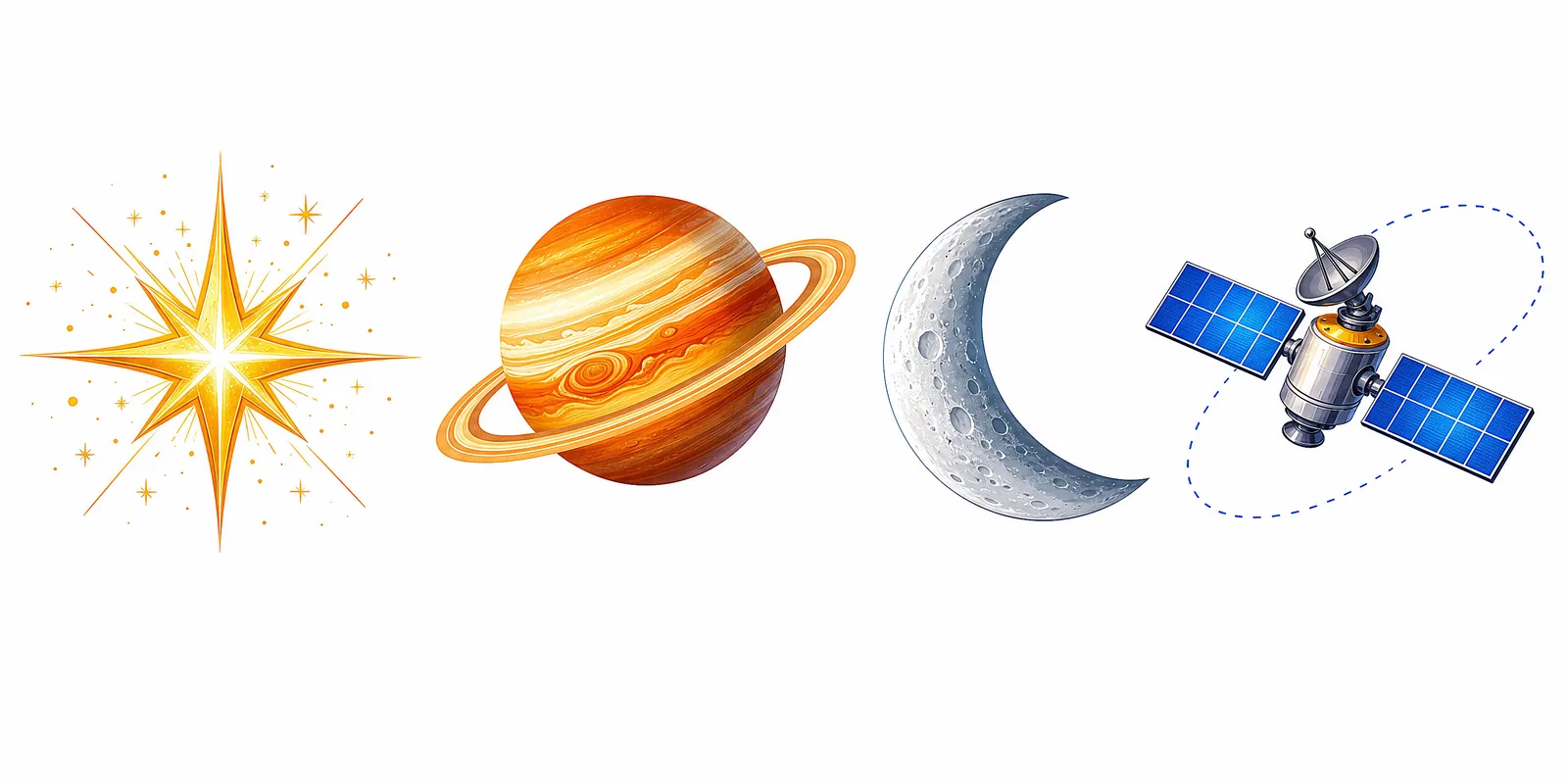
The different objects we see in the sky — stars, planets, the moon and more.
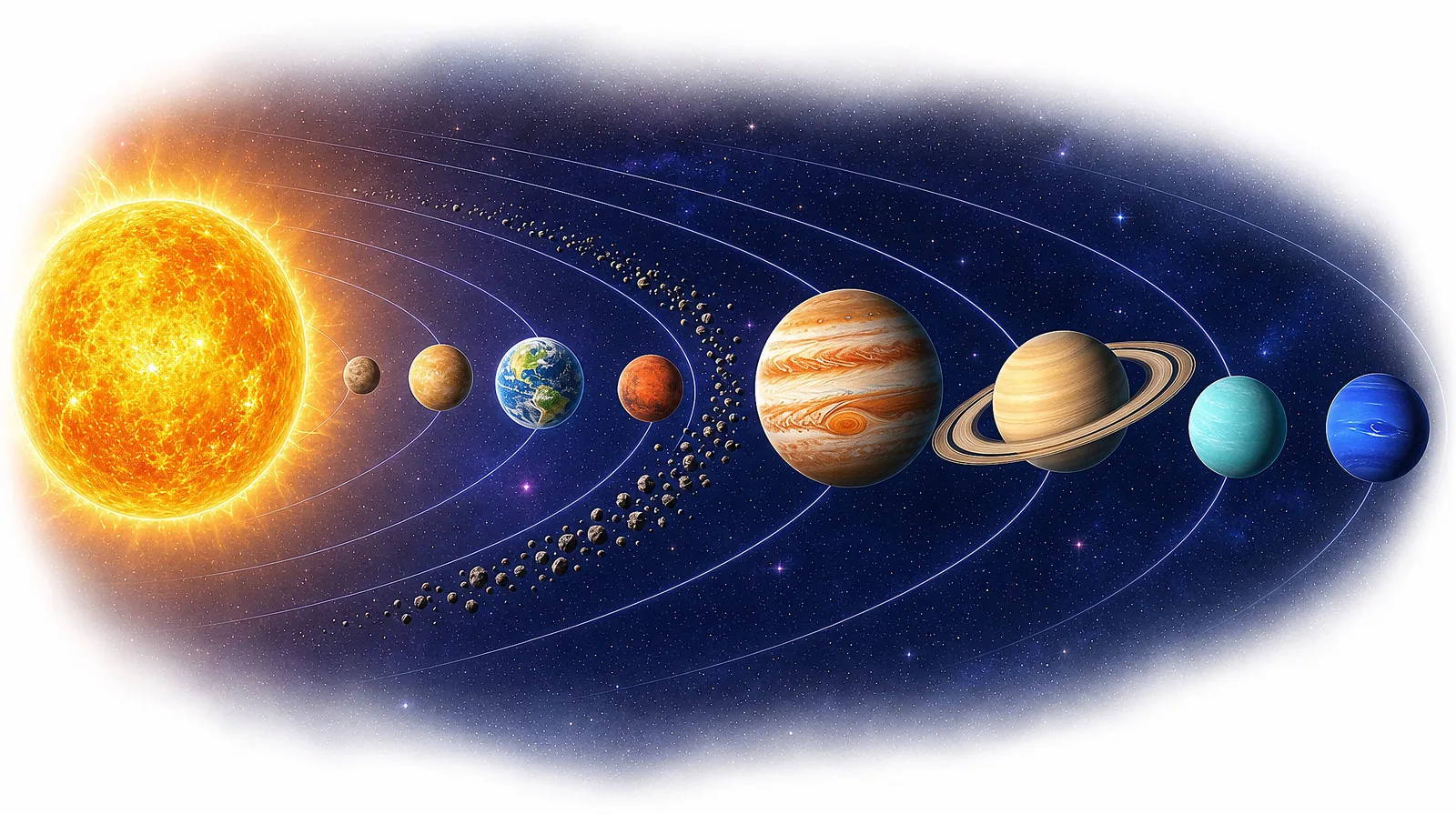
The solar system — the sun and its planets in order.
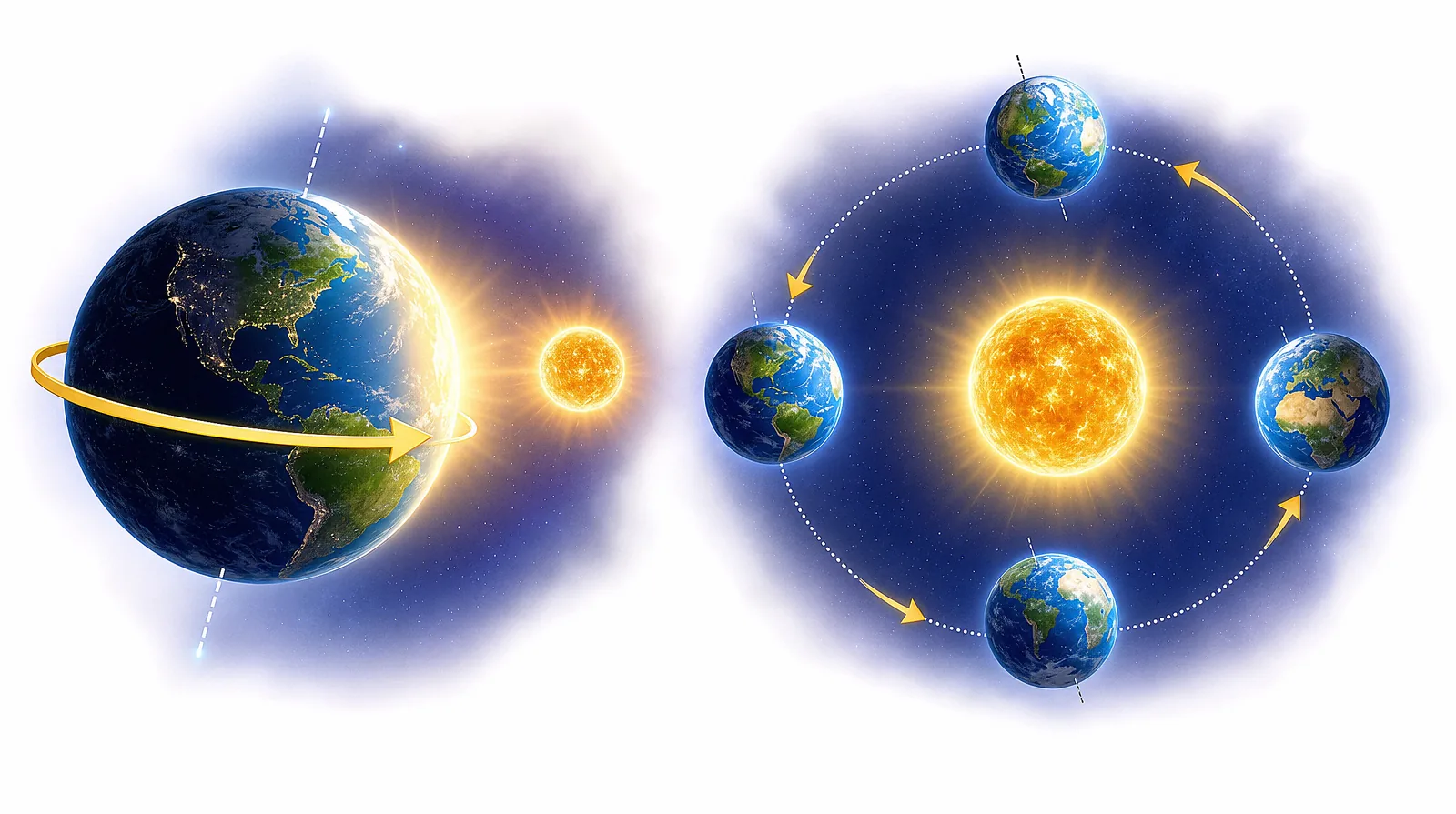
Rotation and revolution — how the Earth spins to make day and night, and circles the sun over a year.
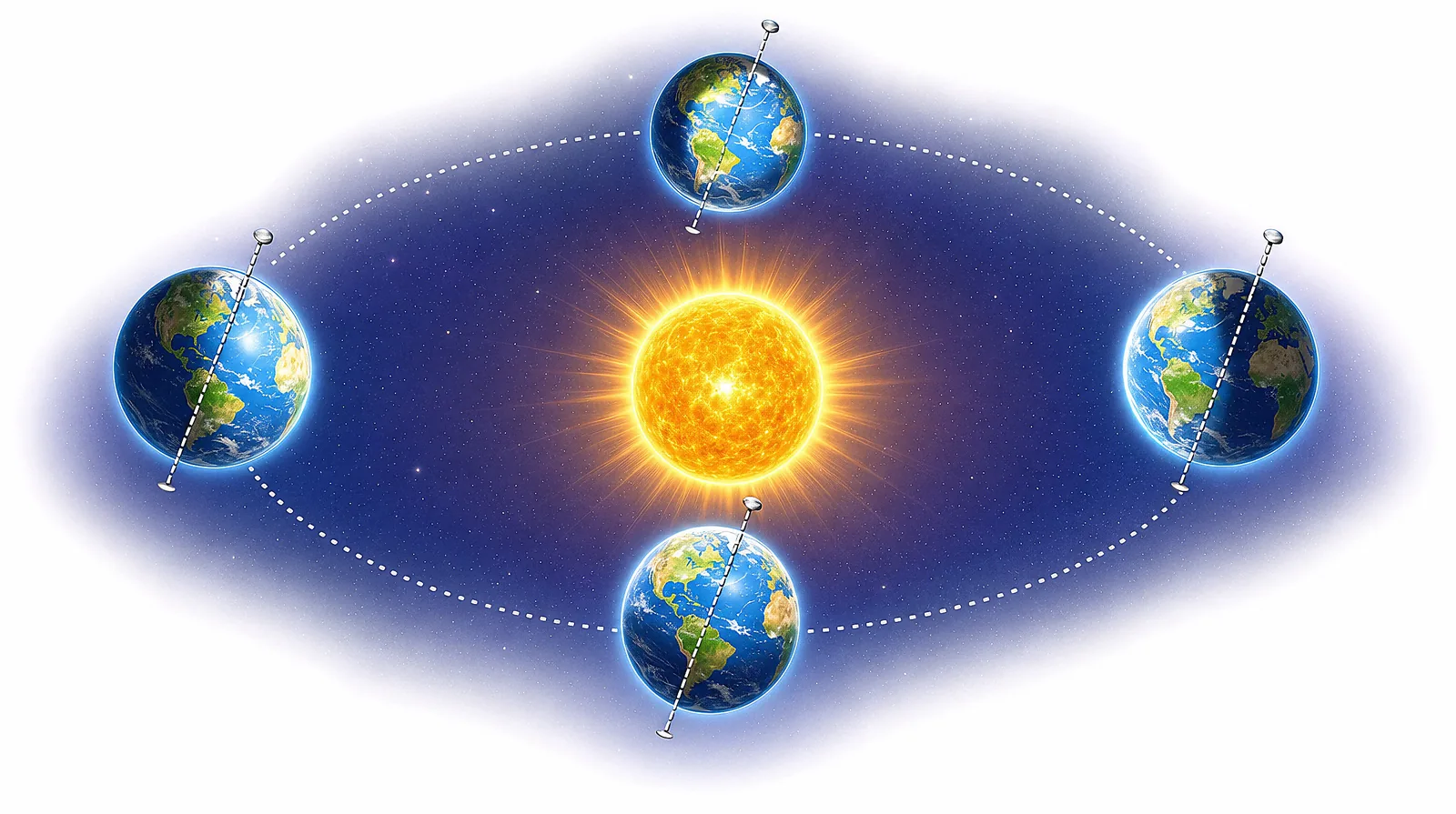
How the Earth's tilt gives us the changing seasons.

Chapter 5 — How Do Animals Grow?
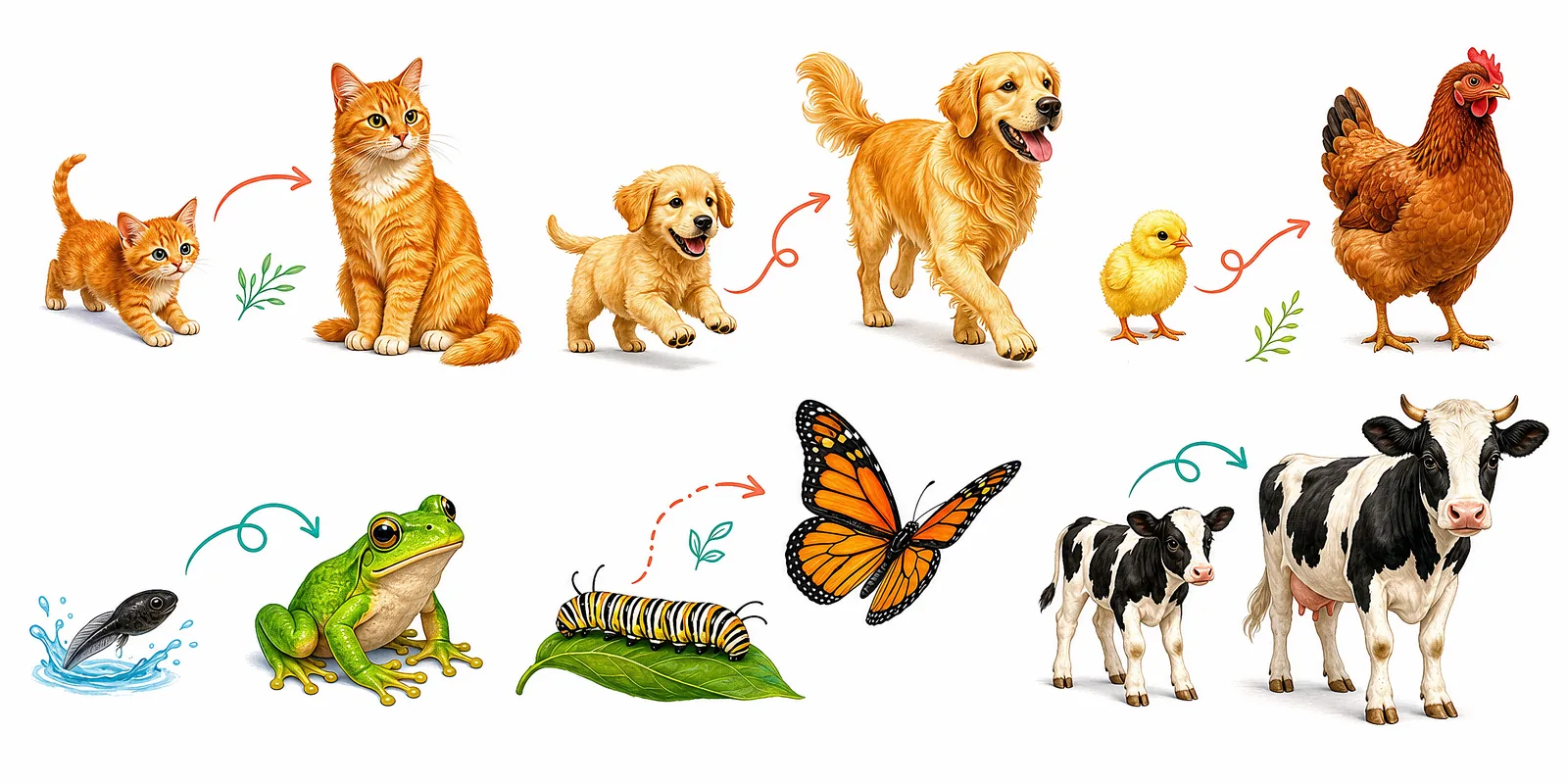
Chapter opener: baby animals growing into adults — kitten to cat, calf to cow, tadpole to frog.
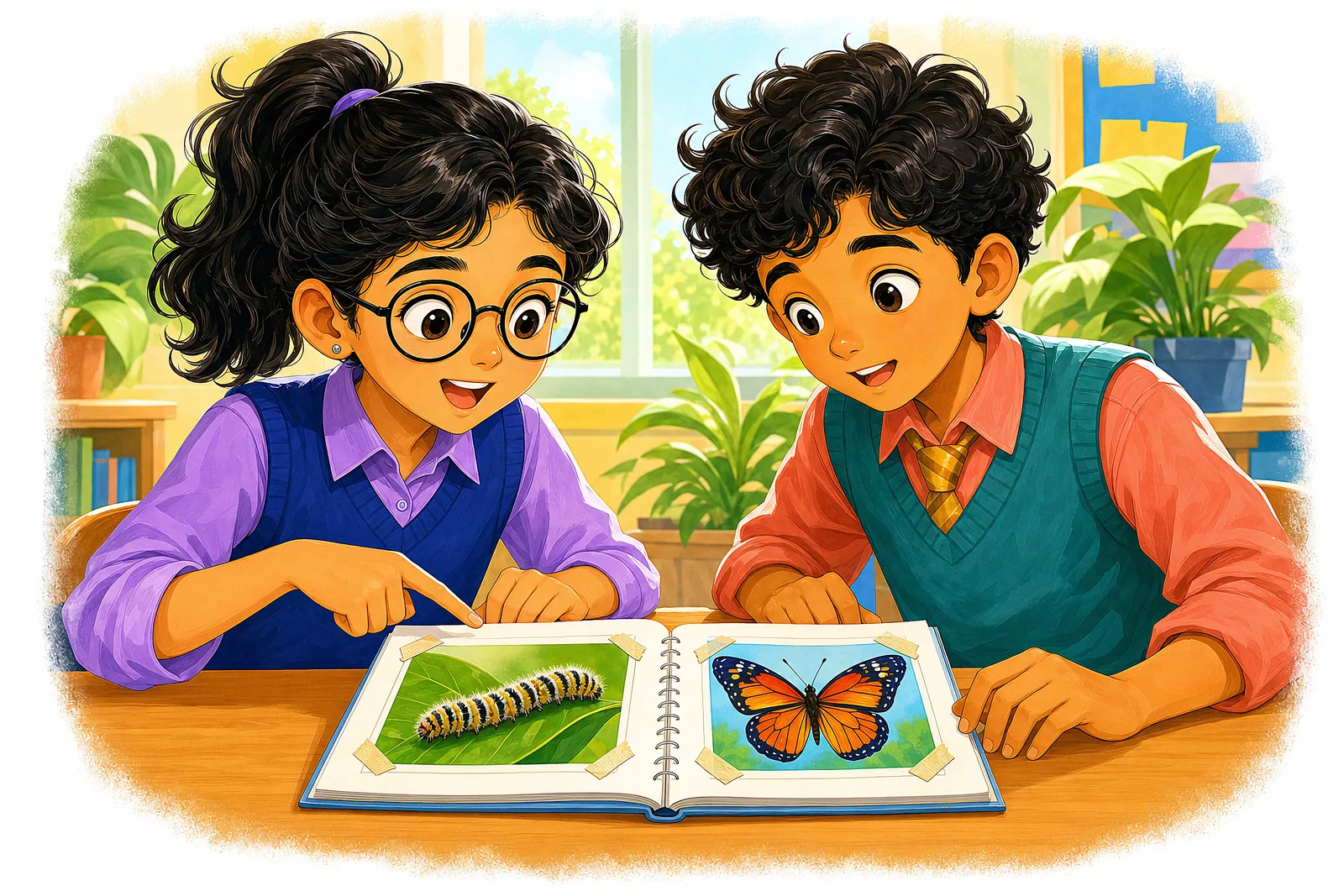
A classroom scene beginning the story of how animals grow.
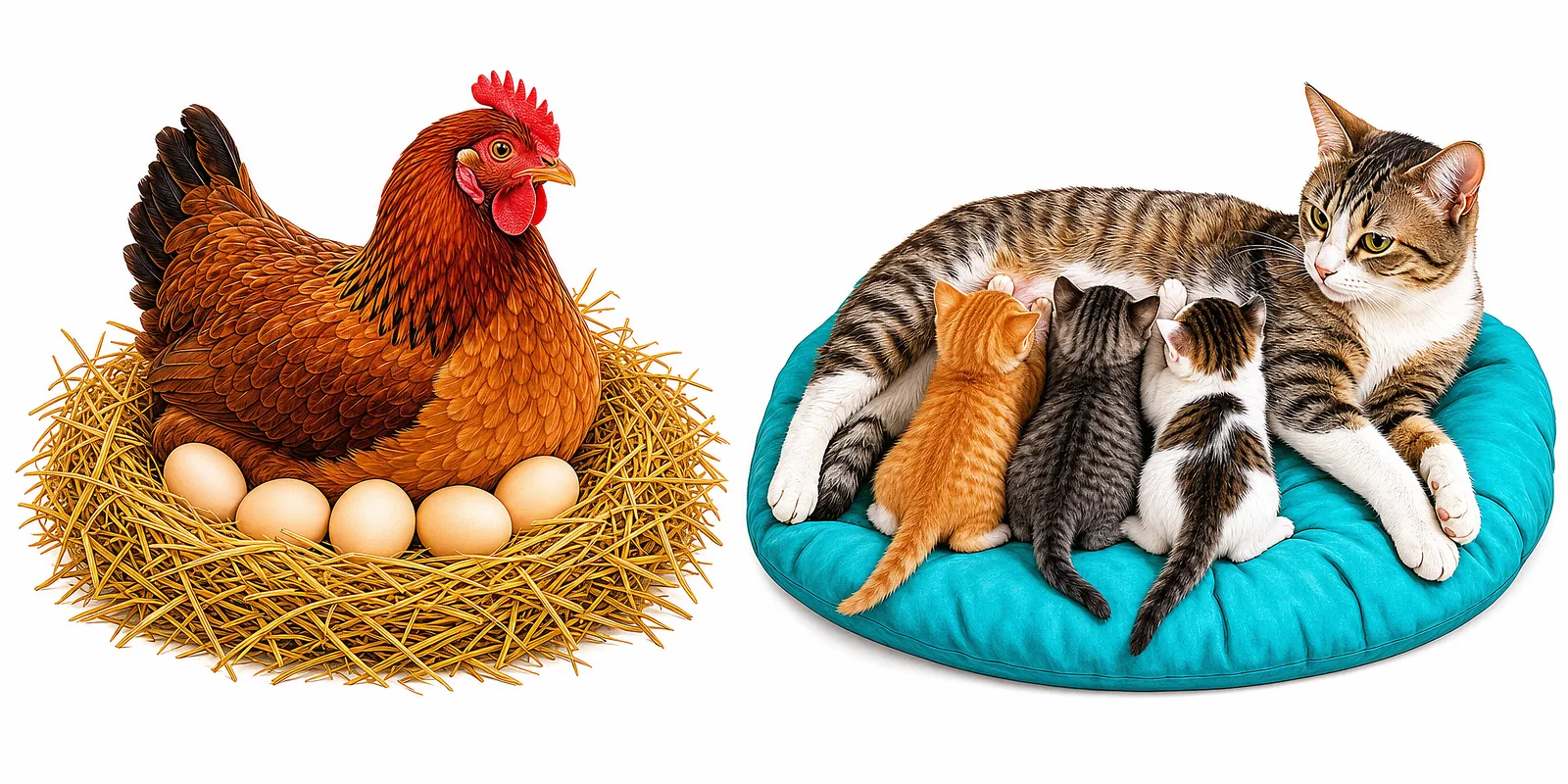
Two ways animals are born — hatching from eggs, or born as live young.
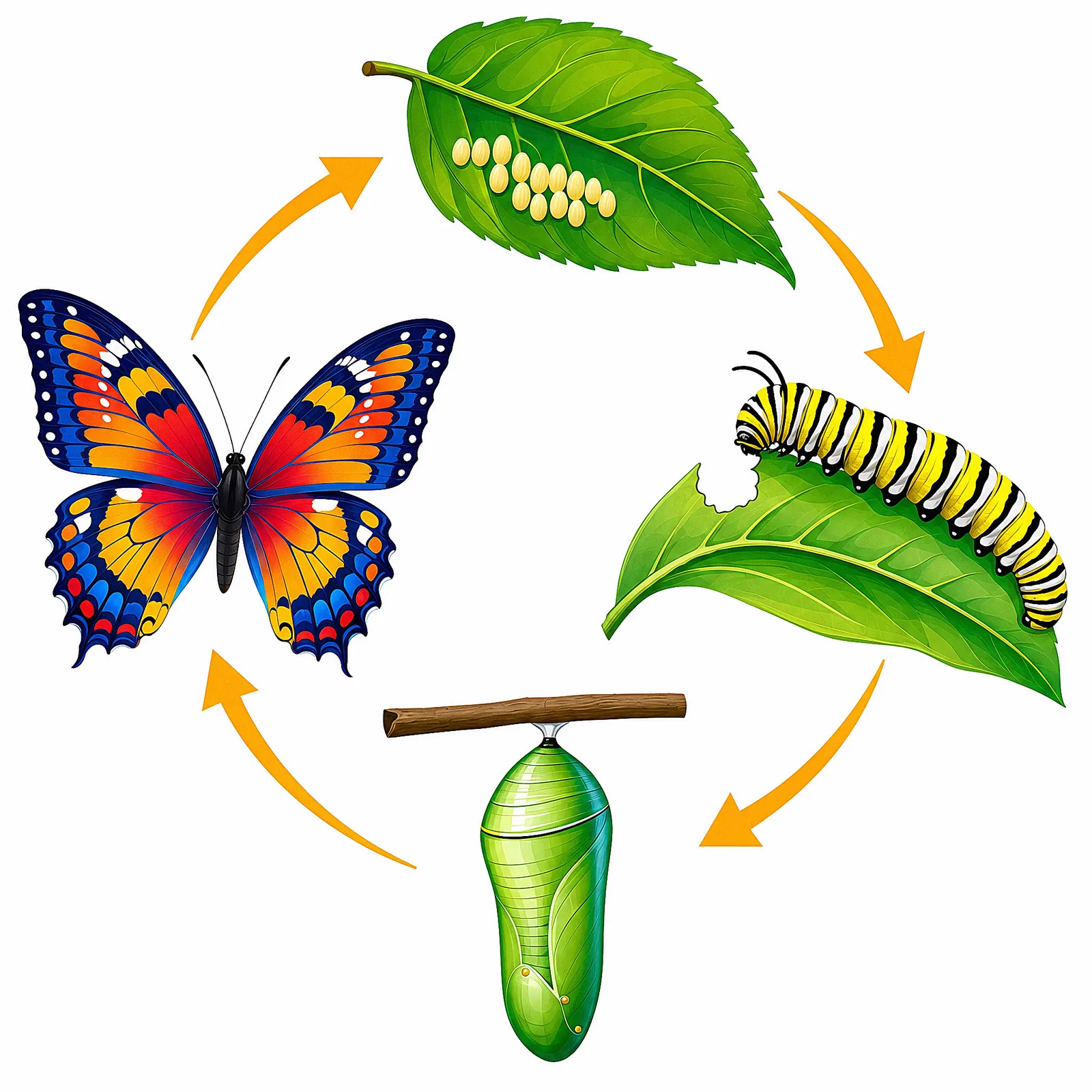
The butterfly life cycle — egg, caterpillar, chrysalis and butterfly.
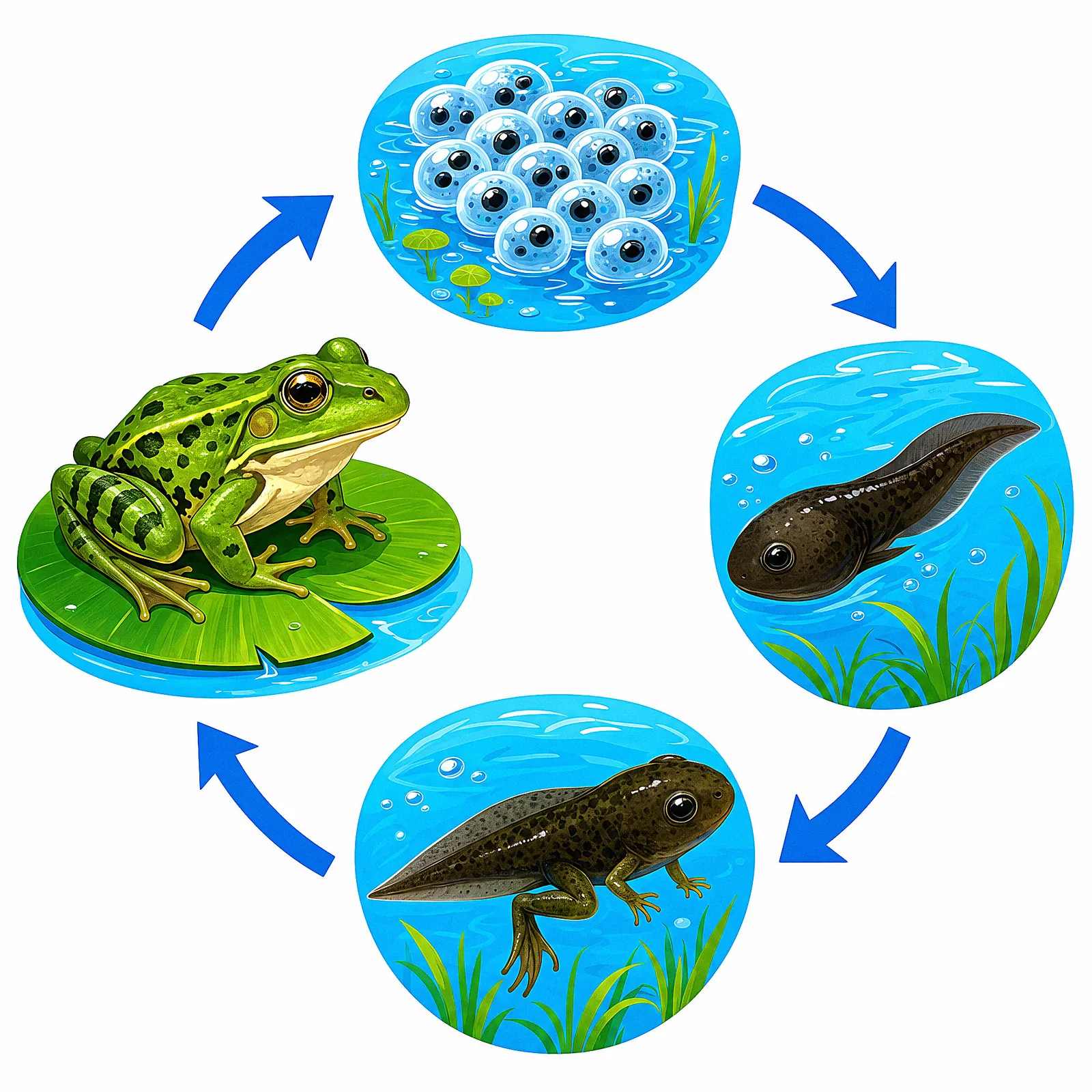
The frog life cycle — from egg to tadpole to fully-grown frog.
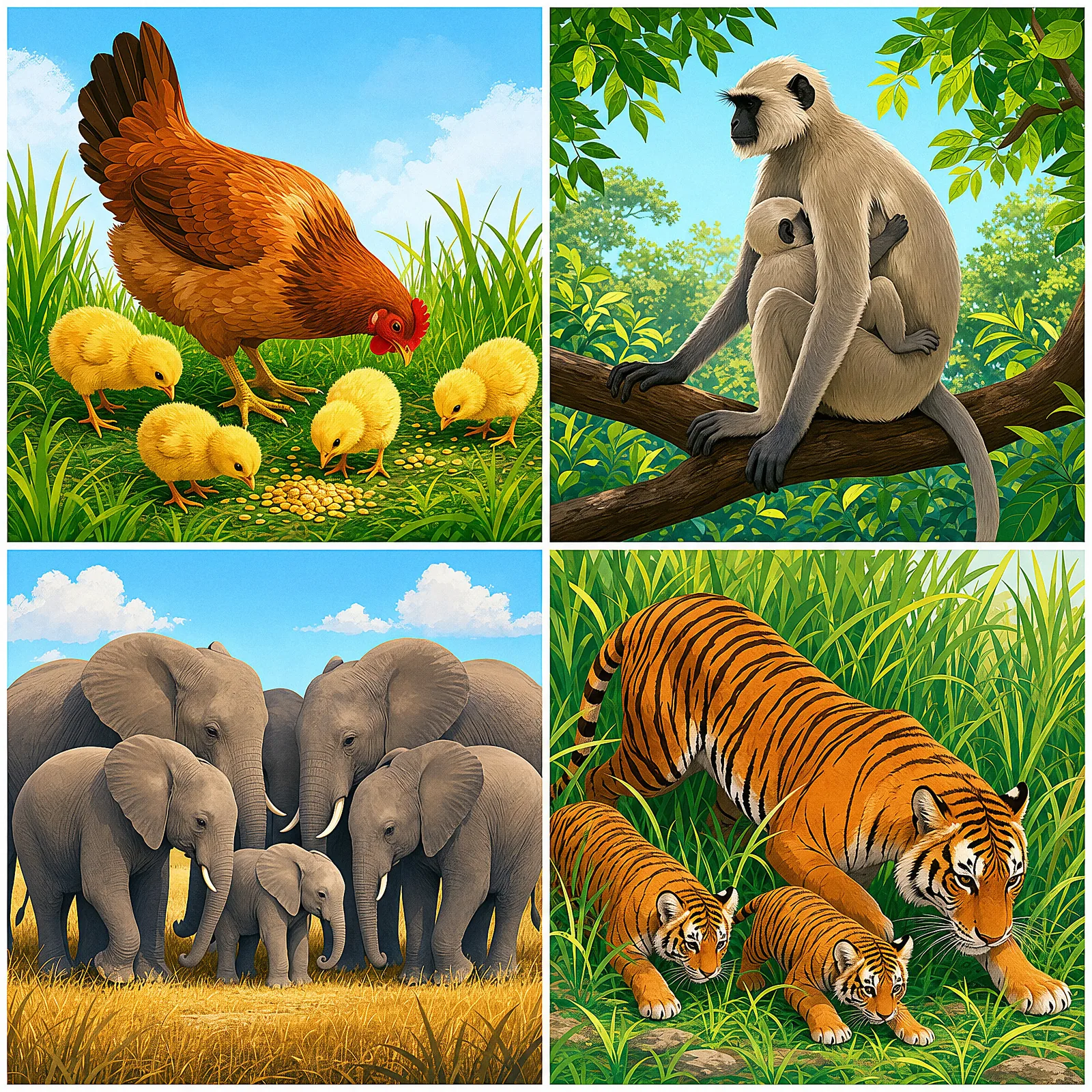
How animal parents care for and protect their young.

Chapter 6 — Where Do Plants Live?
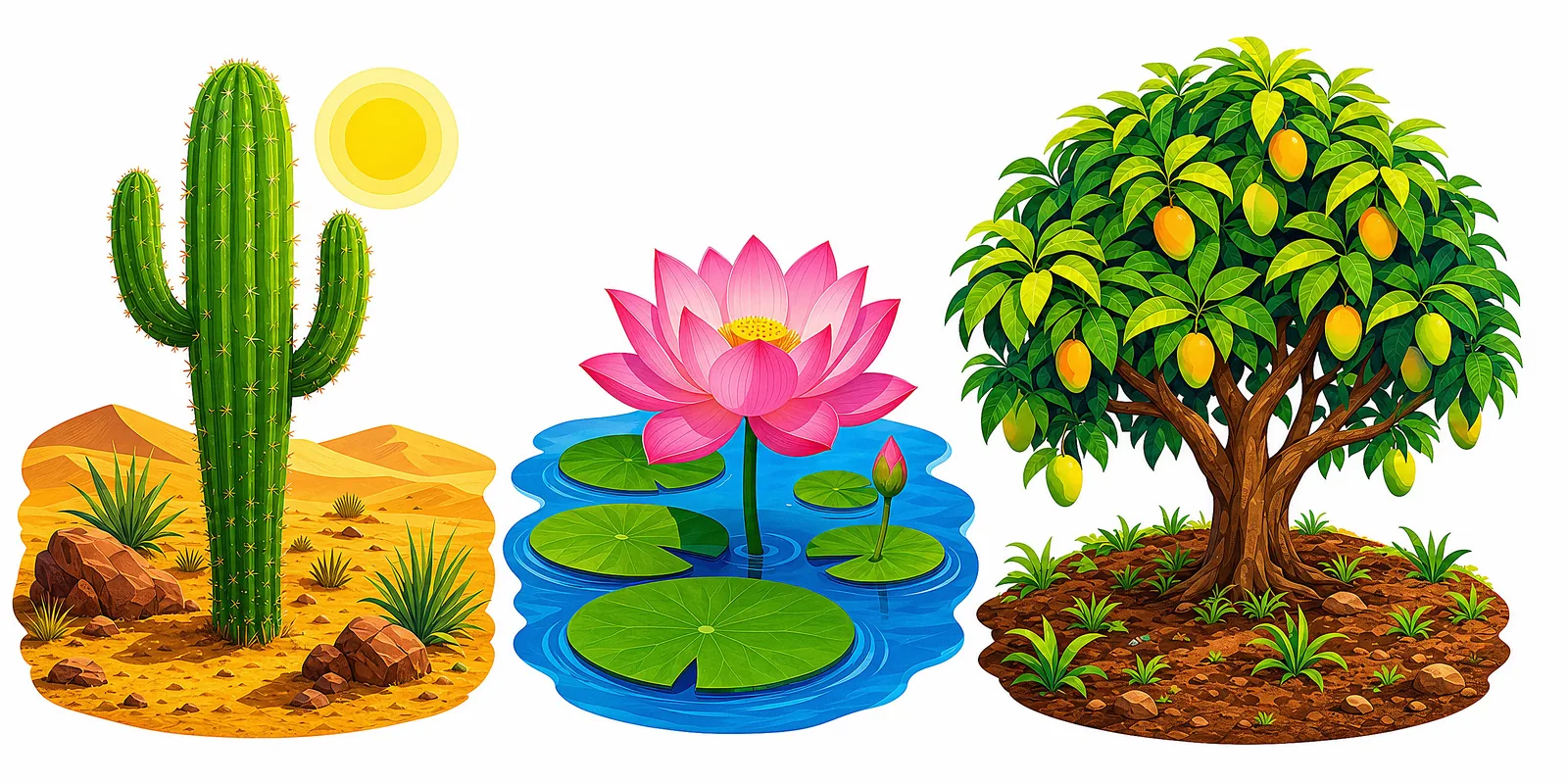
Chapter opener exploring the many places plants call home.
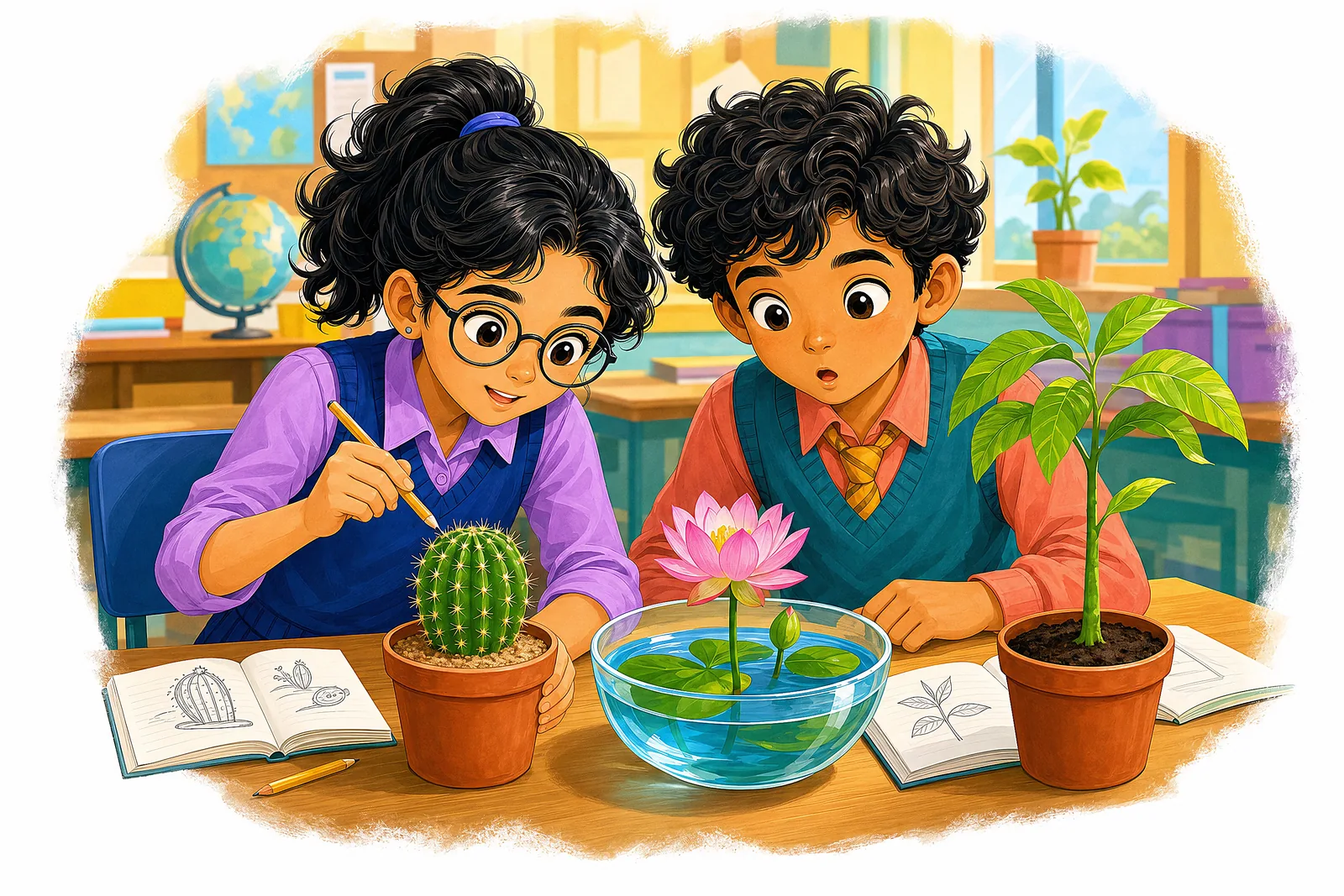
A classroom scene introducing plant habitats.
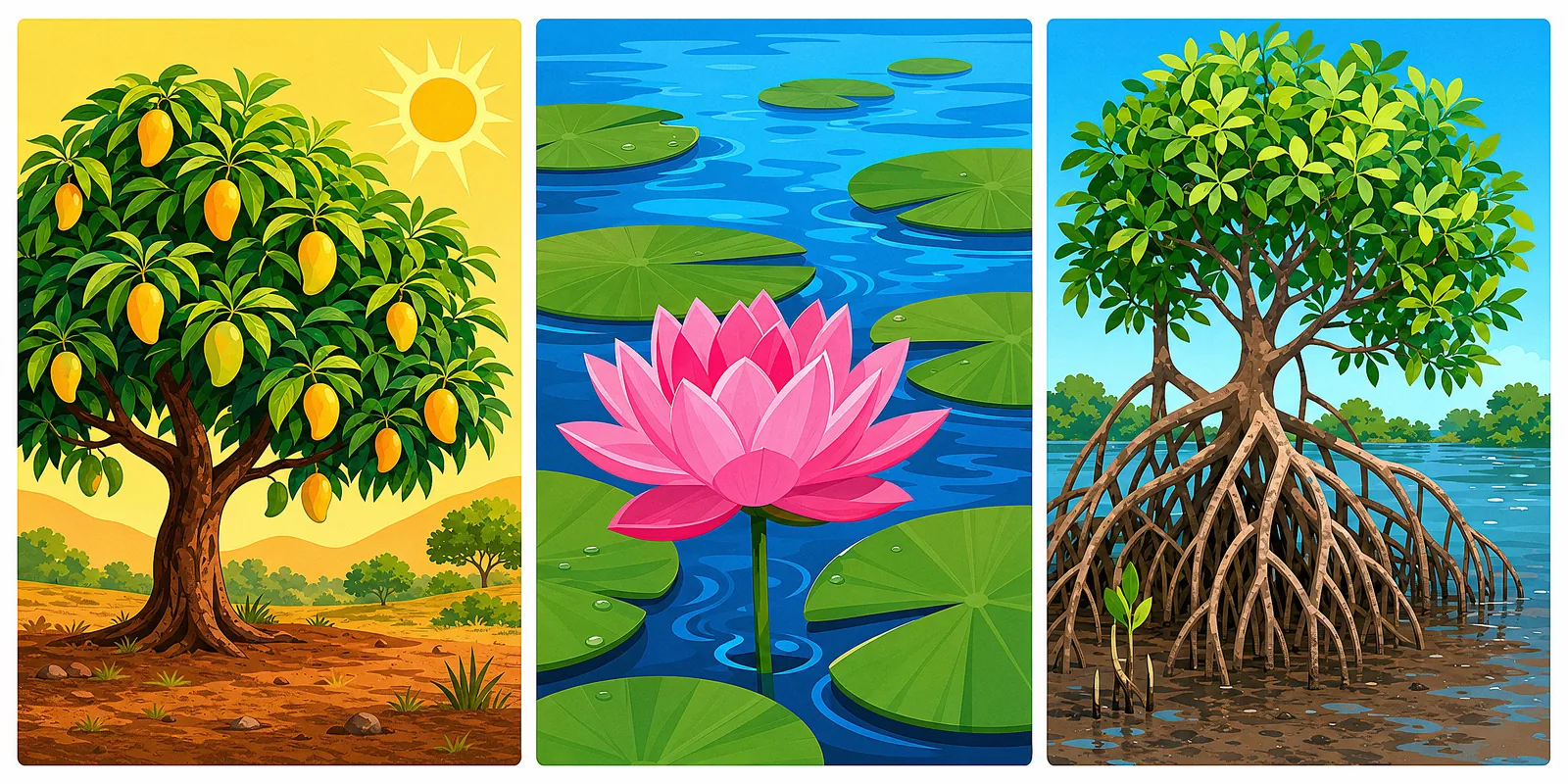
Three very different plant homes — desert, water and land — side by side.
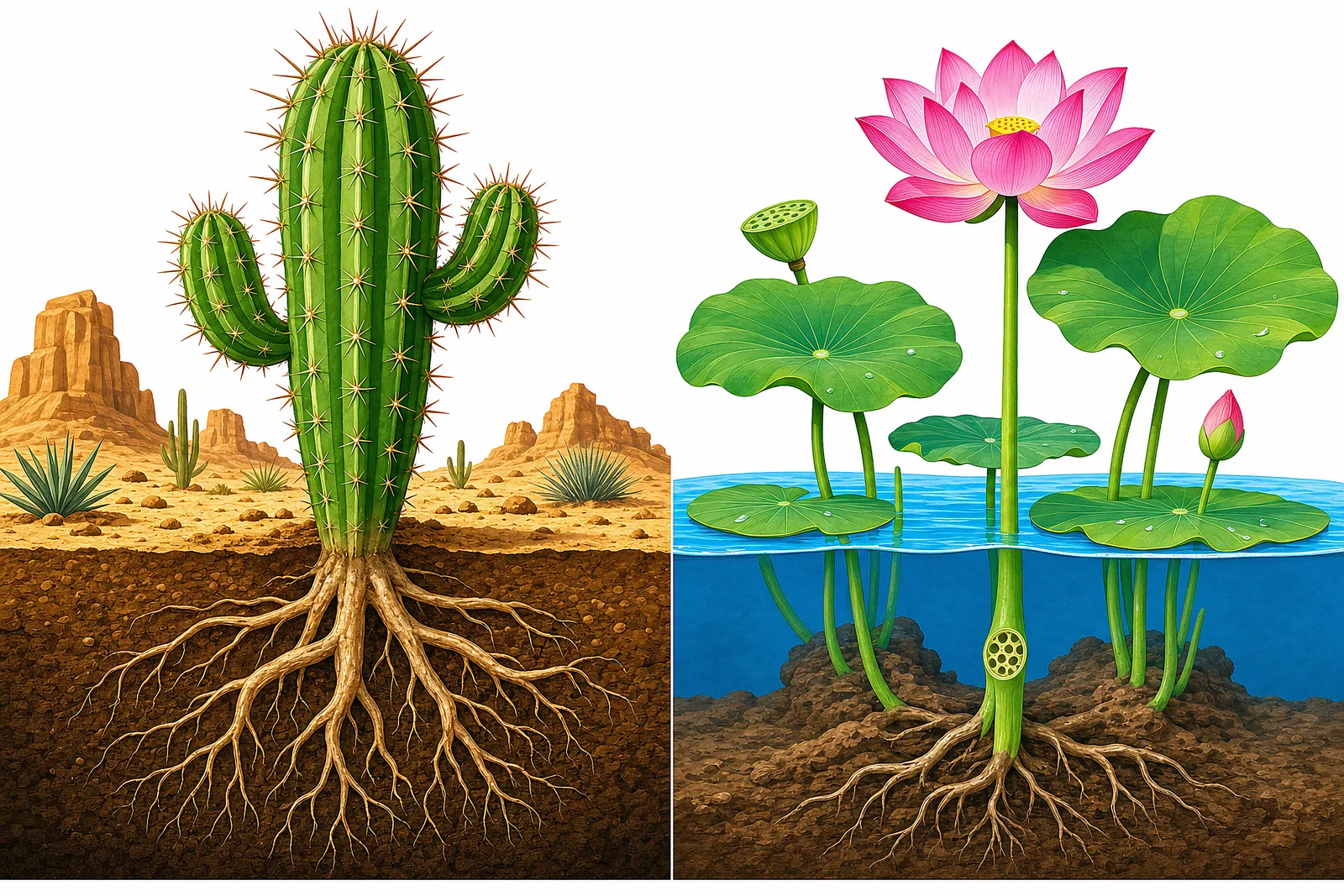
How plants adapt their shape to survive where they live.
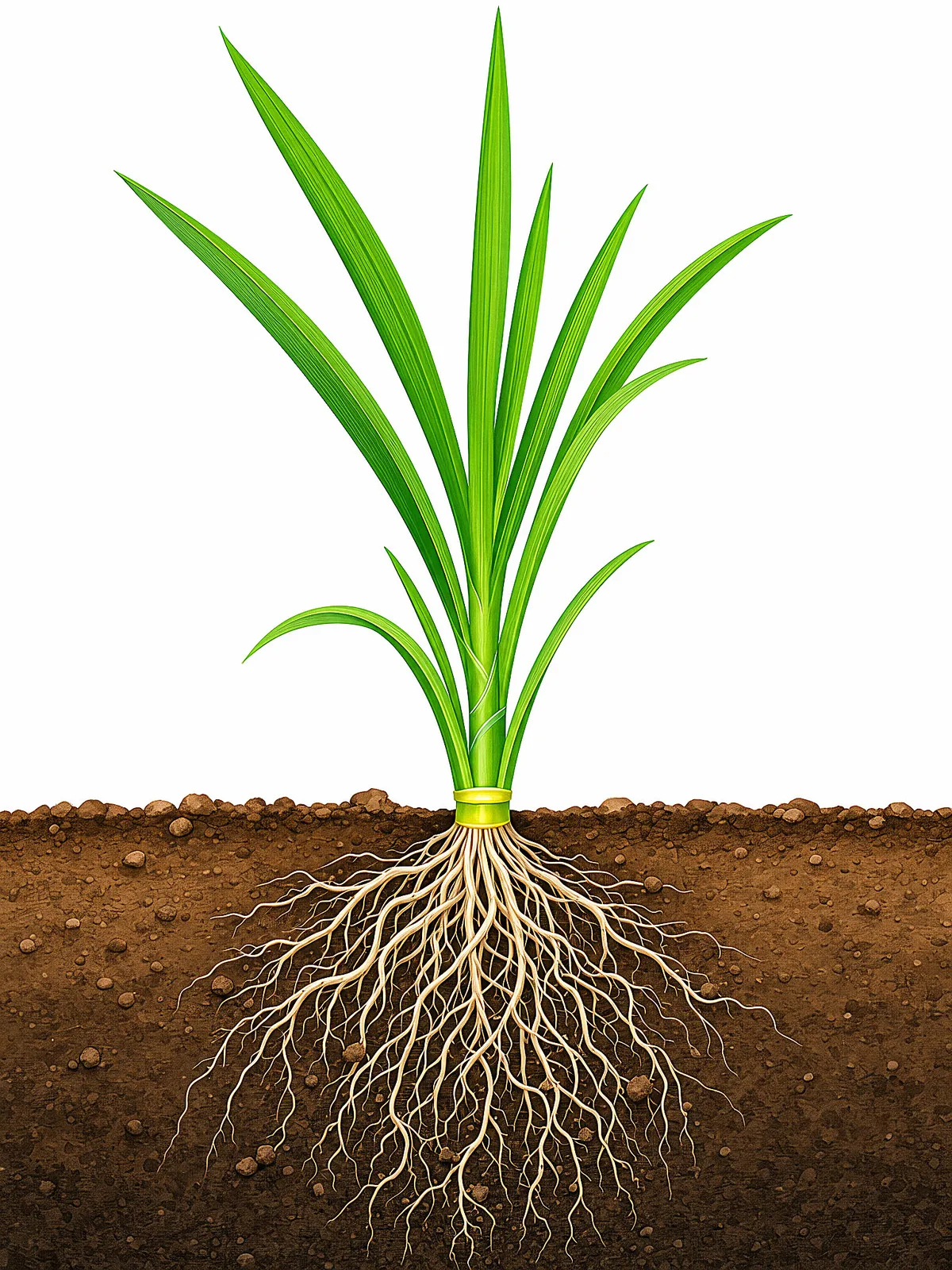
A grassland scene showing plants suited to open, sunny land.
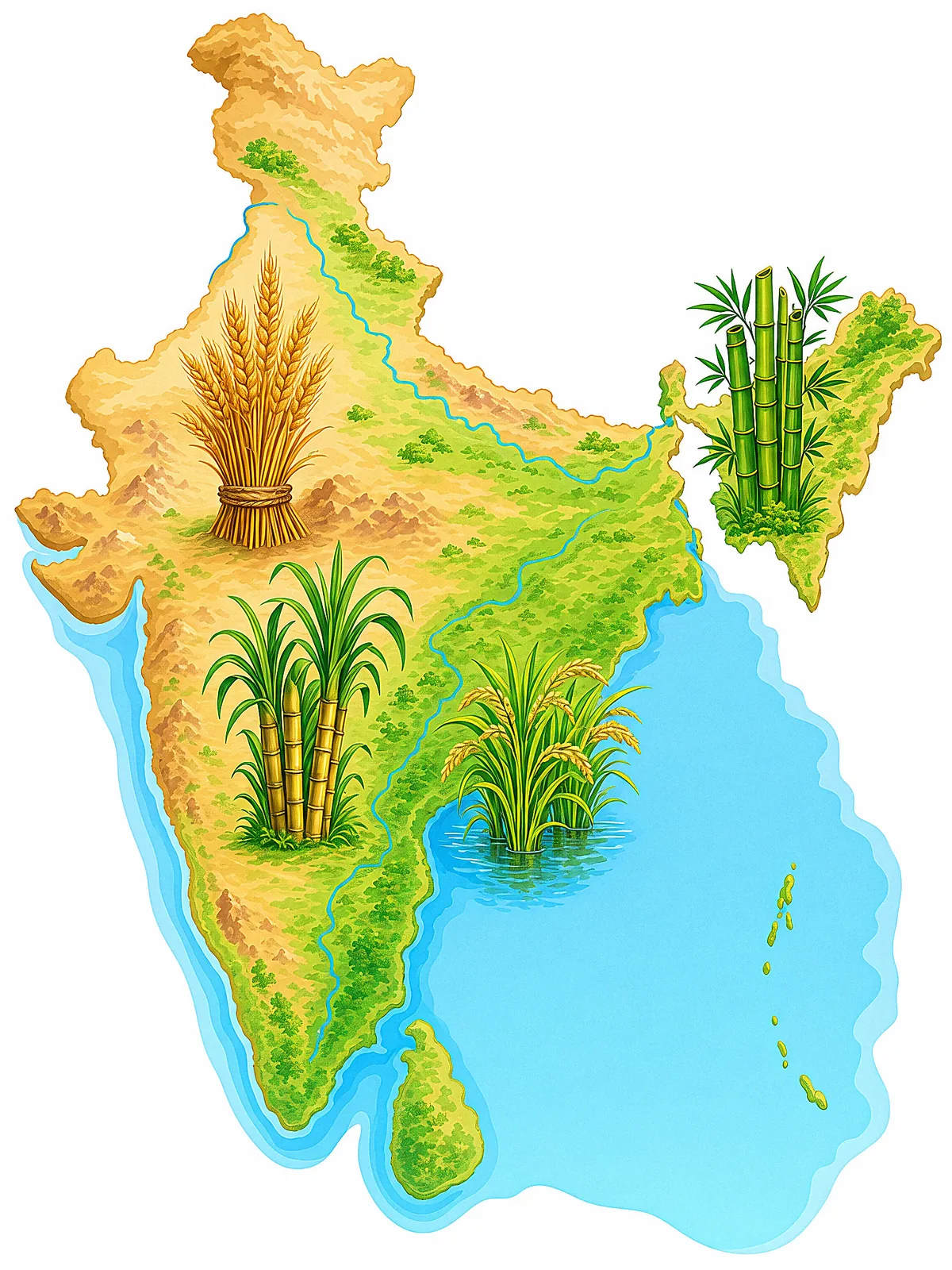
A map of India showing the variety of plant regions across the country.

Chapter 7 — How Do Plants Make Their Own Food?
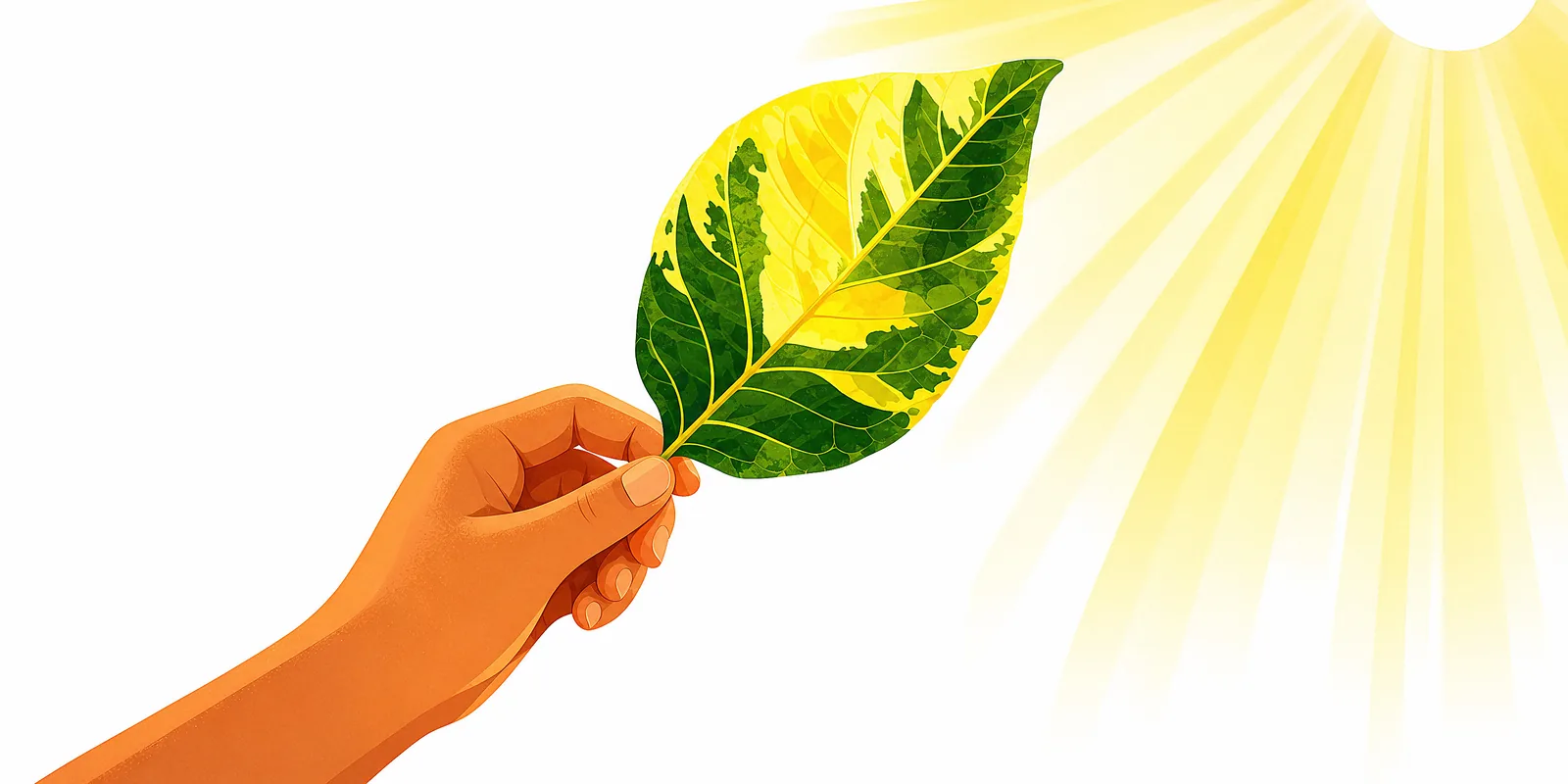
Chapter opener on the amazing way plants cook their own food.
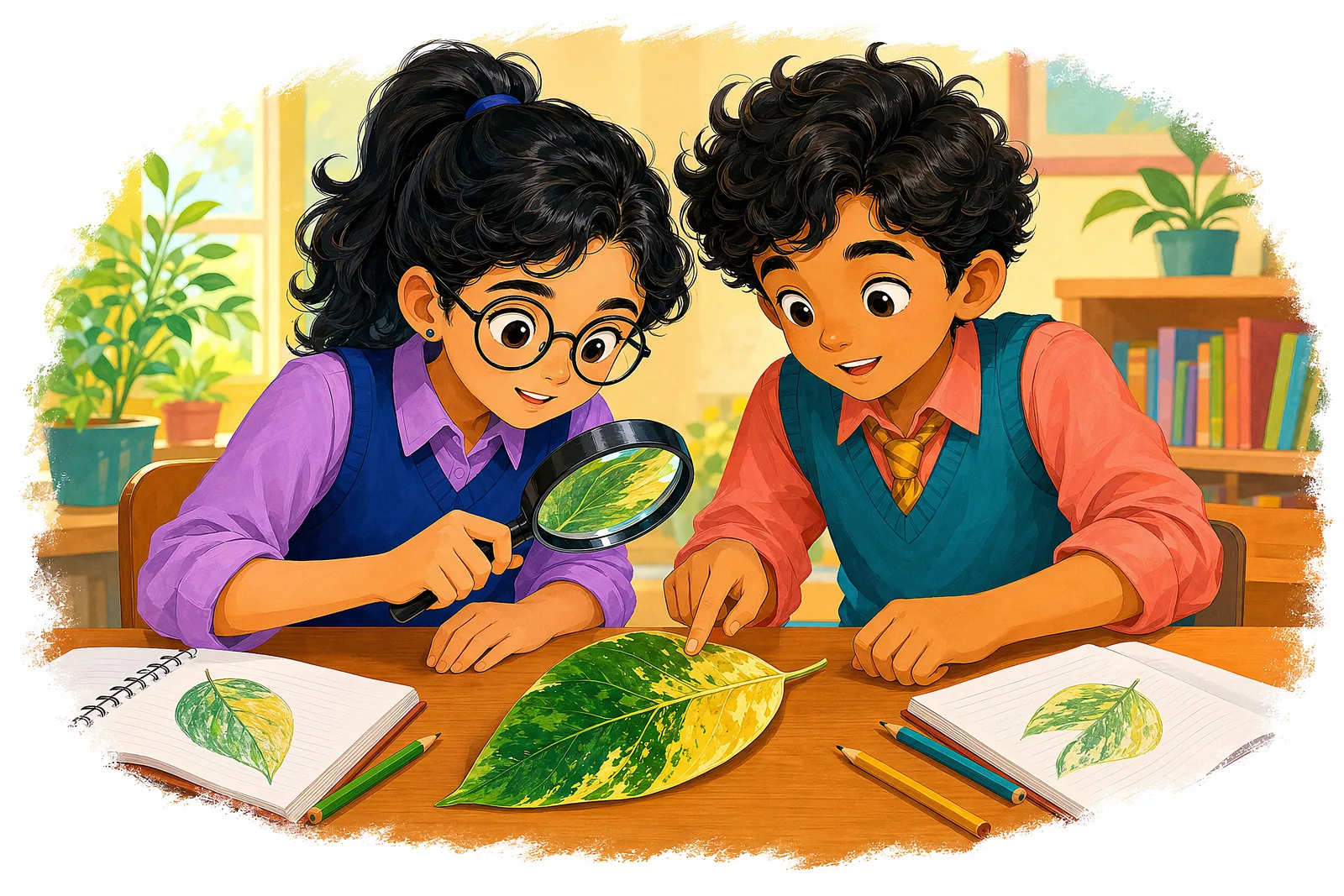
A classroom scene starting the lesson on plants and food.
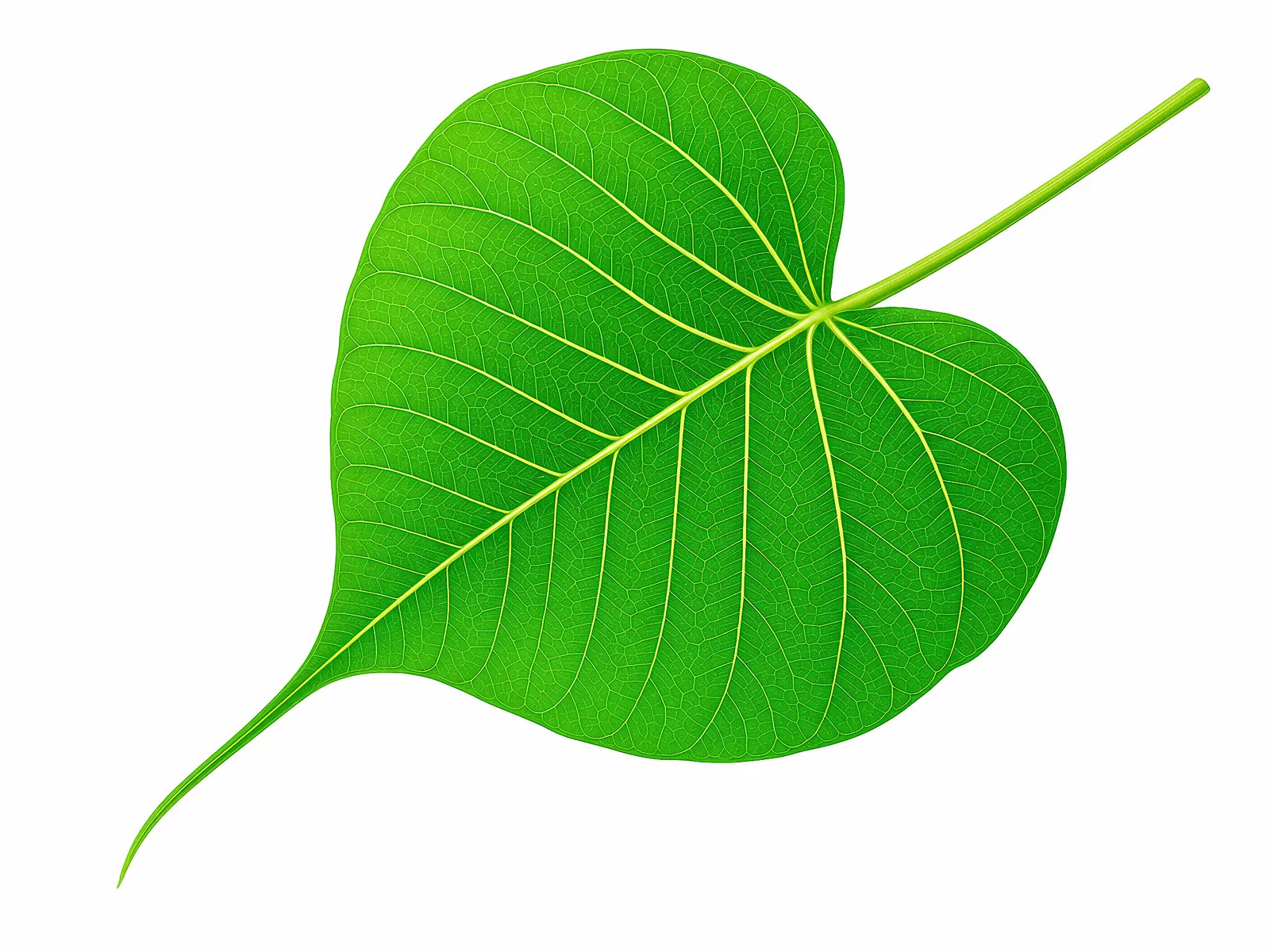
The parts of a leaf — the plant's tiny food factory.
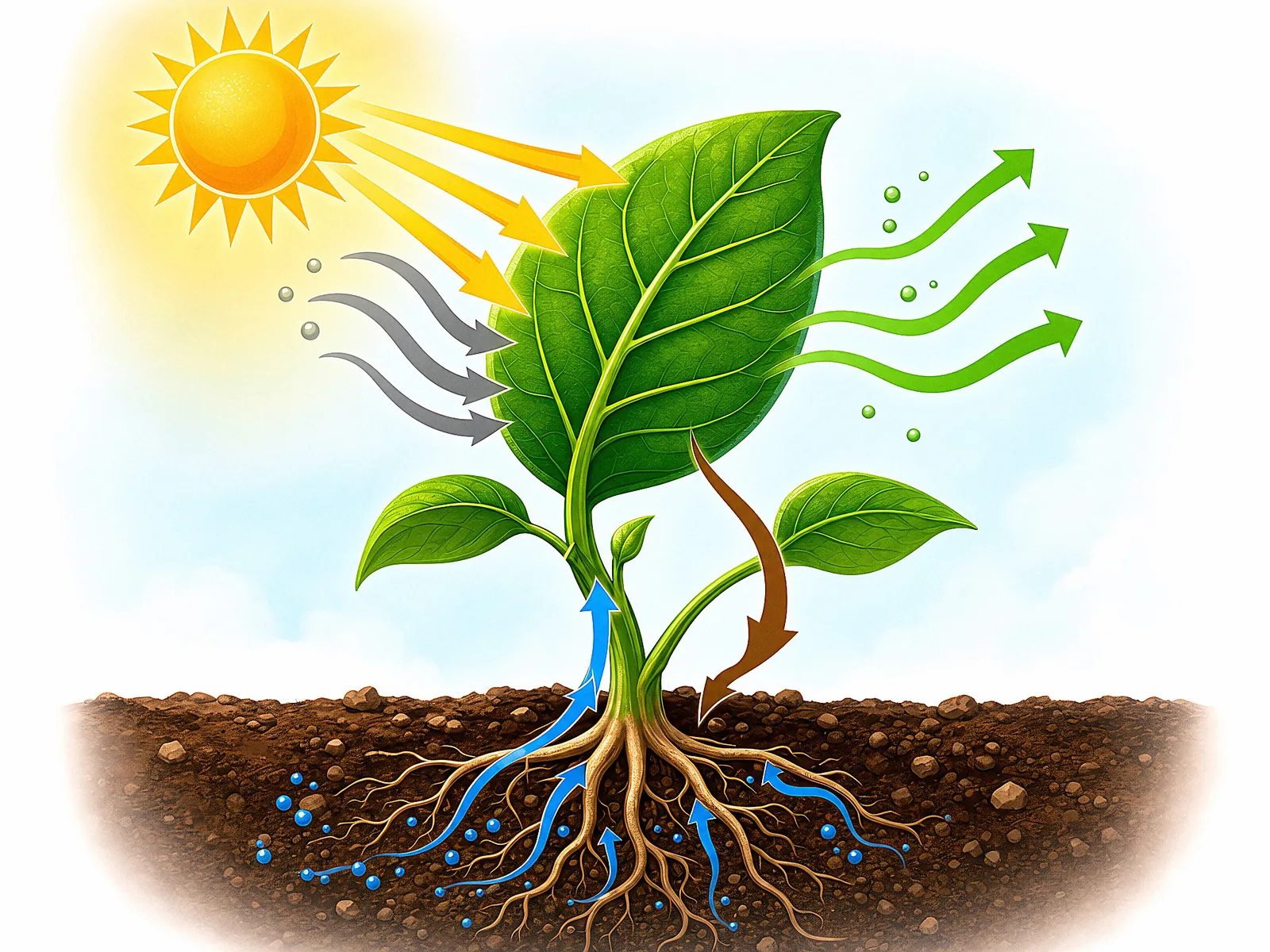
Photosynthesis explained — sunlight, water and air becoming food inside a leaf. A hero diagram of the chapter.
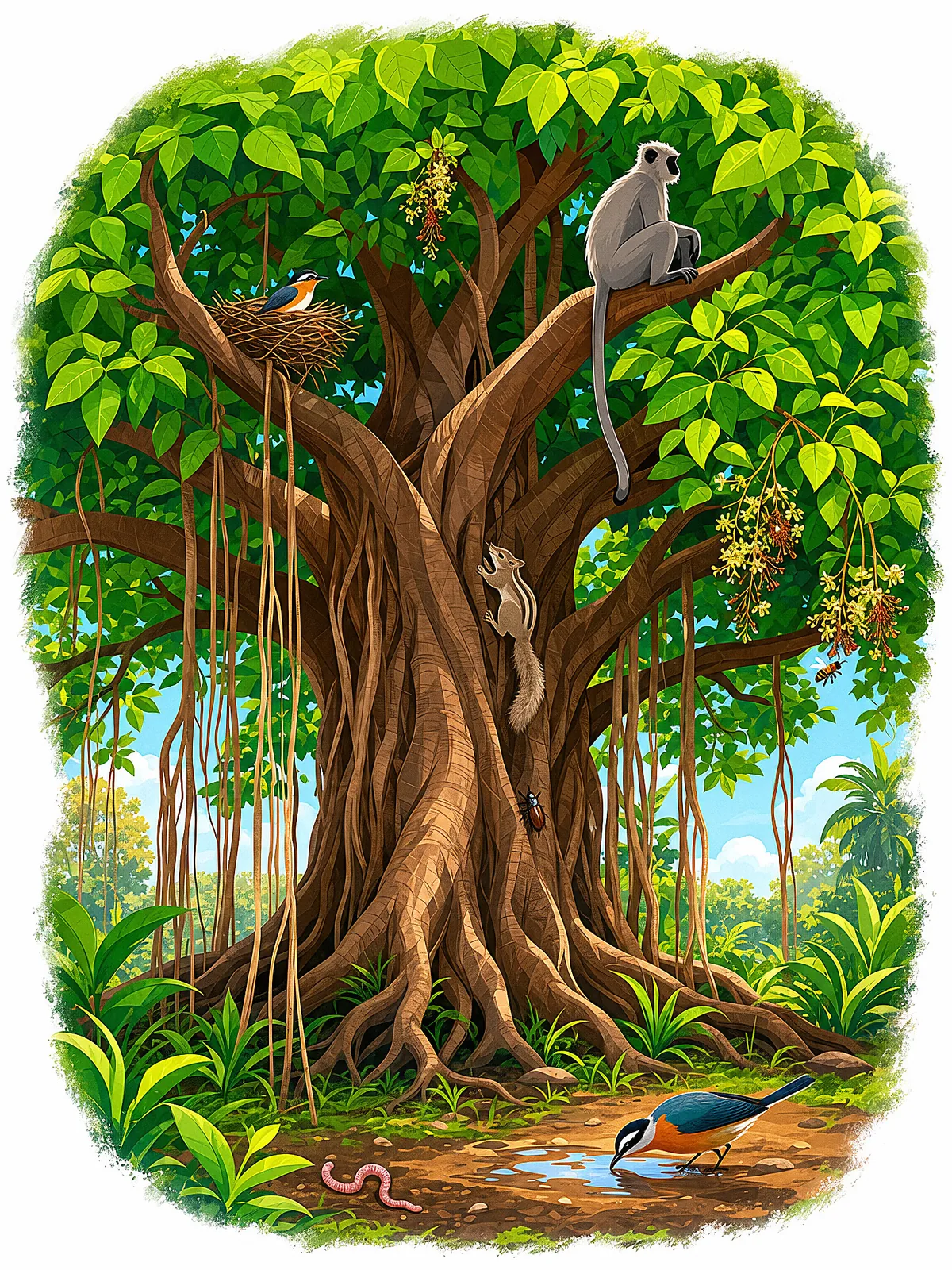
A grand banyan tree — a whole world of life supported by one plant.
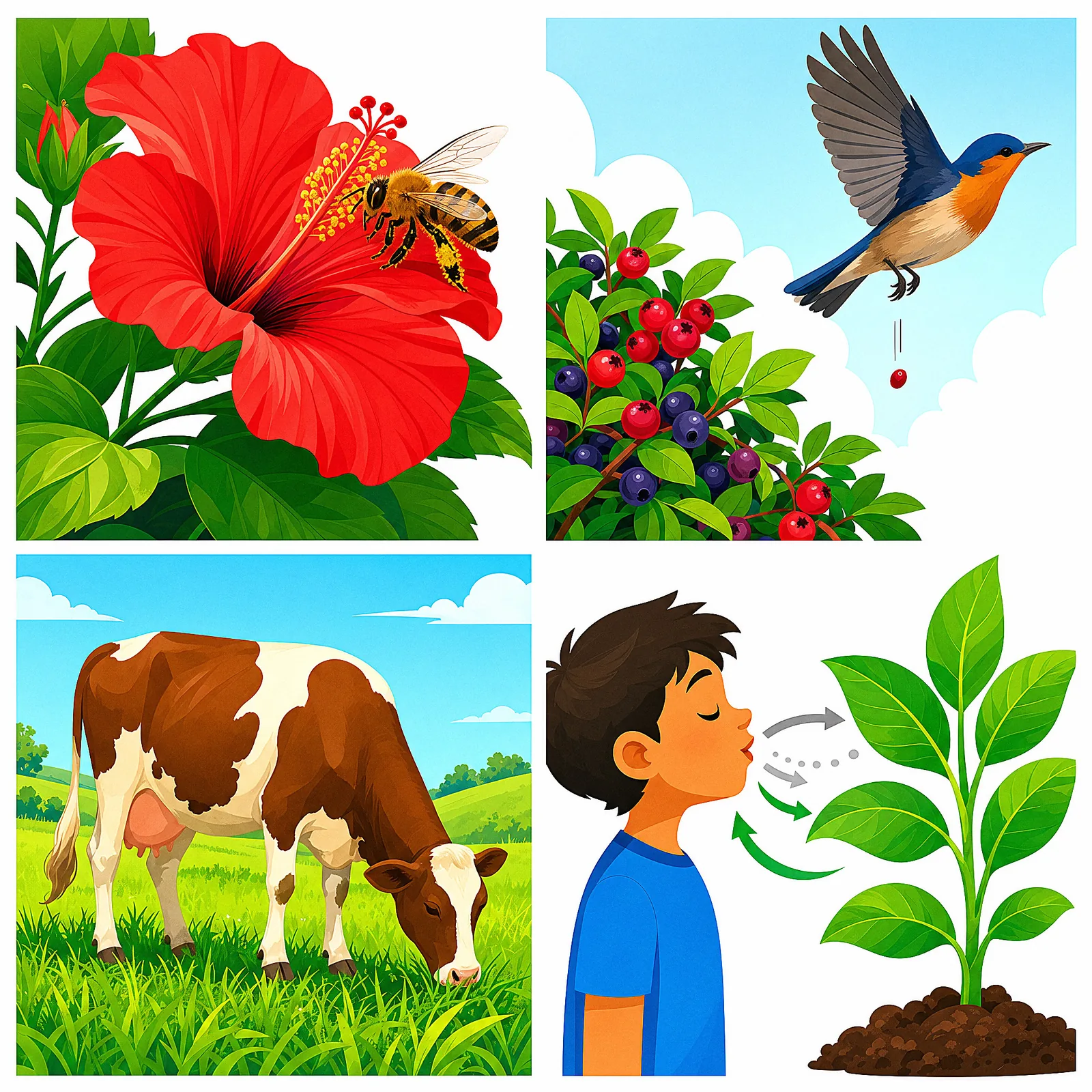
How plants and animals depend on each other to survive.

Chapter 8 — Where Does Rain Come From?
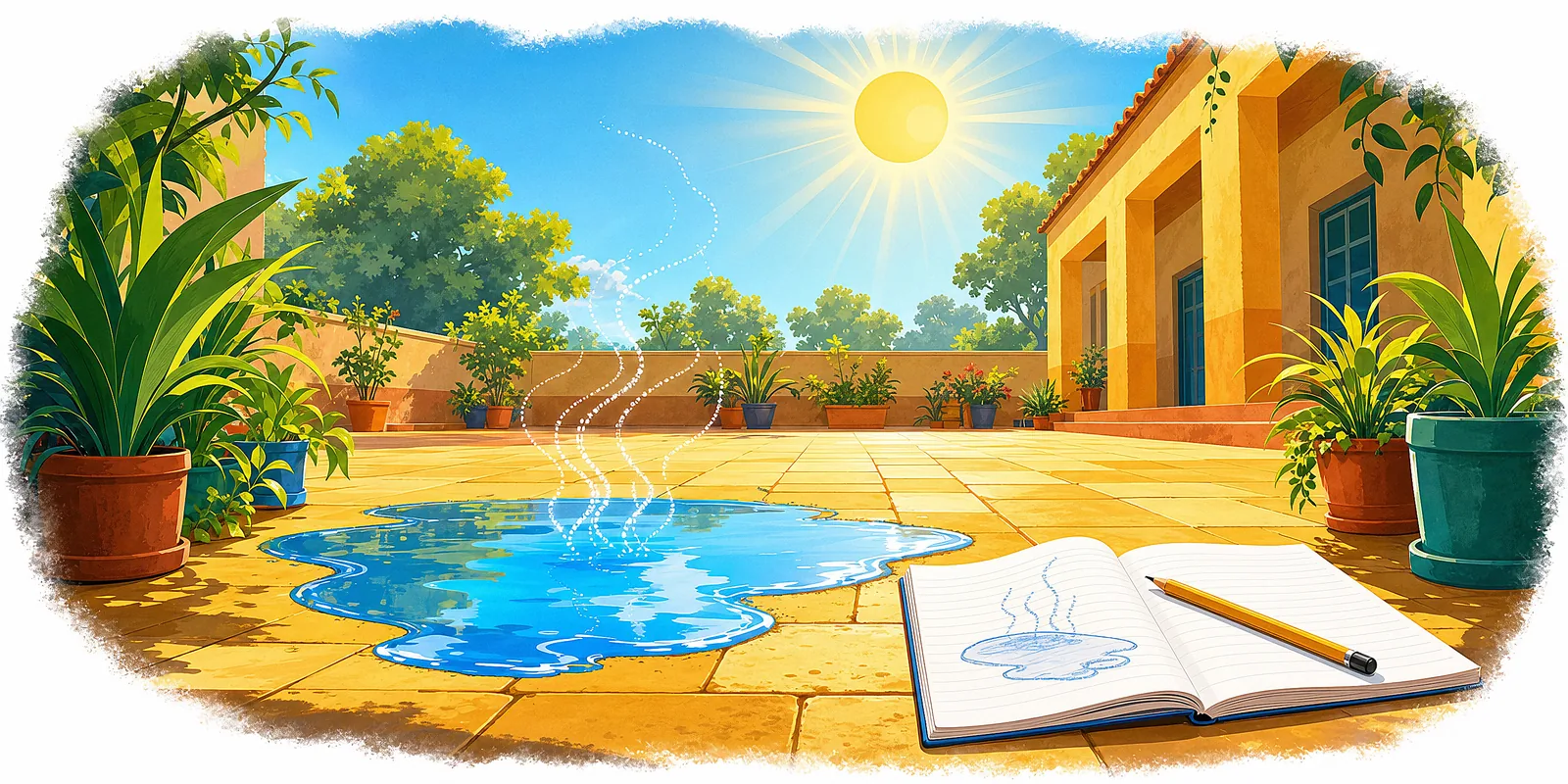
Chapter opener on the journey of water and where rain begins.
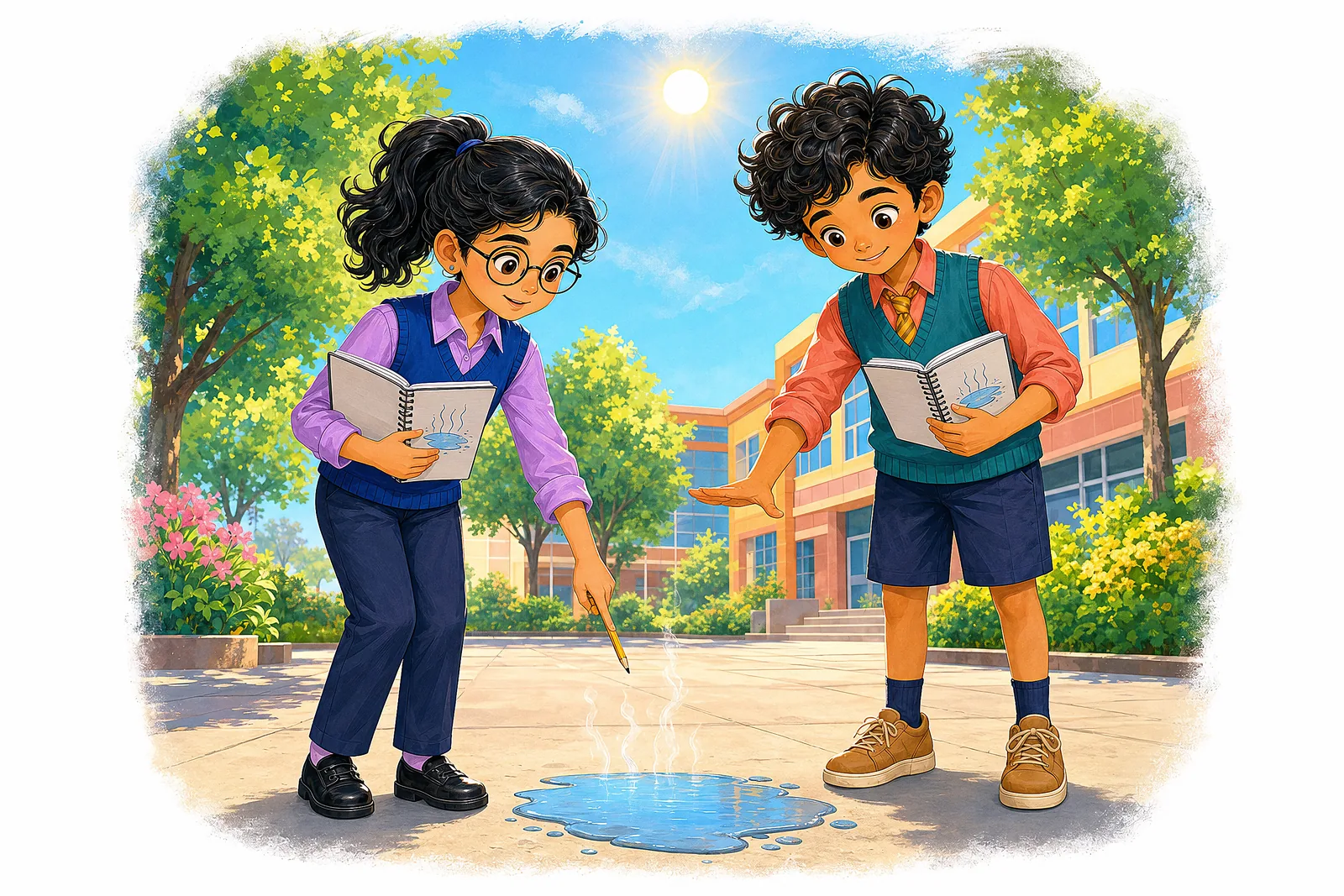
A puddle slowly disappearing in the sun — the first clue about evaporation.
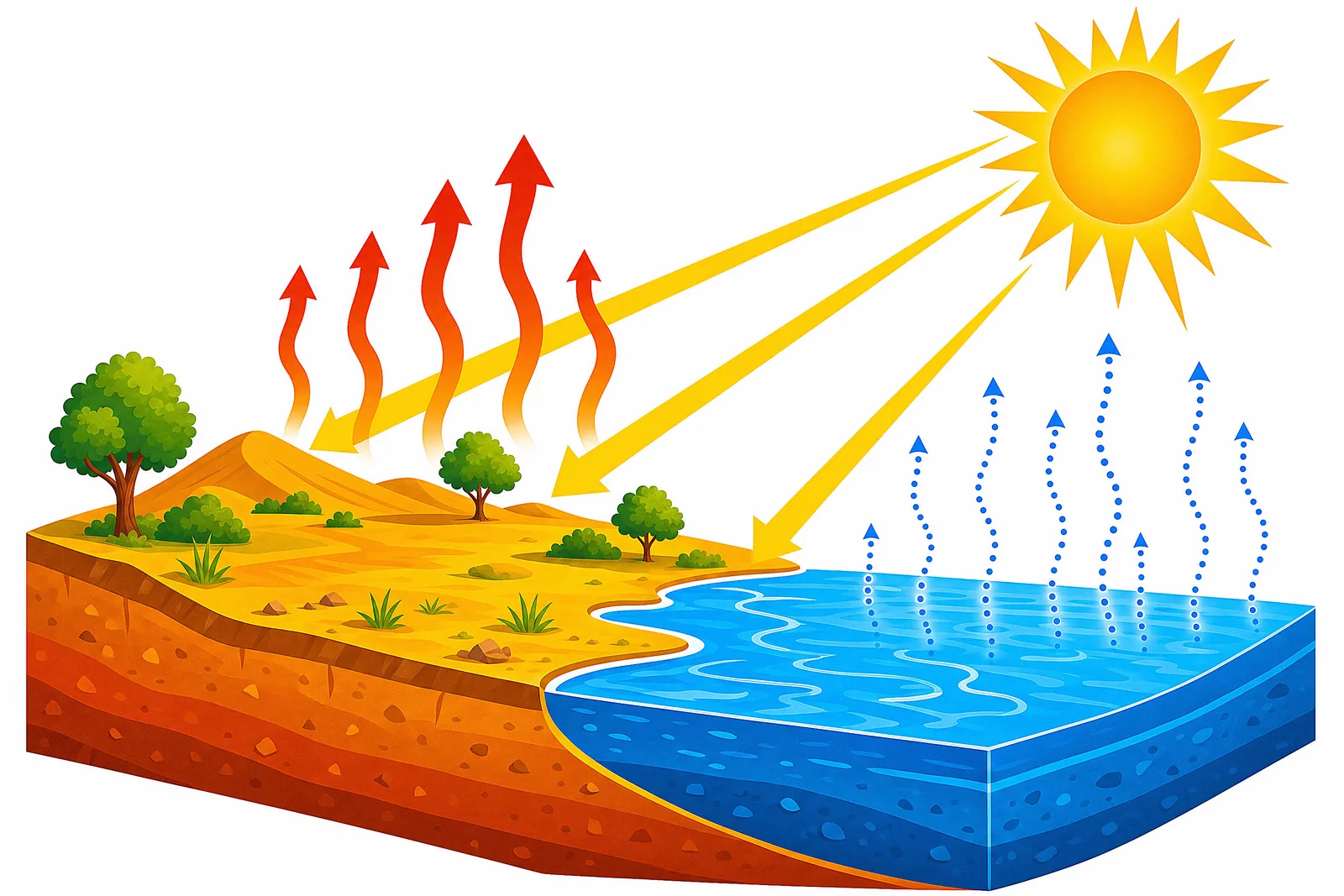
The sun heating water and turning it into invisible vapour.
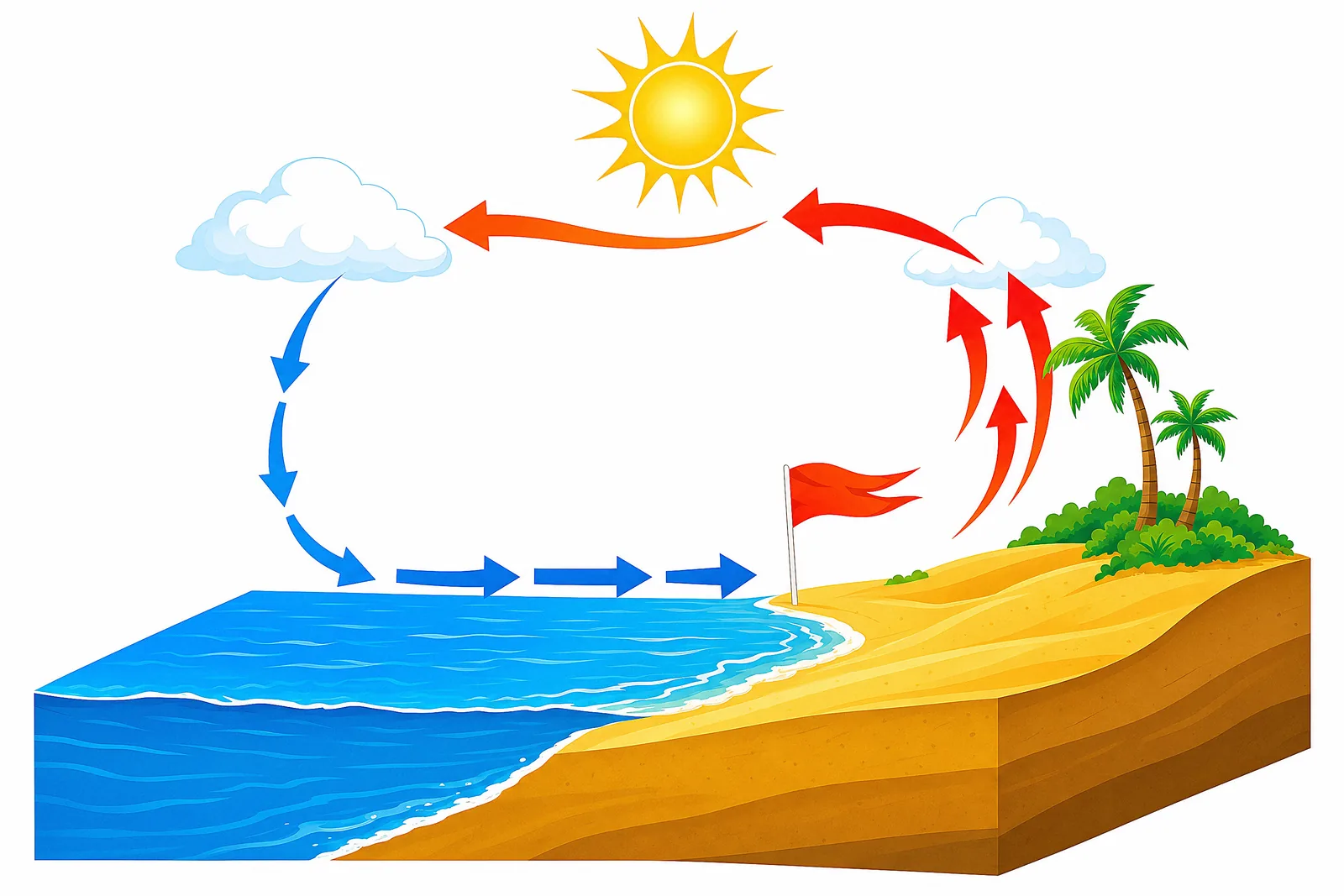
A sea breeze diagram — how air moves from sea to land during the day.
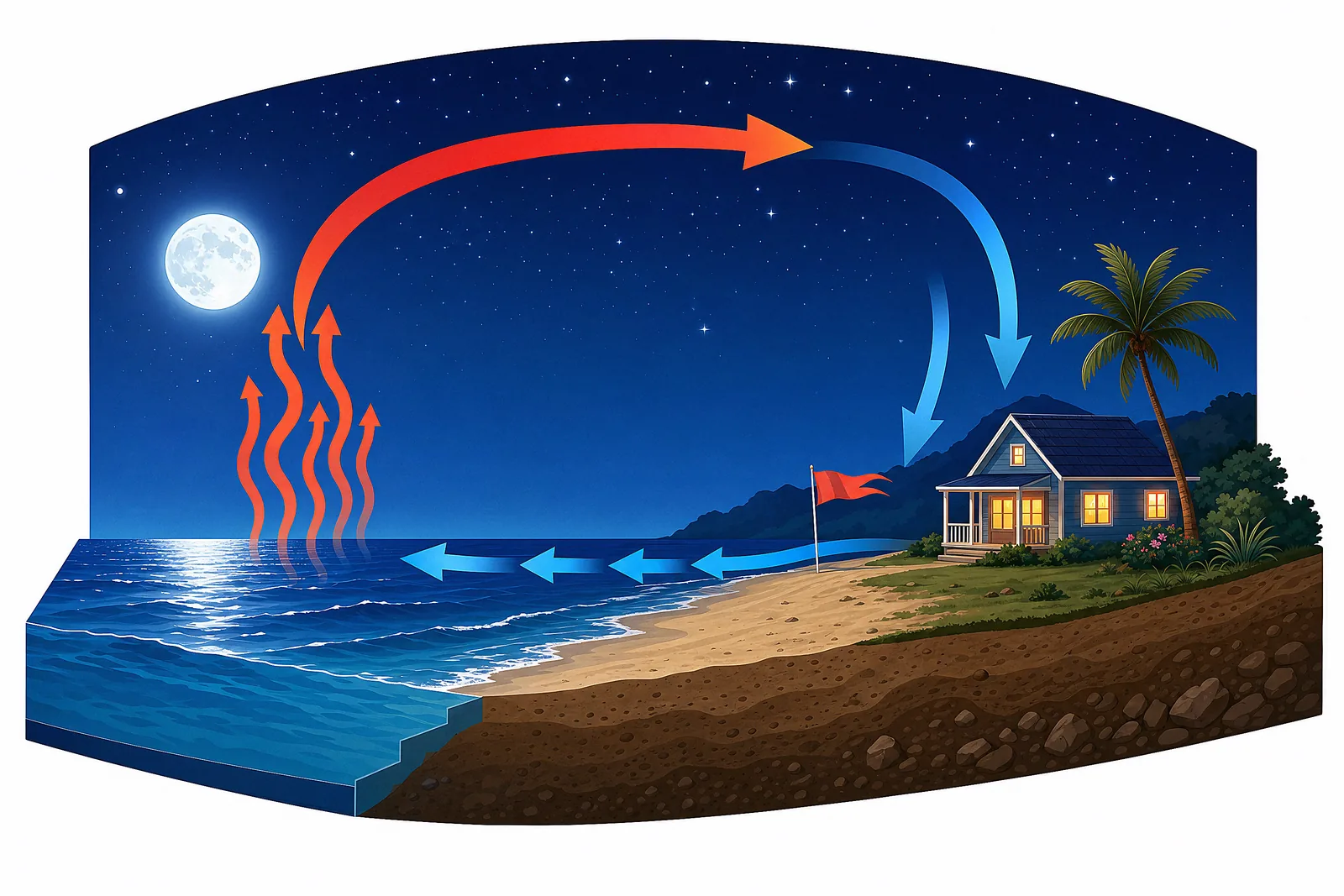
A land breeze diagram — how the same air flow reverses at night.
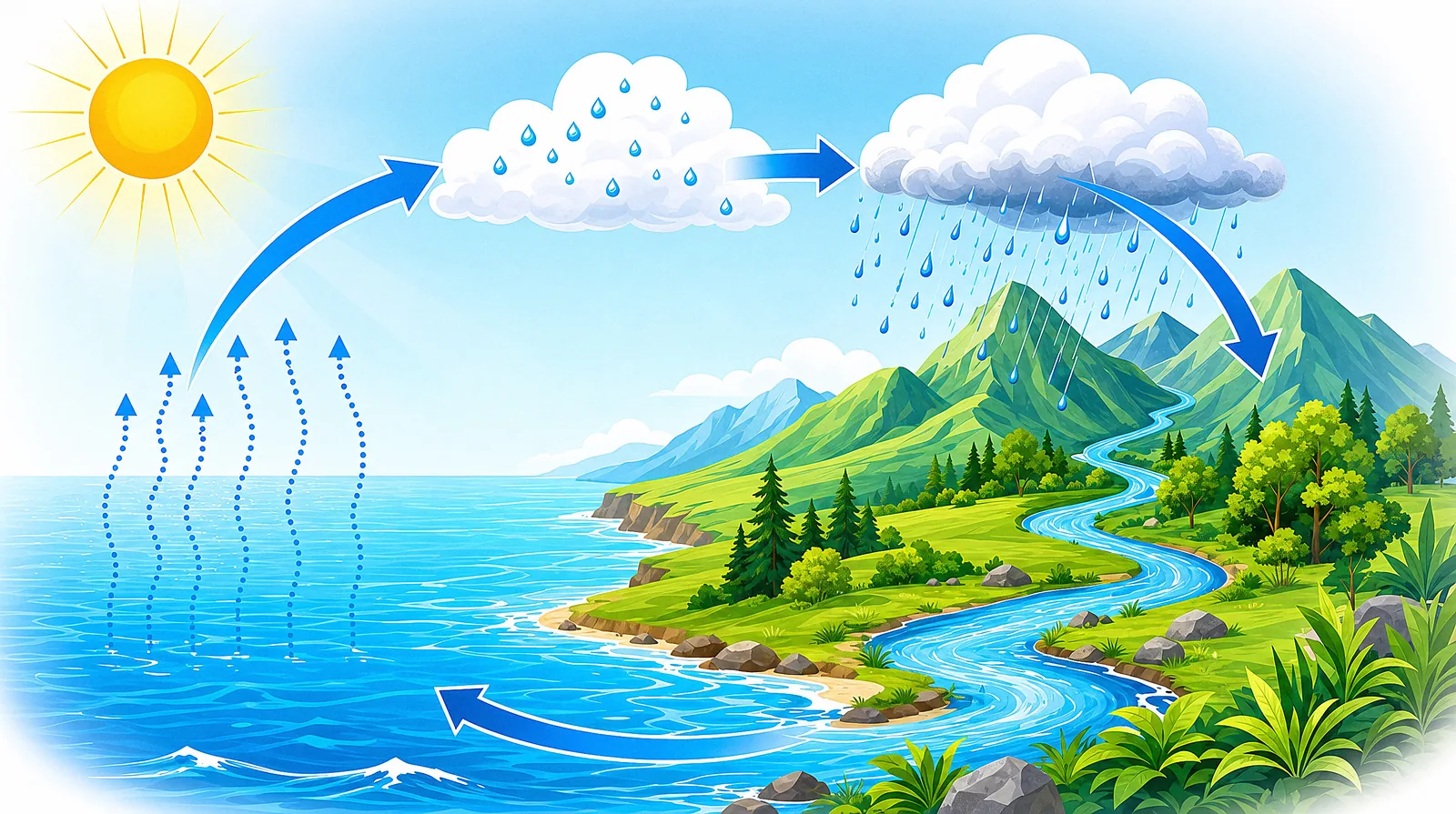
The full water cycle — evaporation, clouds, rain and the water returning to the sea. A hero diagram of the chapter.
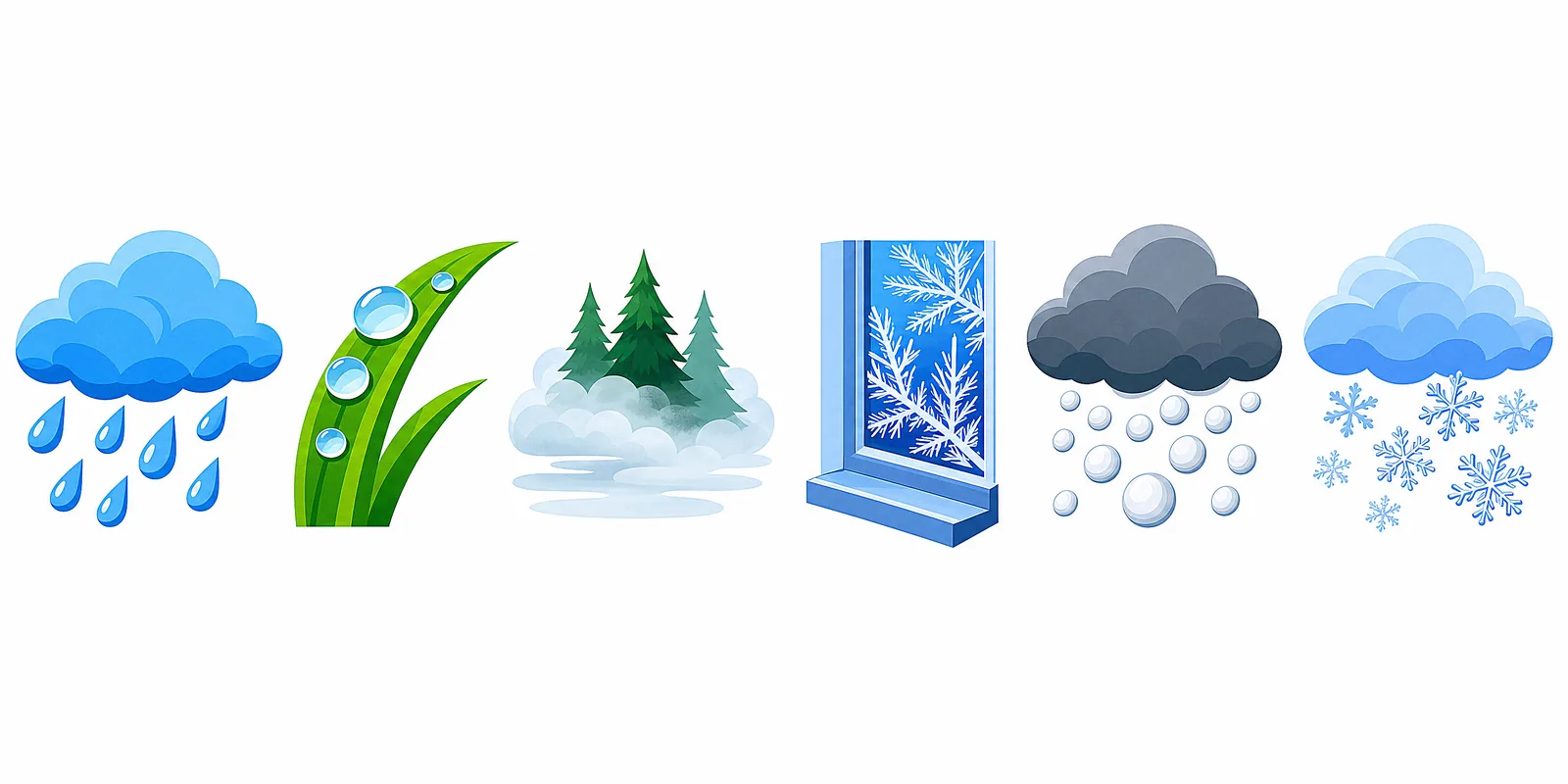
The different forms rain can take — drizzle, downpour, hail and snow.
Why fresh water is precious and must not be wasted.

Chapter 9 — What Is Everything Made Of?
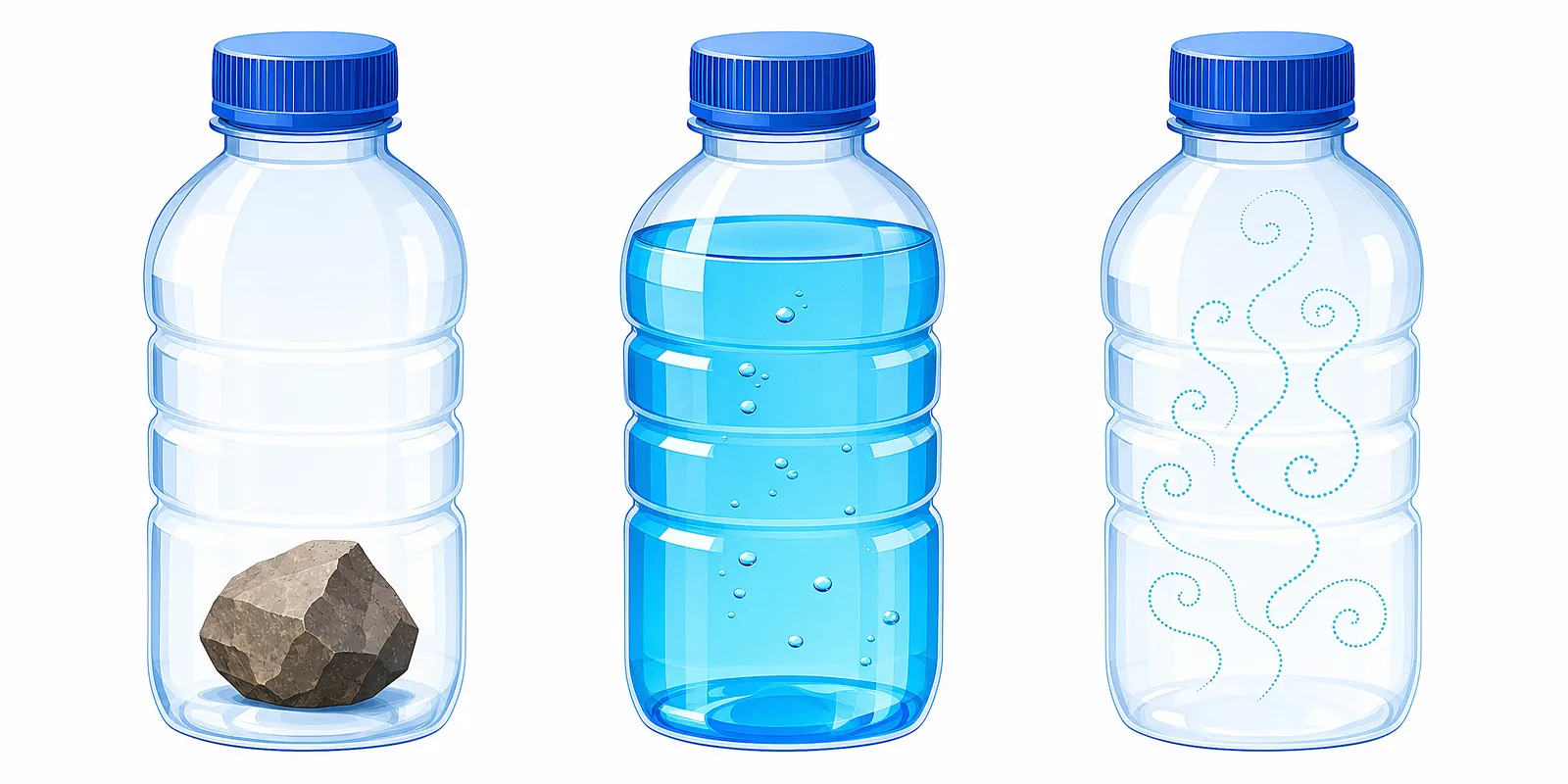
Chapter opener asking what all the stuff around us is really made of.
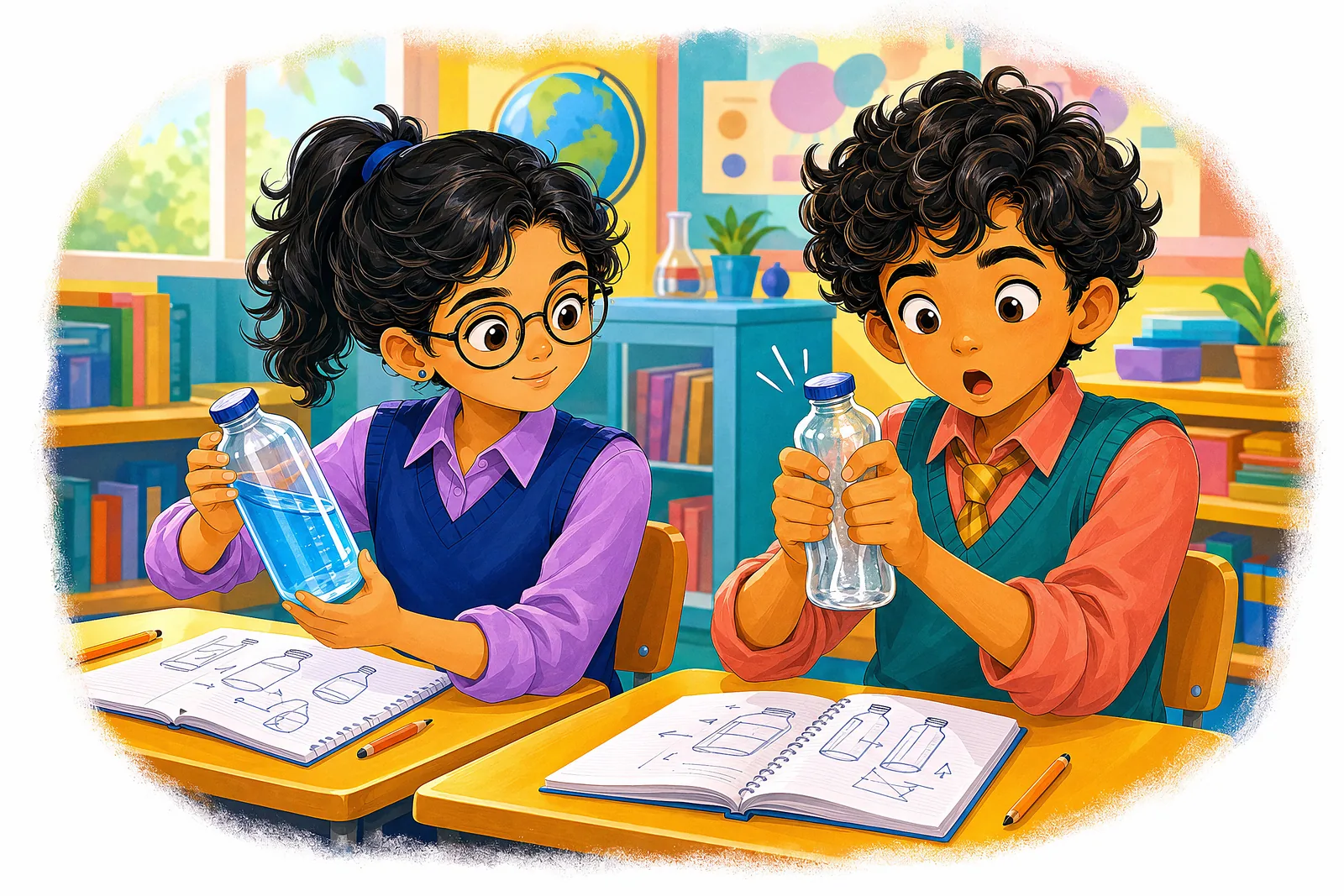
A classroom scene beginning the exploration of matter.
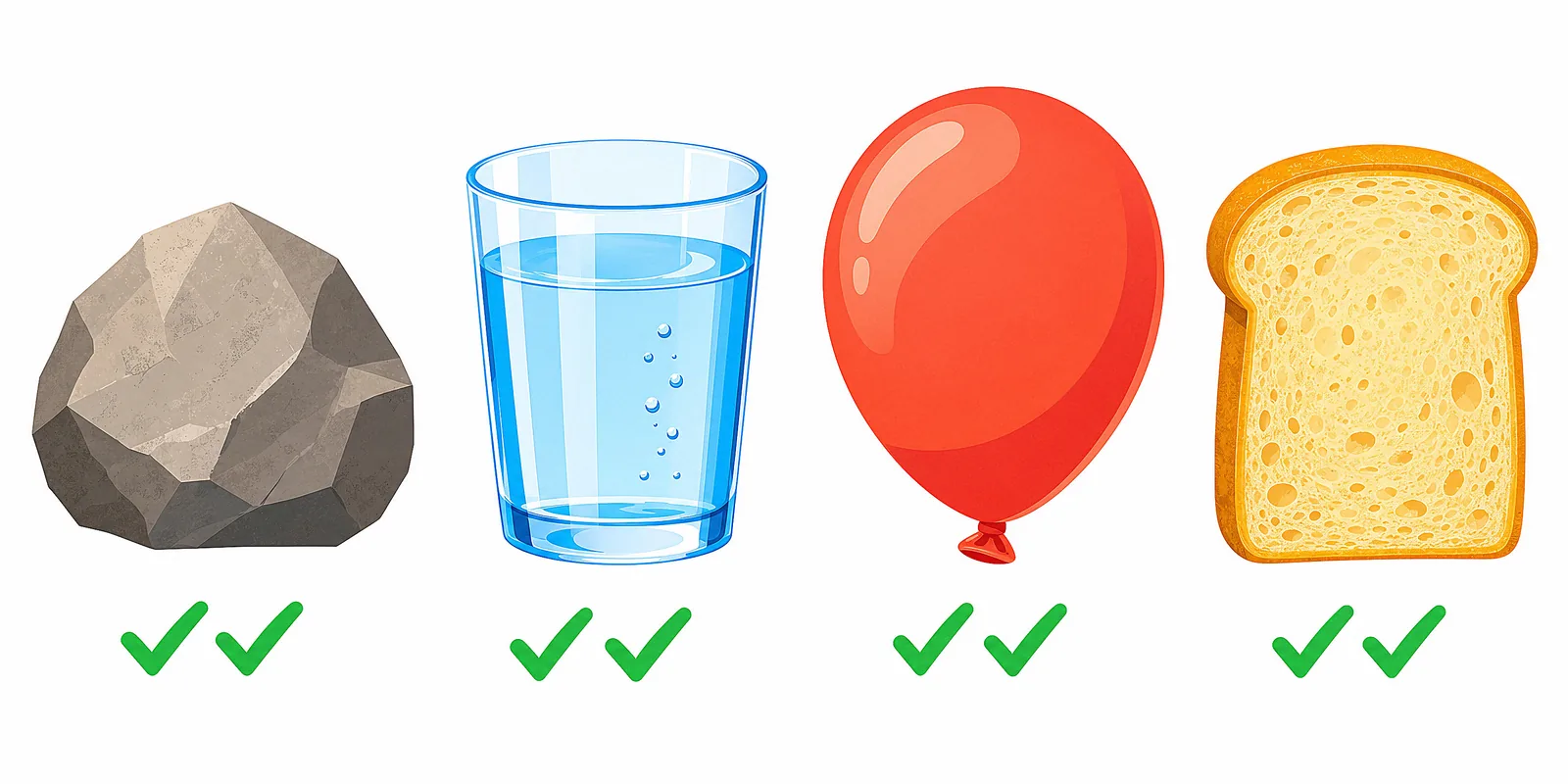
A simple test to check whether something is matter — does it take up space and have weight?
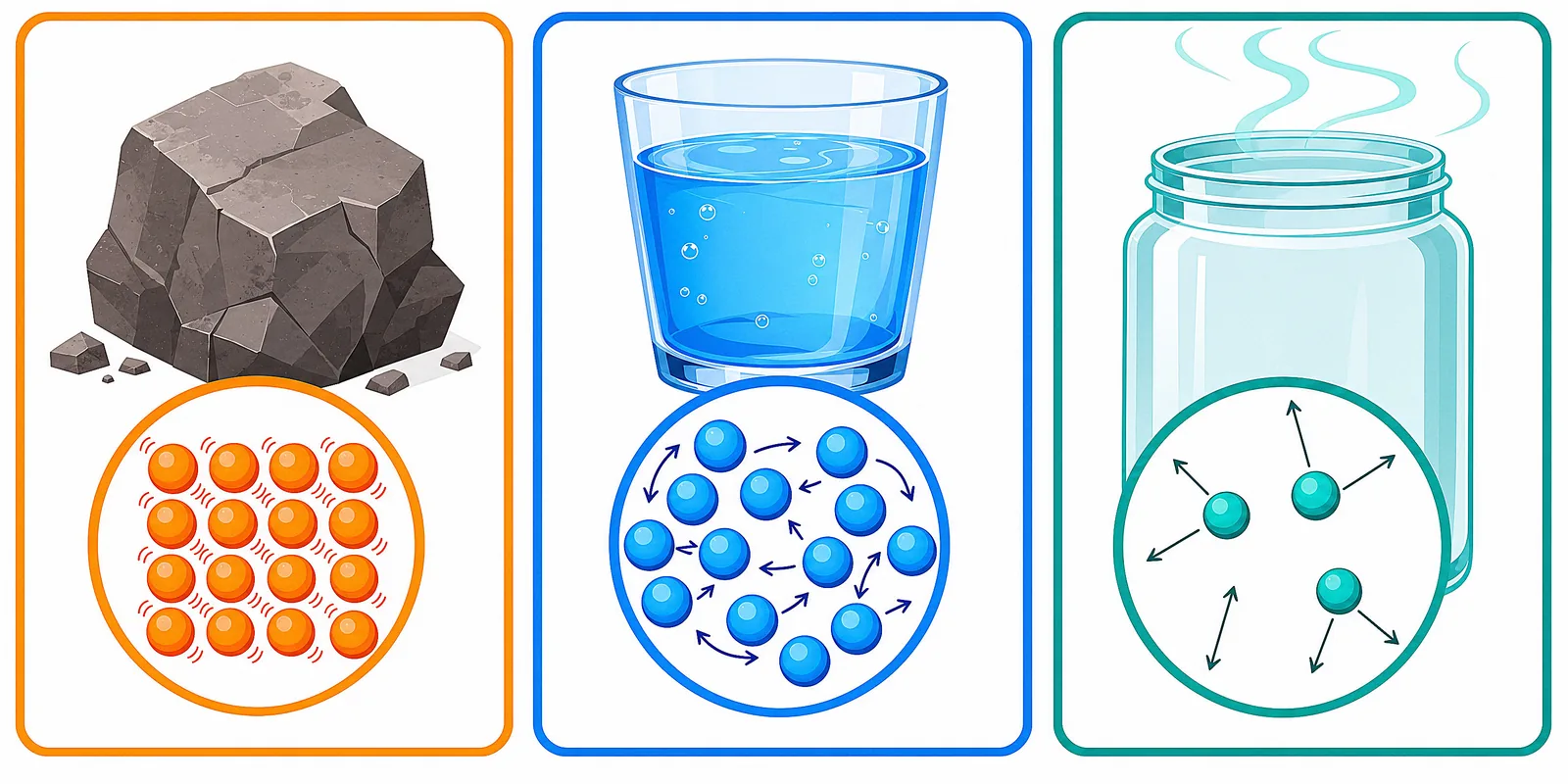
The three states of matter — solid, liquid and gas — shown side by side.
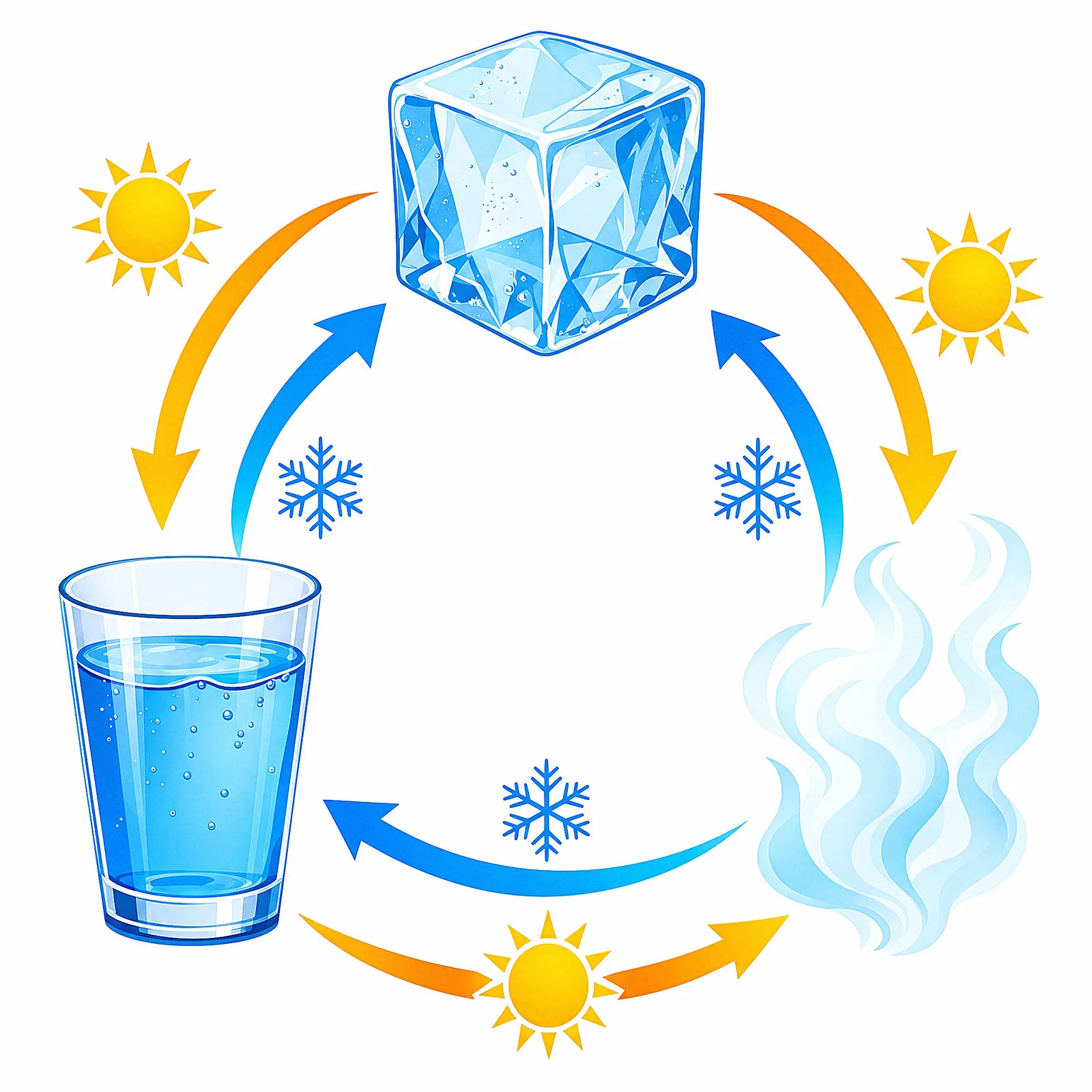
A wheel showing how matter changes from one state to another with heating and cooling.
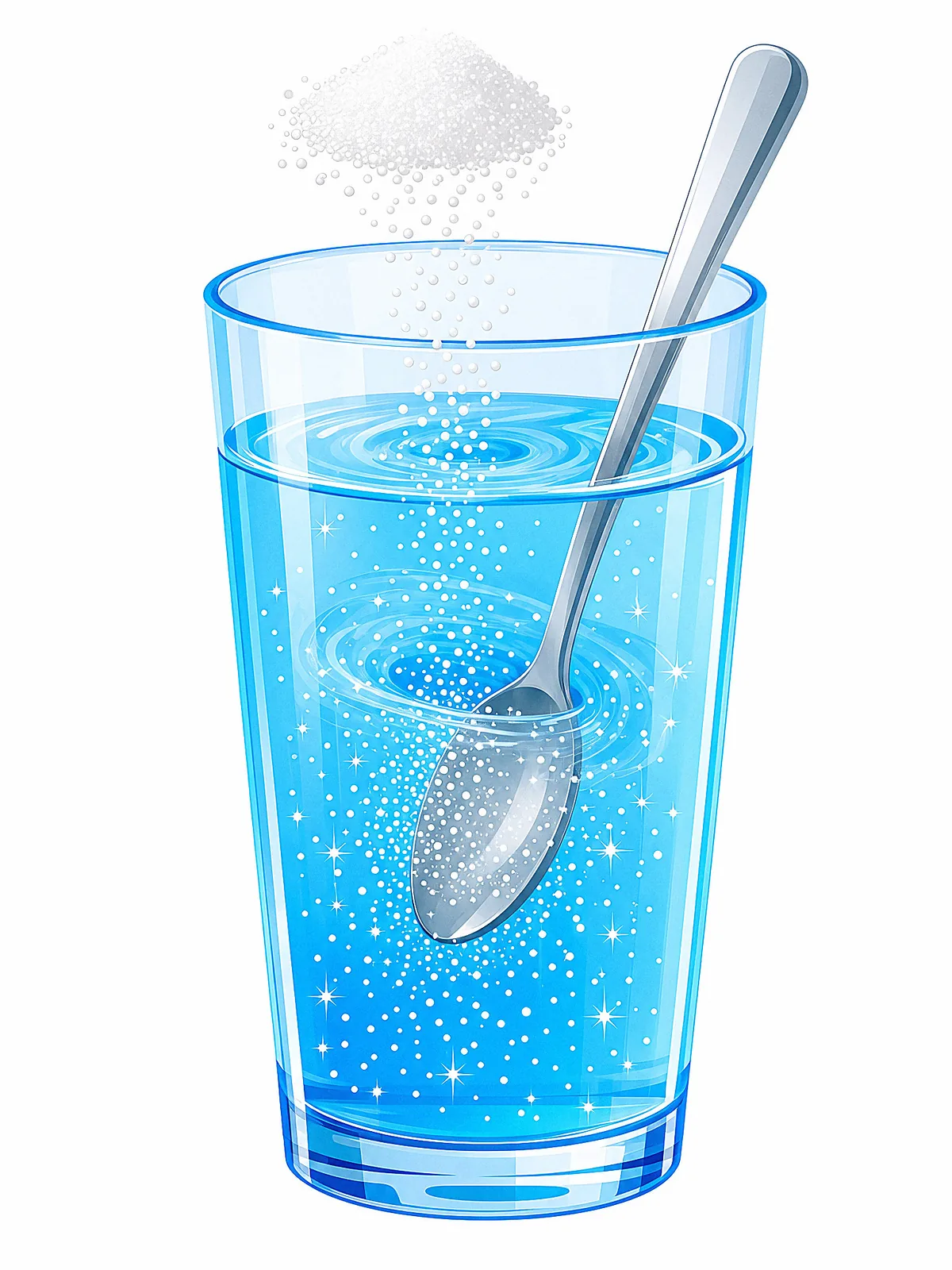
How a solid dissolves into a liquid to form a solution.

Chapter 10 — How Do We Stay Healthy?
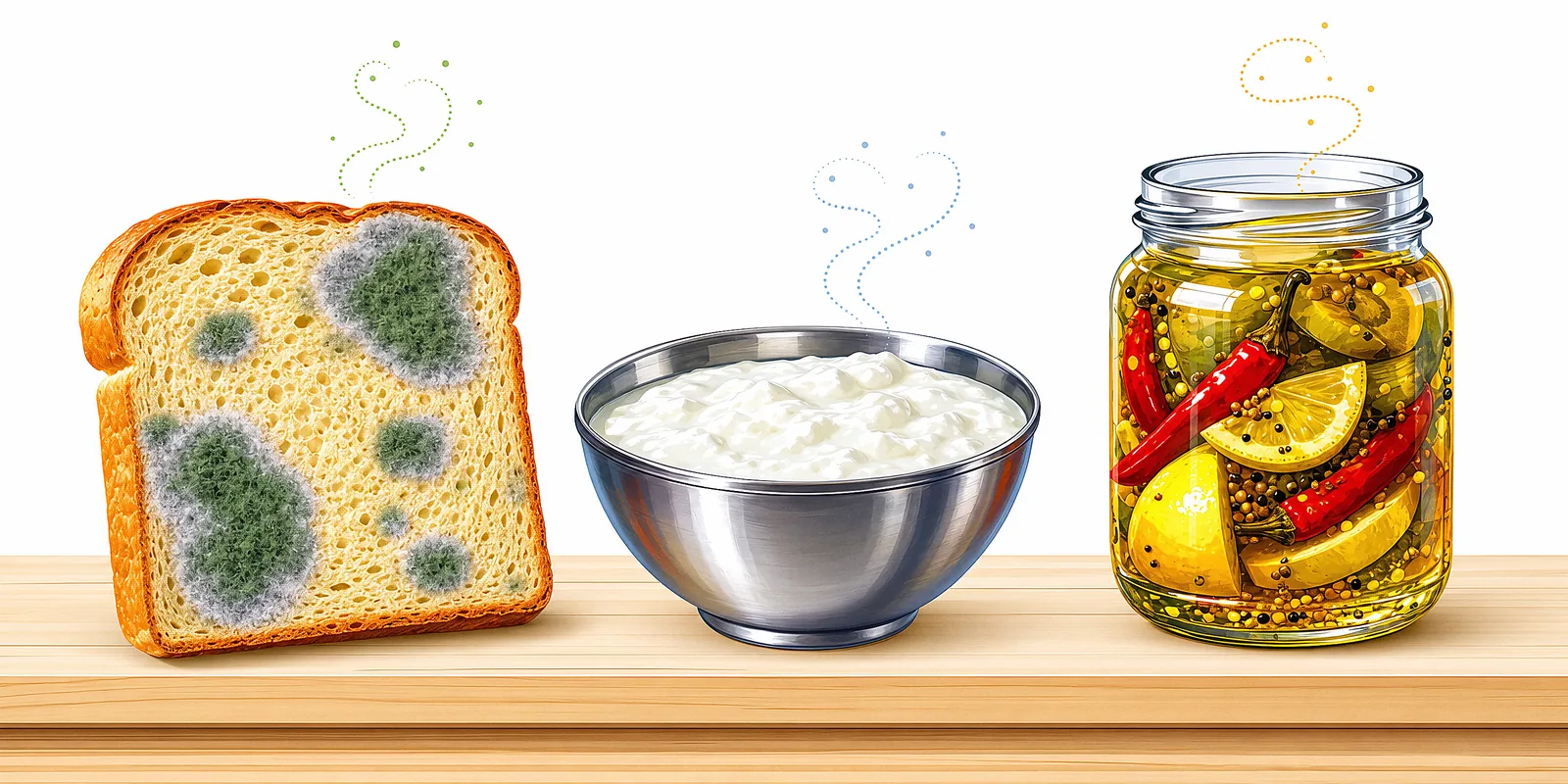
Chapter opener on staying healthy and keeping germs away.
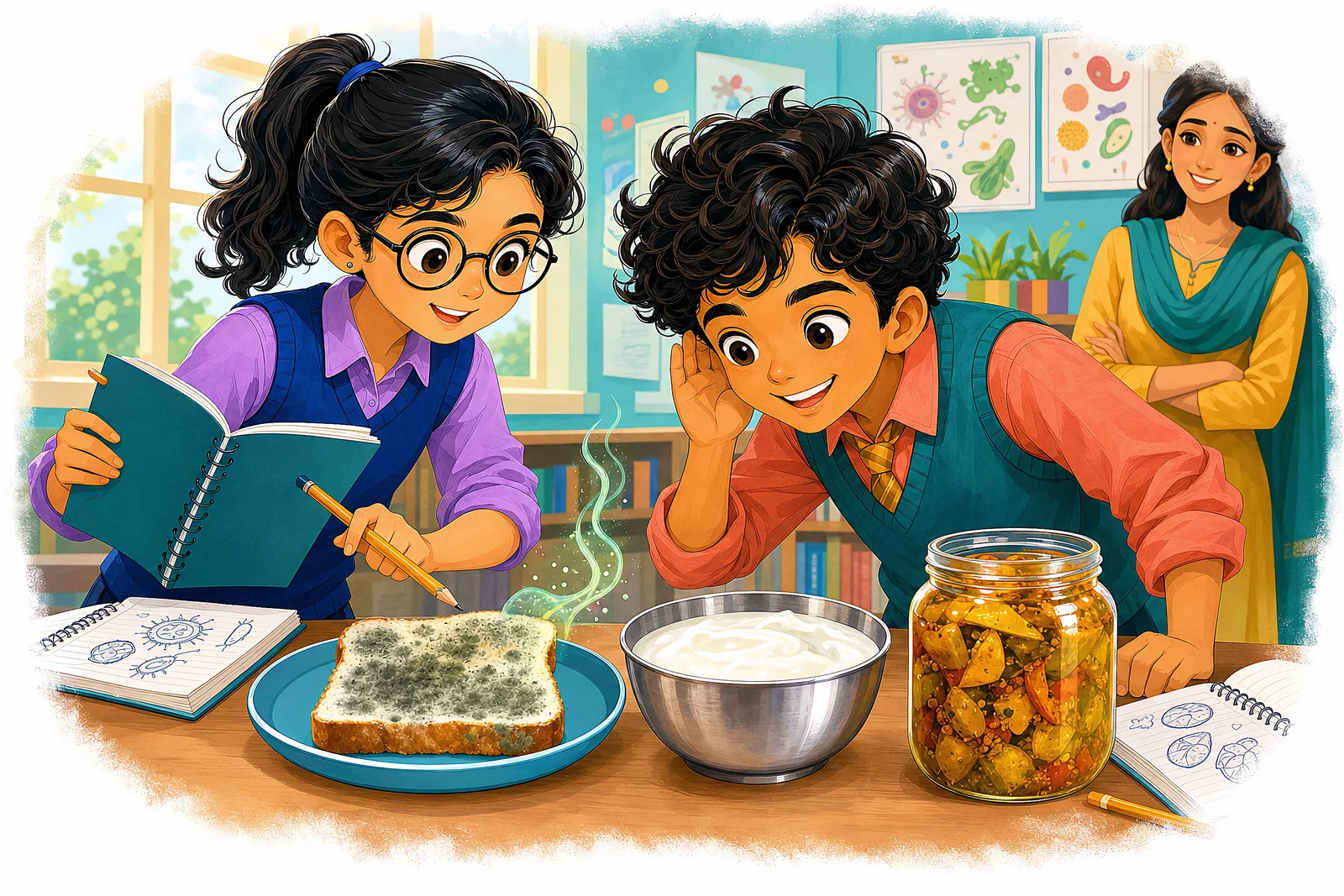
A classroom scene opening the discussion on health and hygiene.
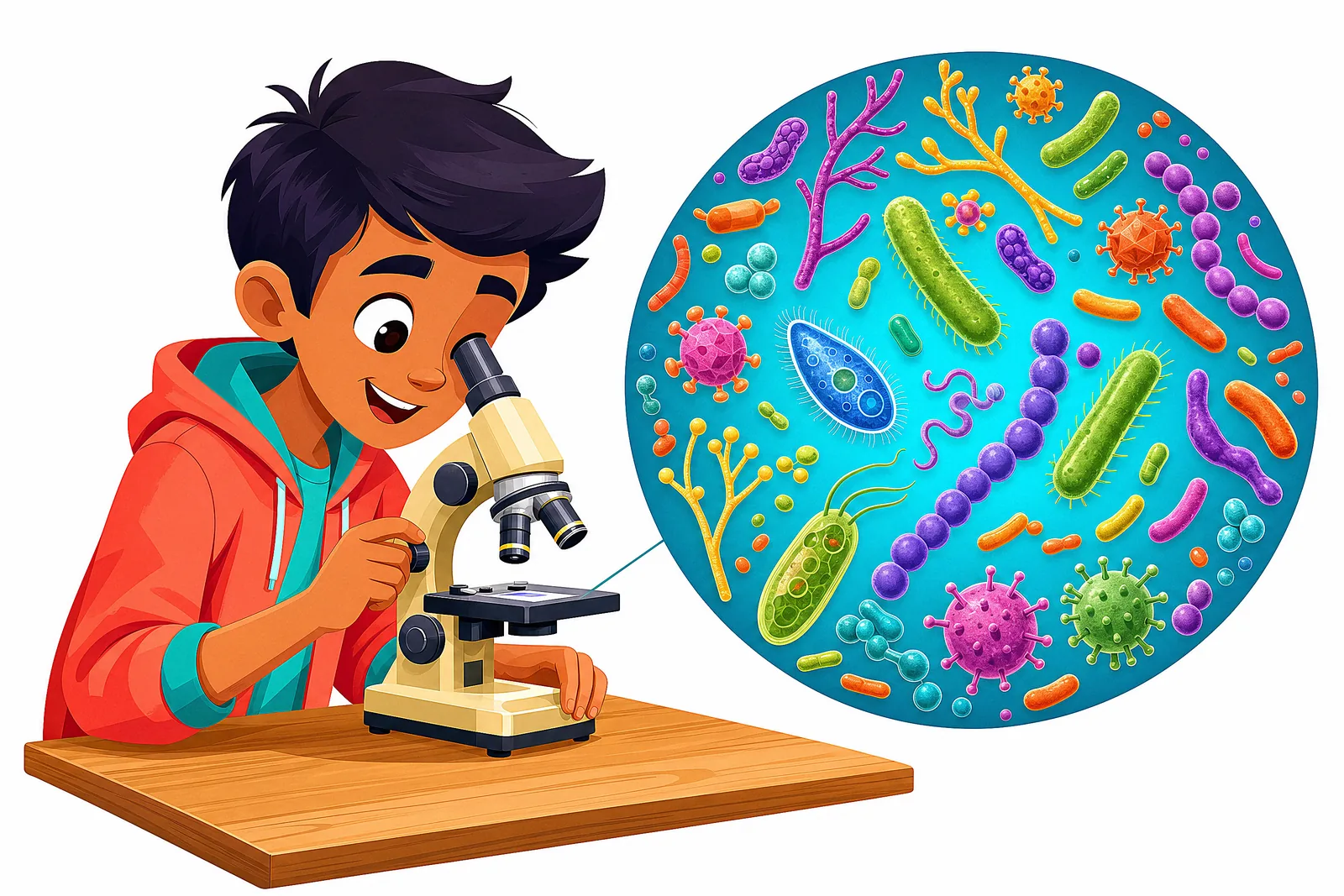
Looking through a microscope to reveal the tiny germs we cannot see with the eye.
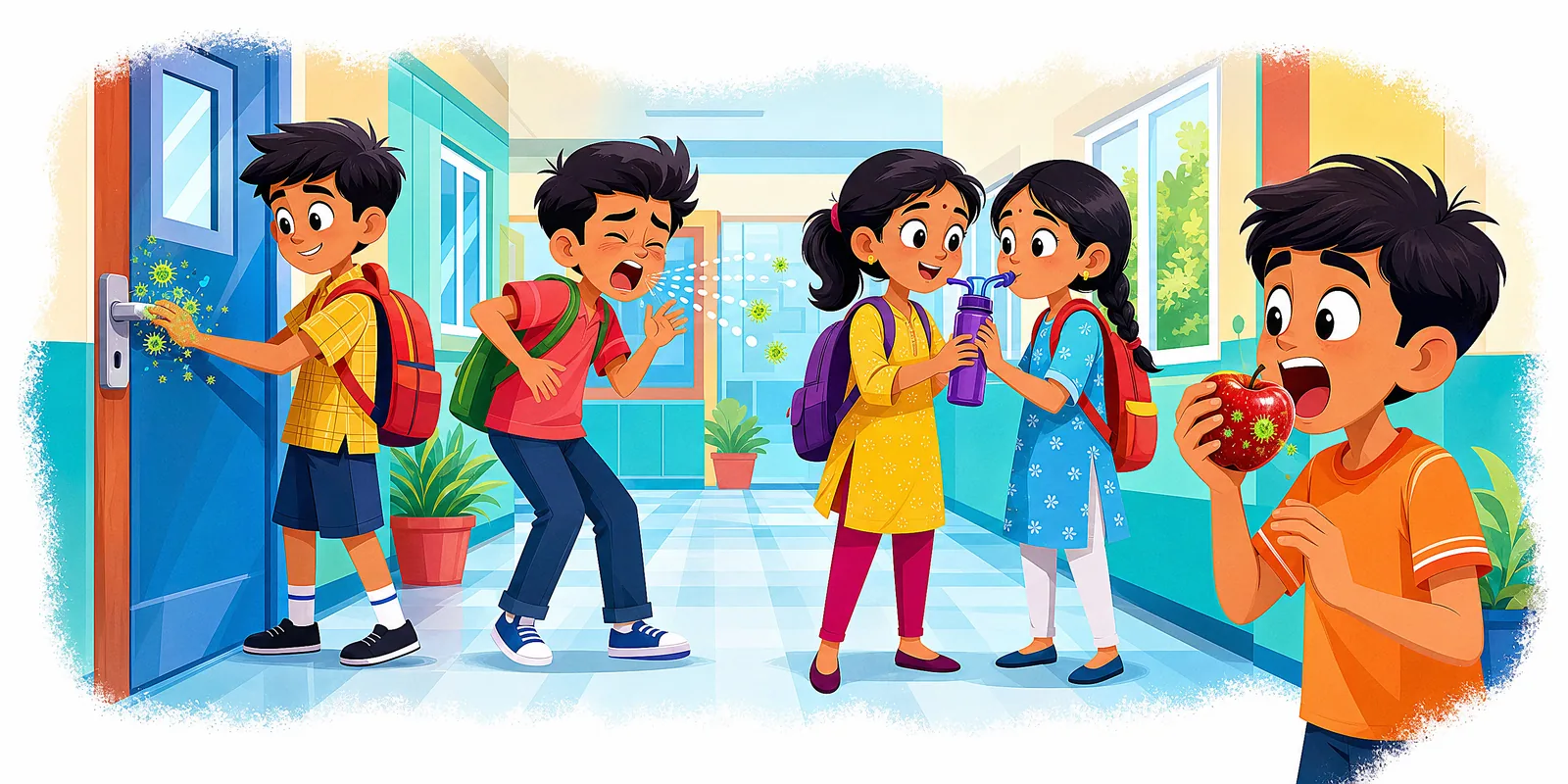
How germs spread from person to person — and how simple habits stop them.
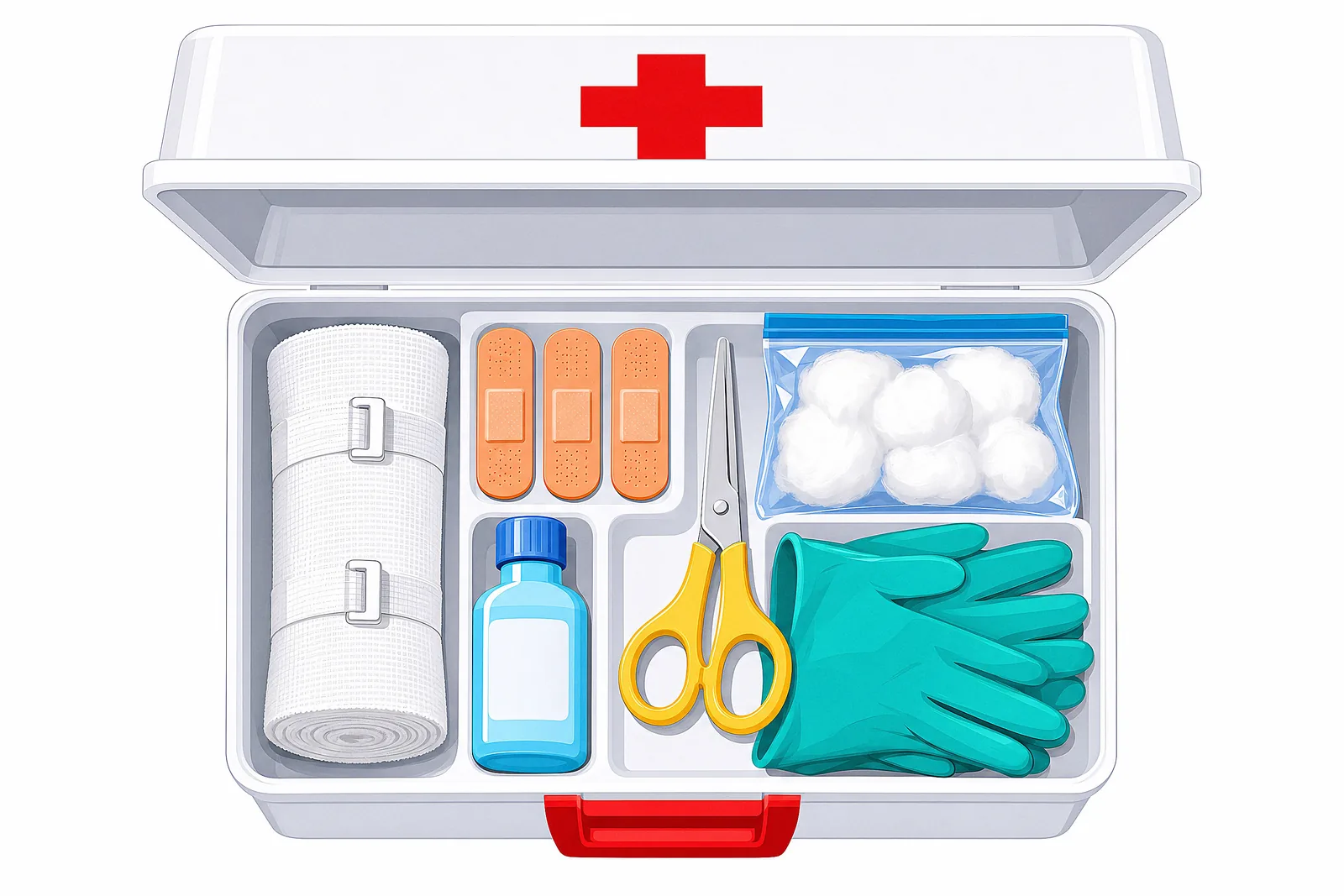
The contents of a first-aid kit, ready for small injuries.
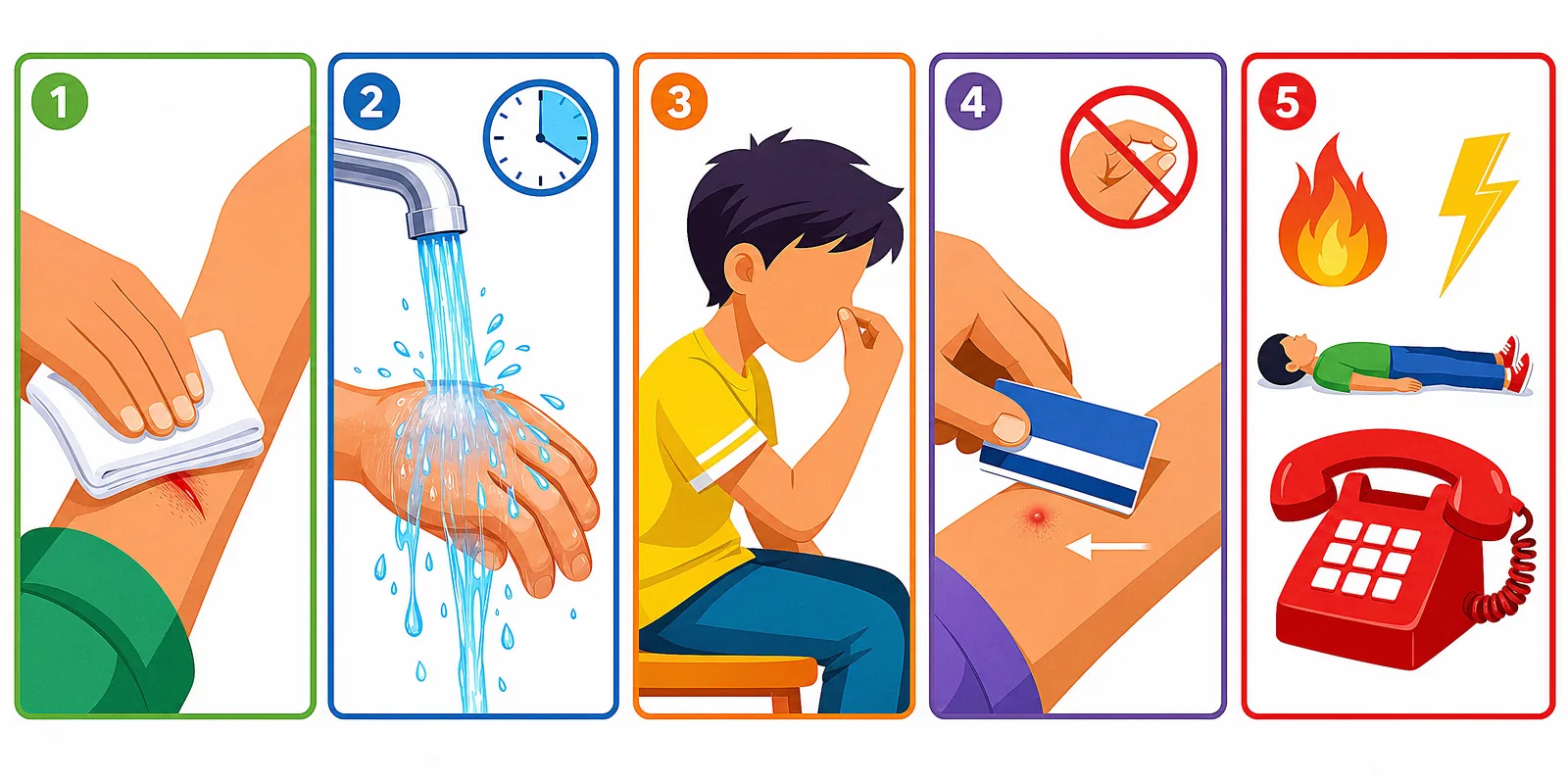
A step-by-step chart for handling common minor injuries safely.

Chapter 11 — What Happens to Food Inside Us?
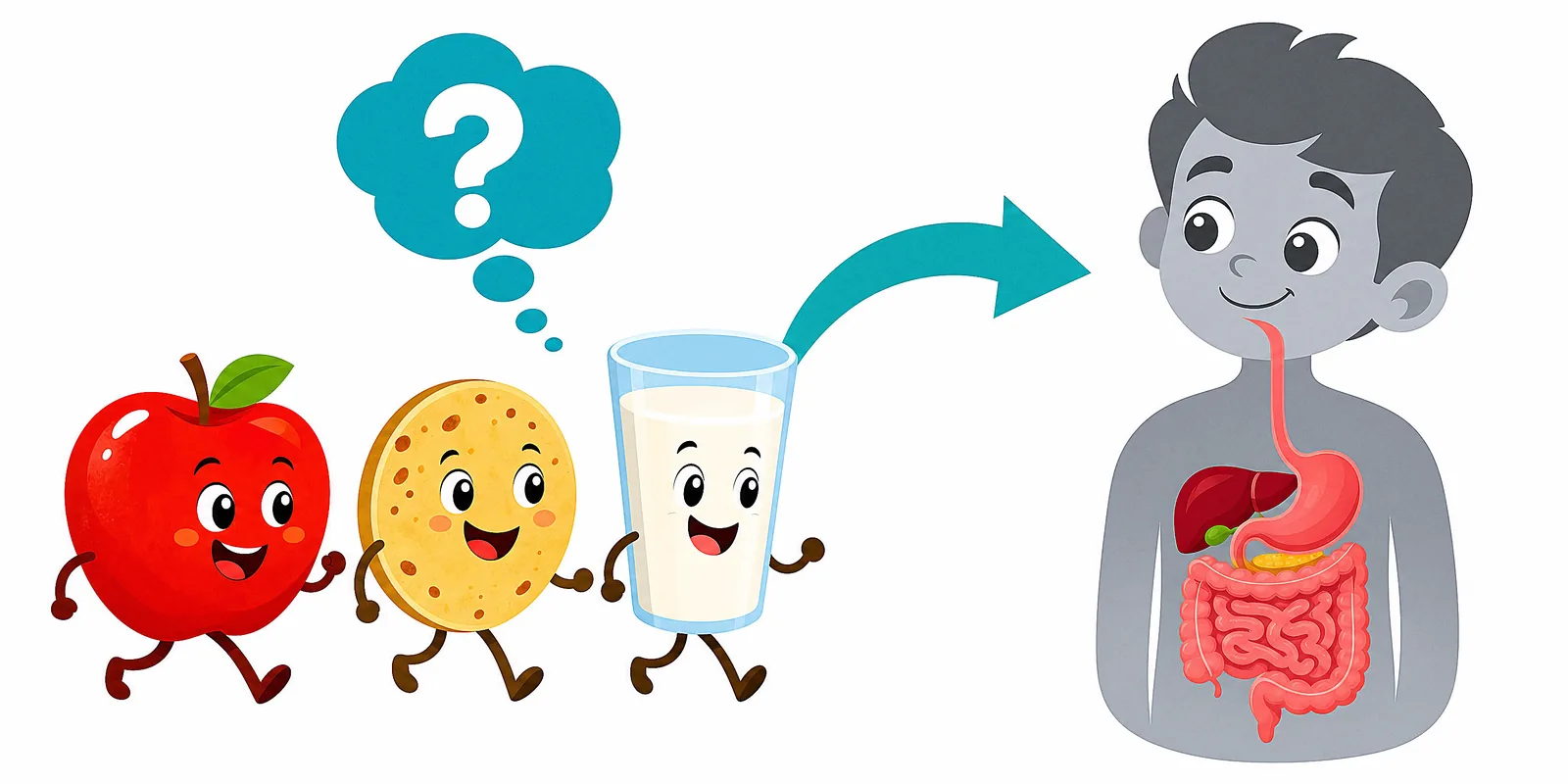
Chapter opener: following the journey of food from the first bite onwards.
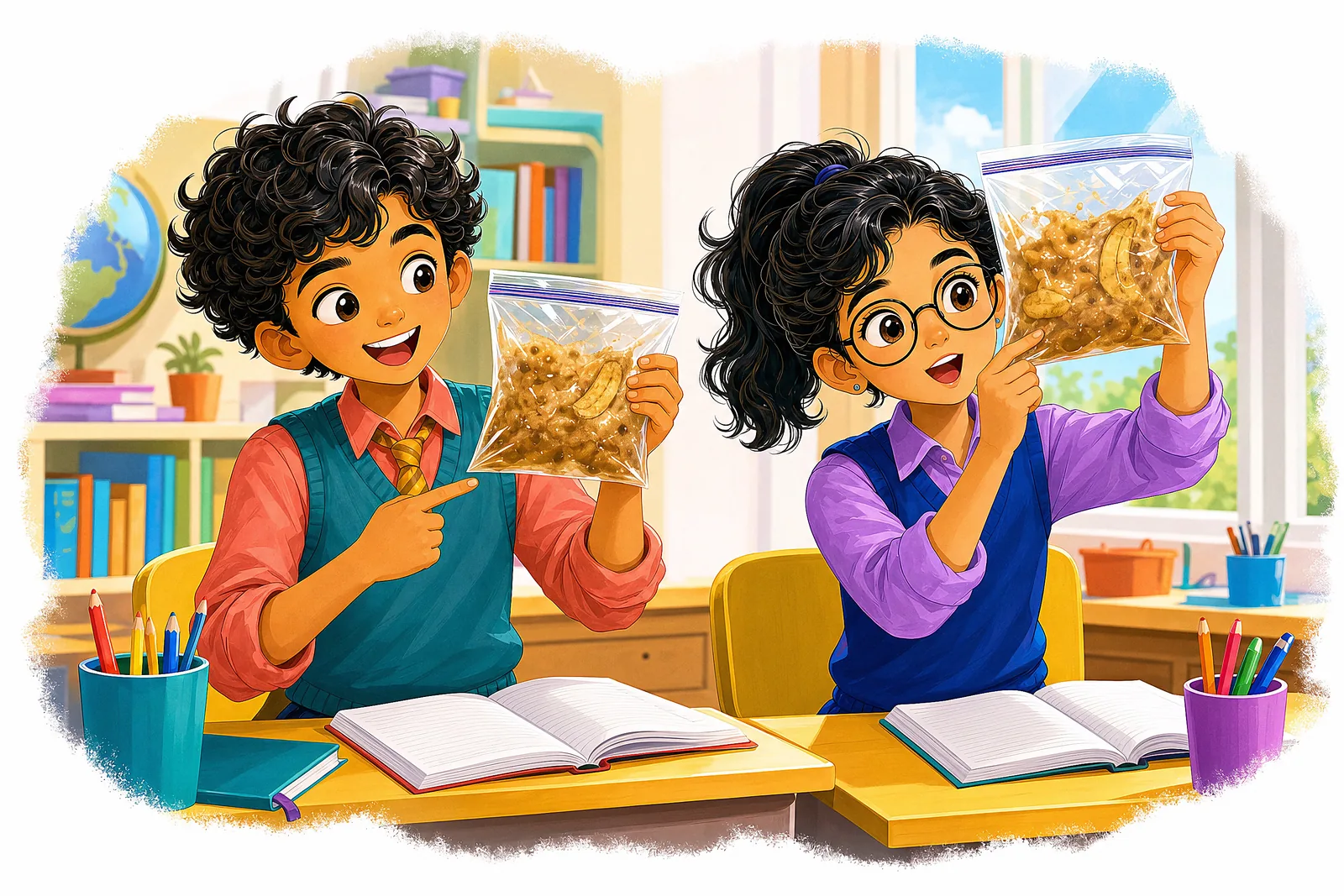
A simple bag-and-banana demonstration standing in for how the stomach mashes food.
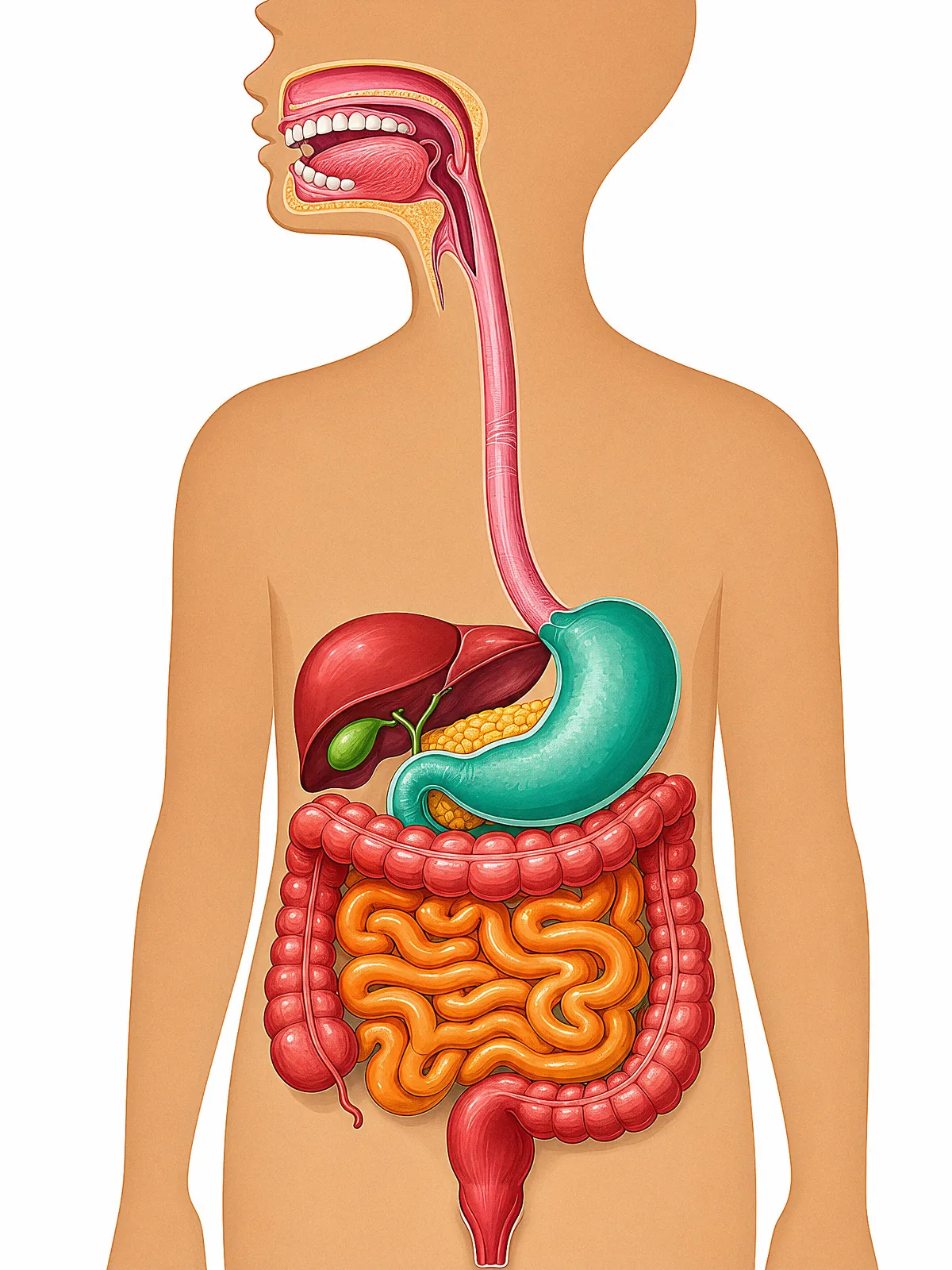
A clear map of the digestive system — the whole path food travels through the body.
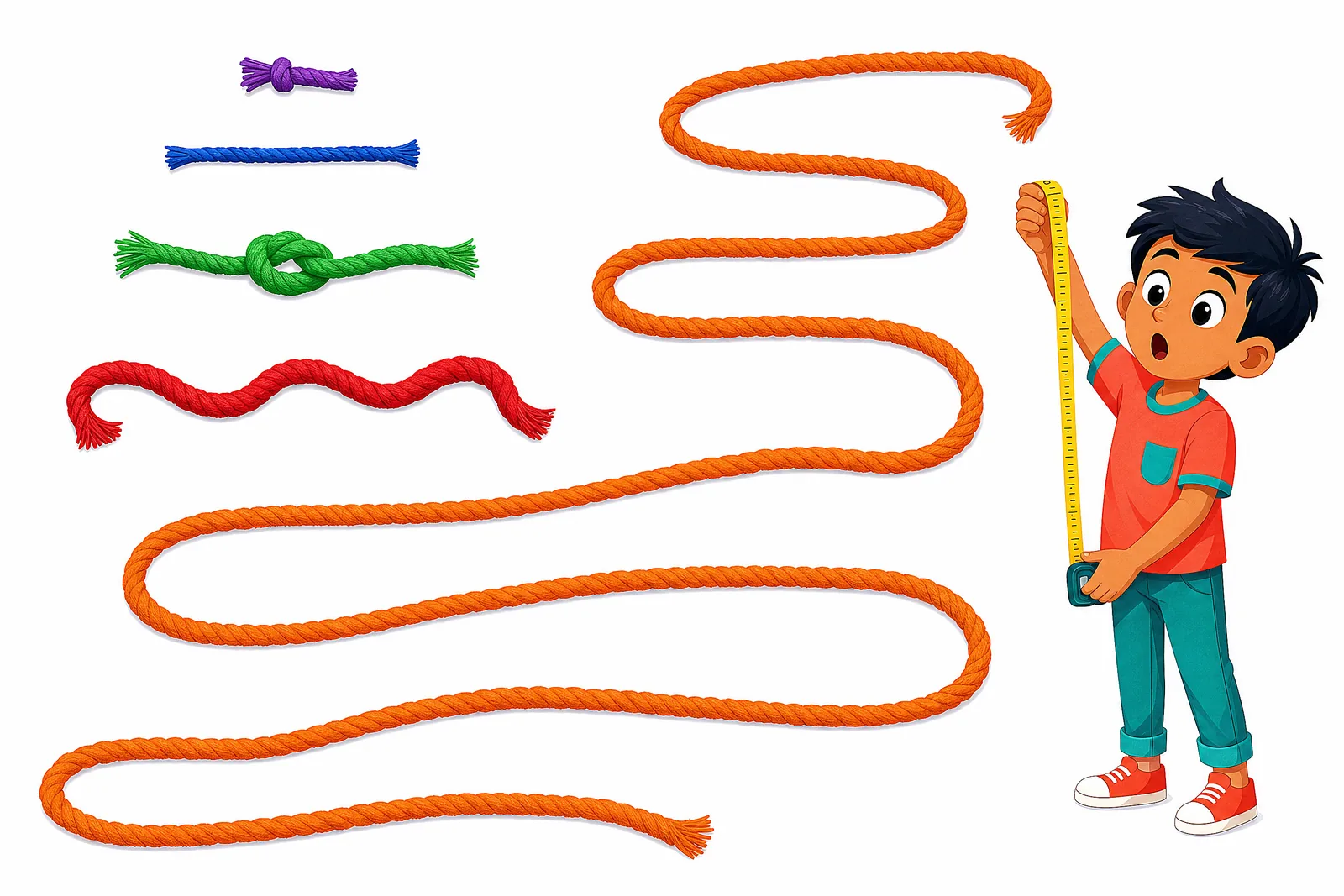
A long piece of yarn used to show just how long the intestines really are.
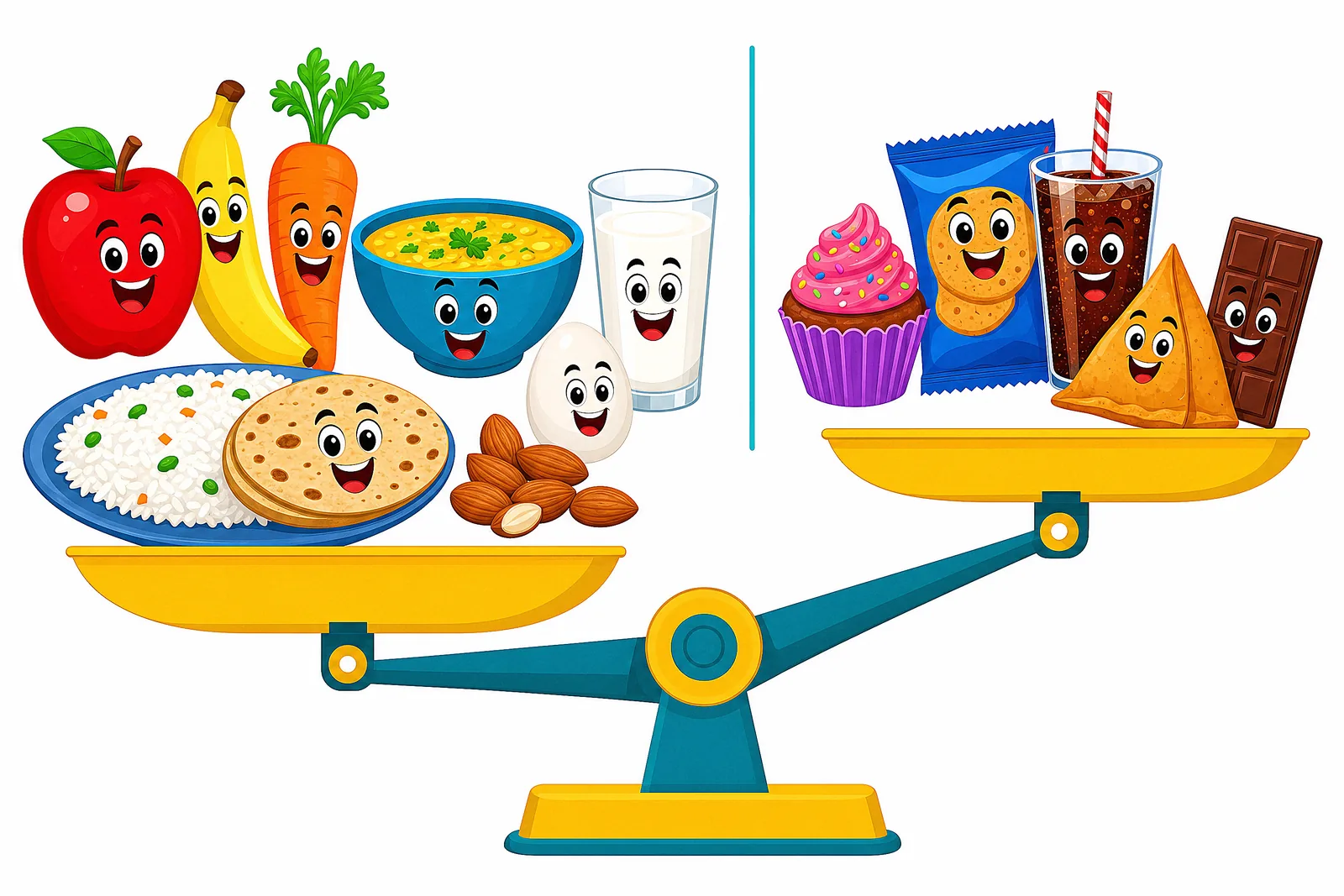
A spread of everyday foods that fuel the body.
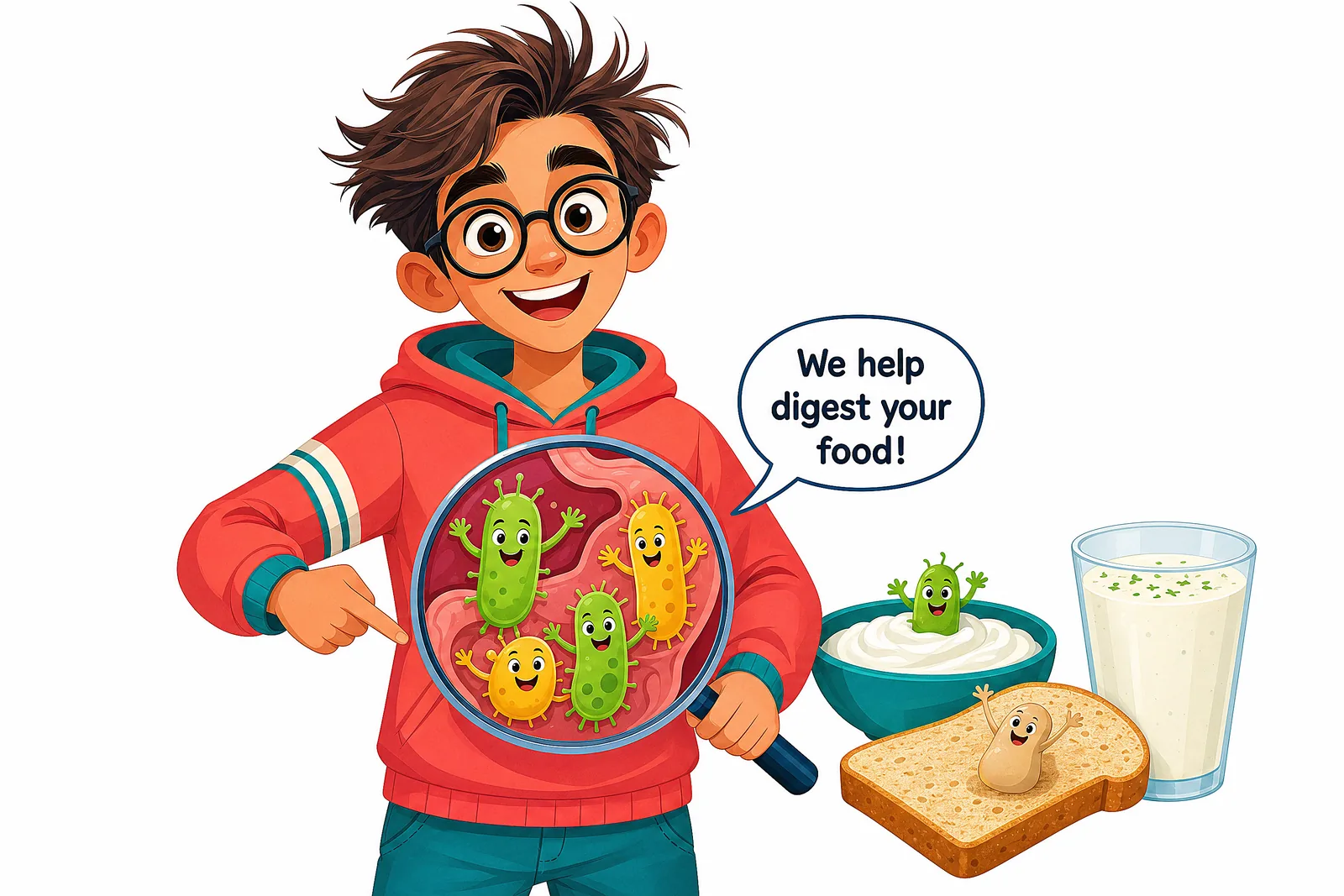
The friendly microbes in our gut that help break food down and keep us healthy.
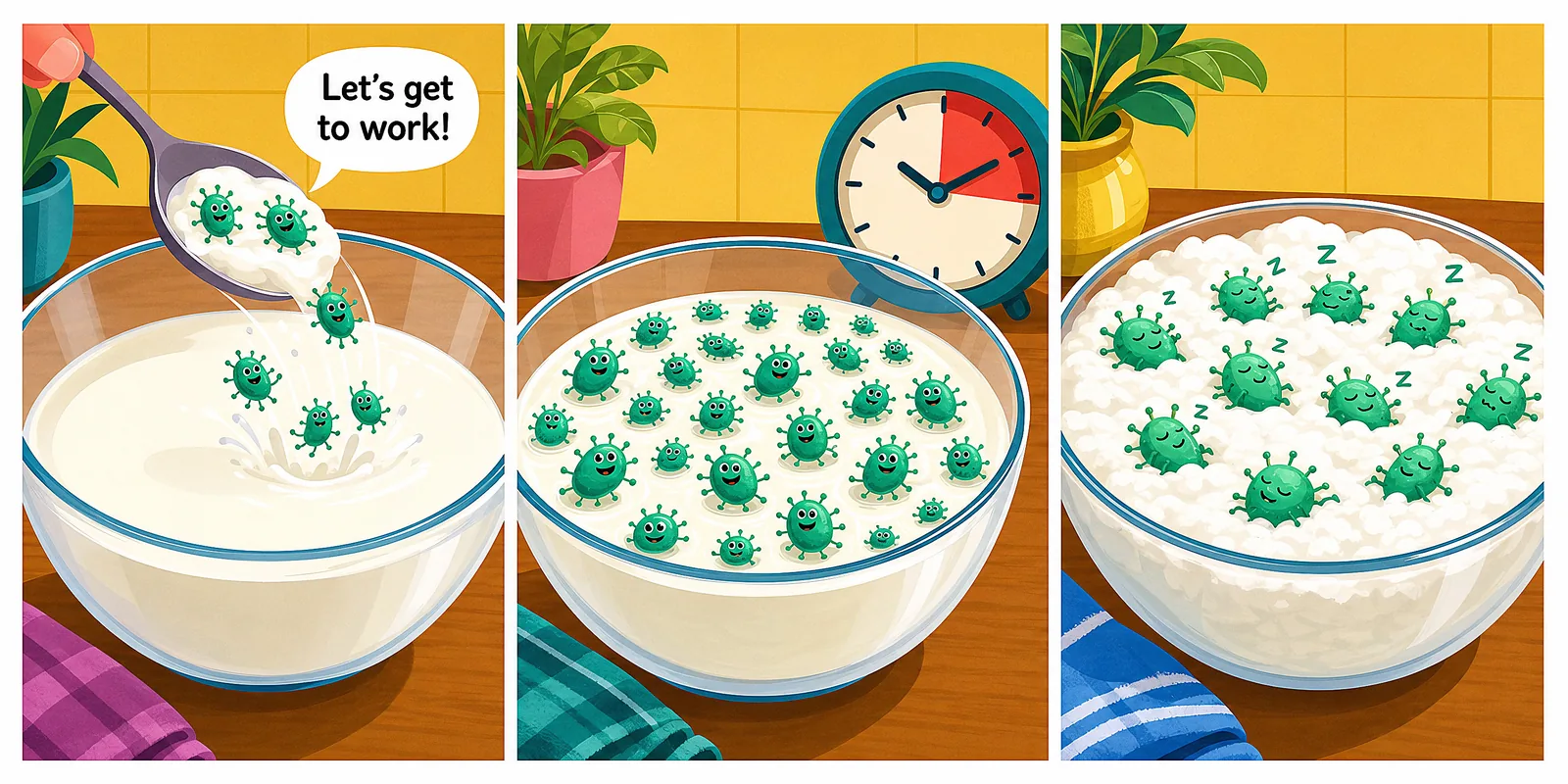
Curd as an everyday example of good bacteria at work.

Chapter 12 — Why Do Our Teeth Matter?
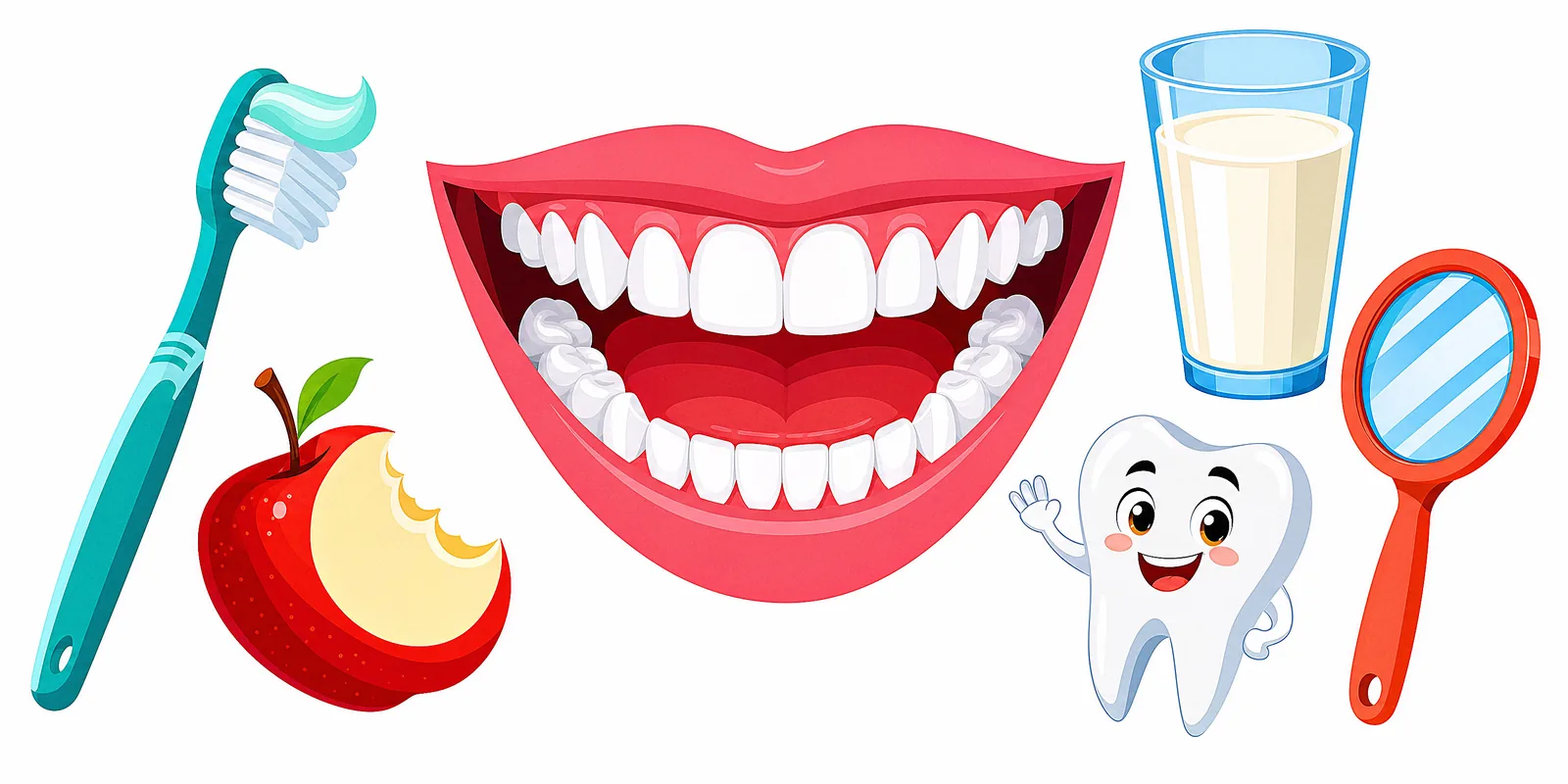
Chapter opener introducing teeth — why these little tools in our mouth matter so much.
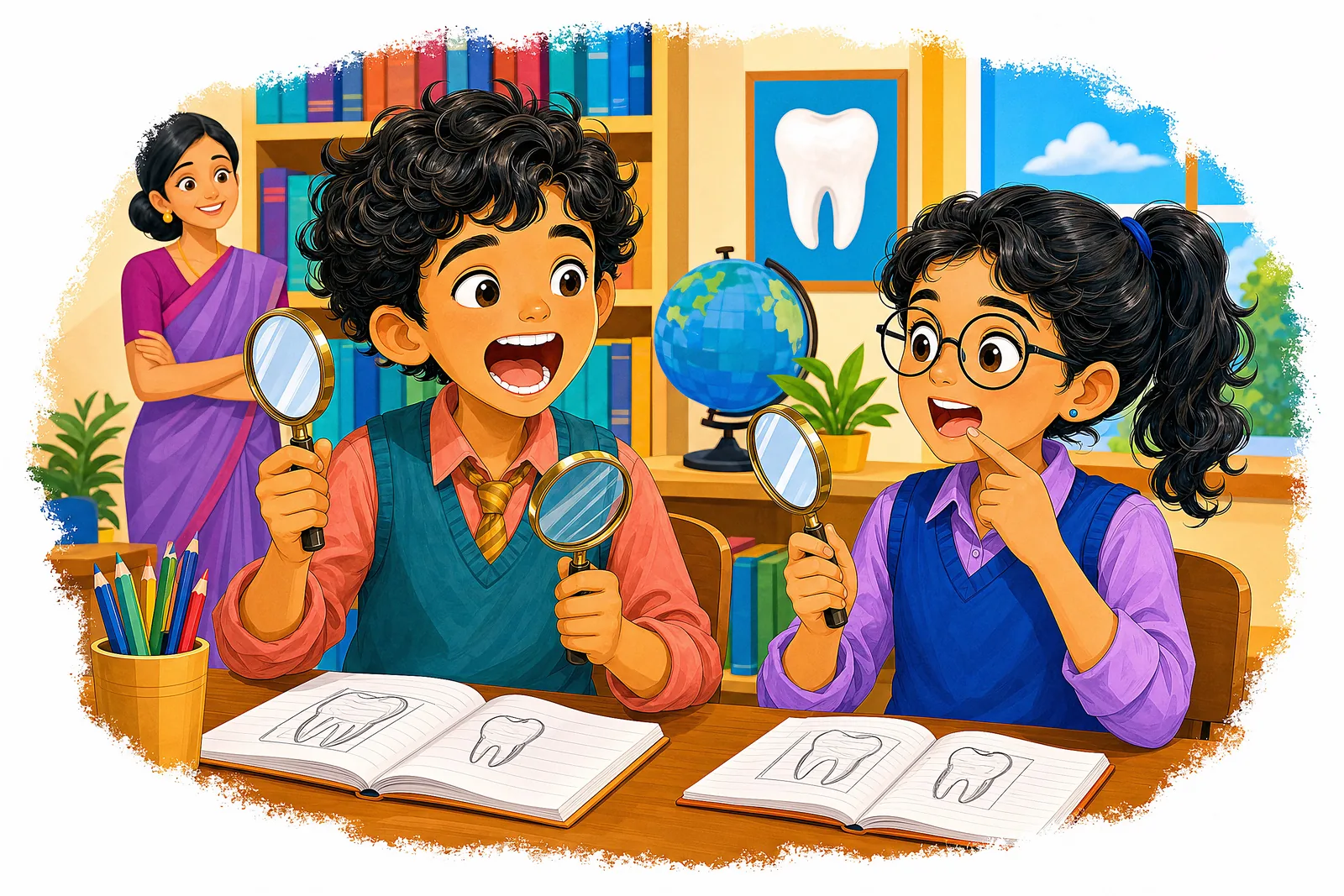
A classroom moment where the lesson about teeth begins with the students.
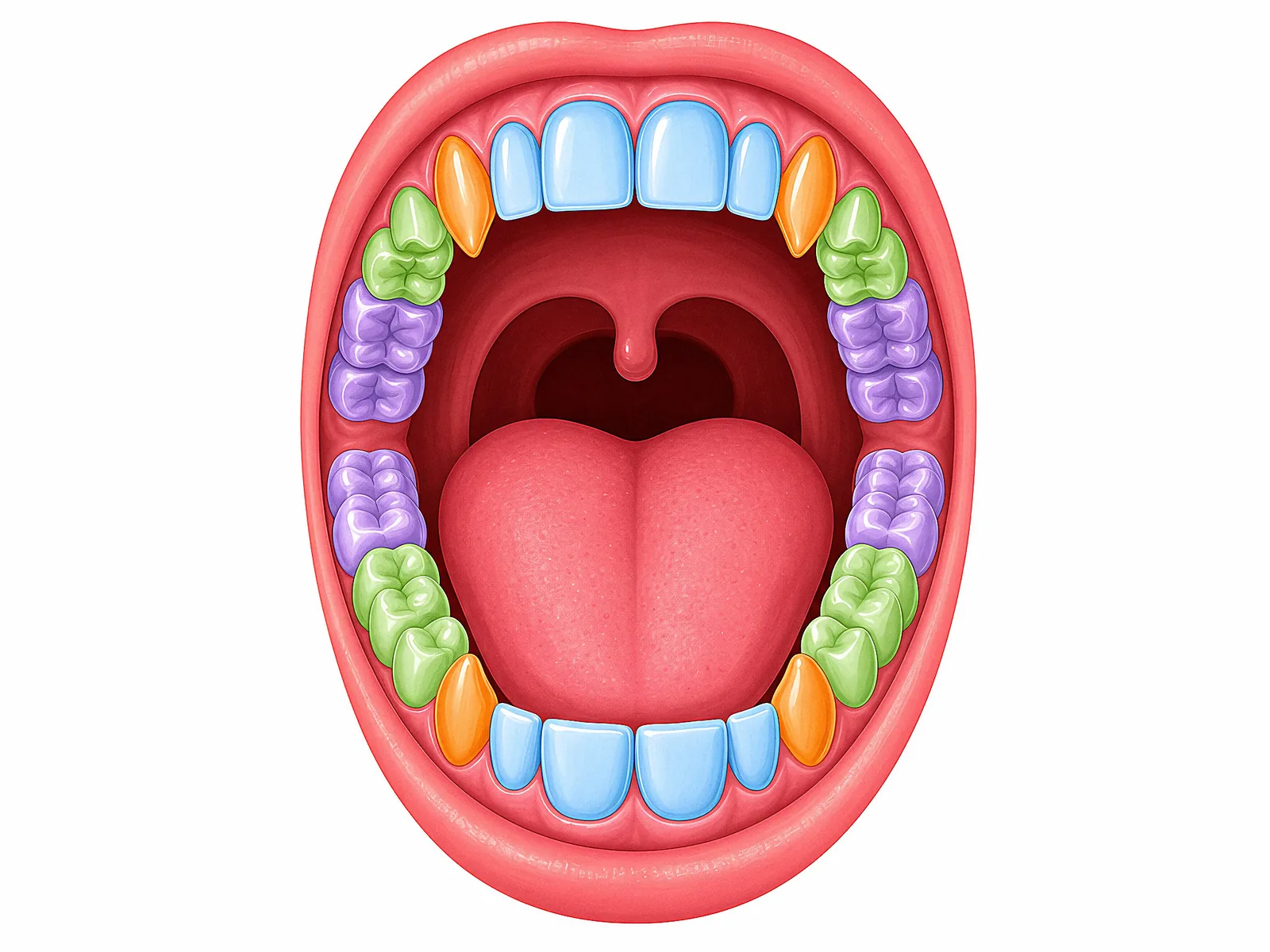
The different types of teeth — sharp cutters, pointed tearers and flat grinders — each with its own job.
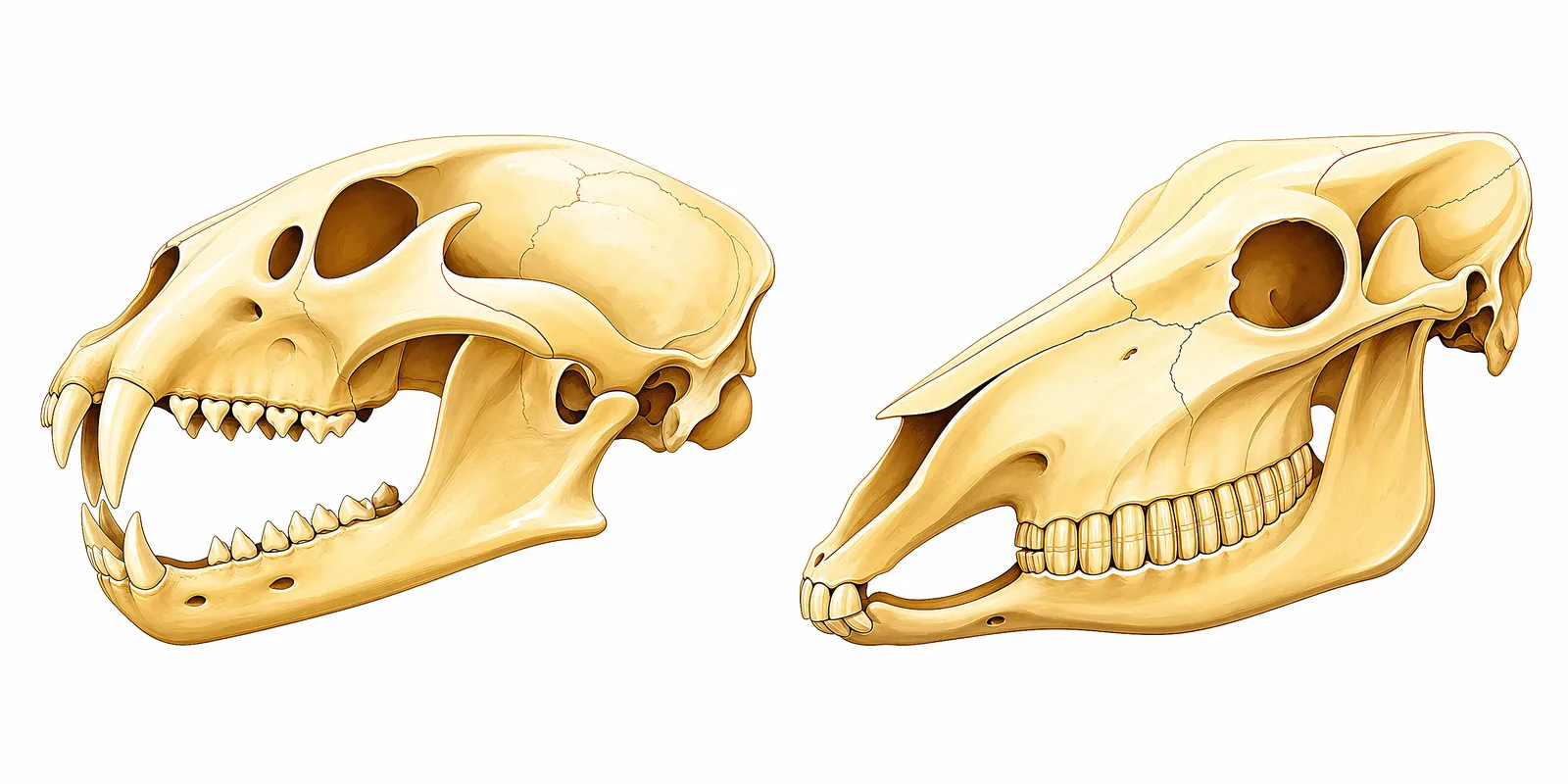
Comparing animal skulls to show how an animal's teeth reveal what it eats.
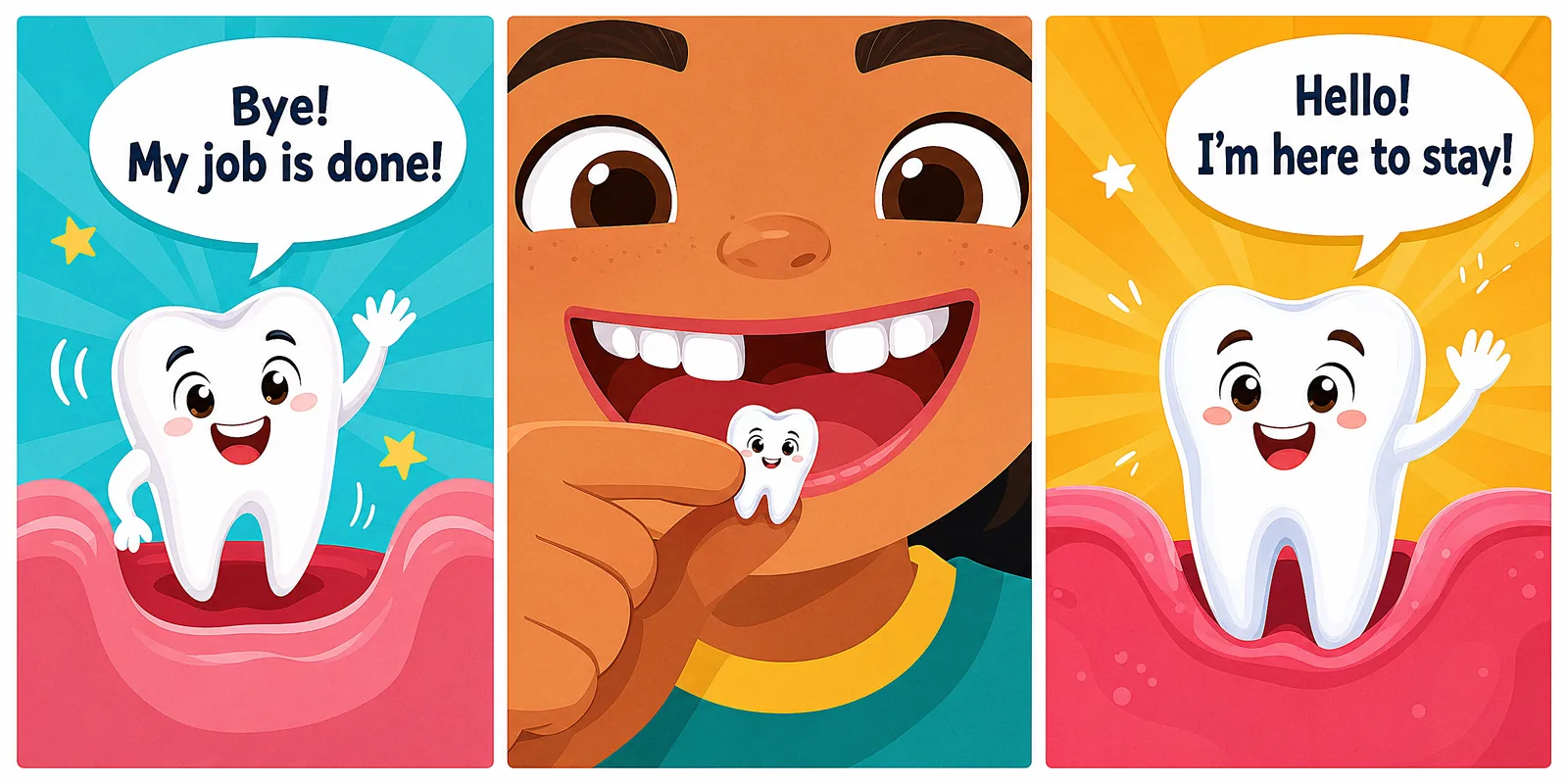
A short comic strip that teaches tooth care through a fun little story.
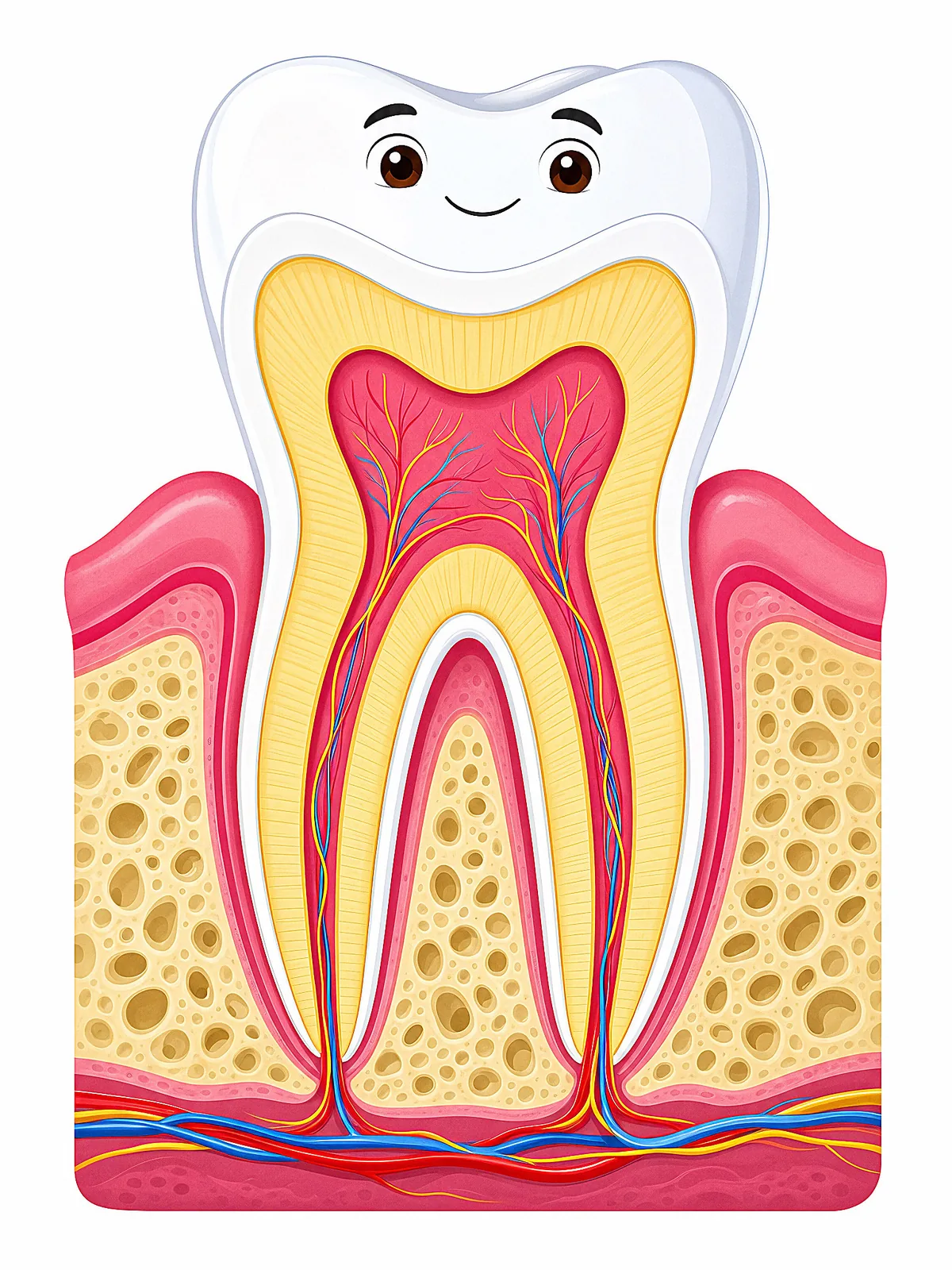
A cross-section showing what's inside a tooth — the hard outer layer and the soft living core.
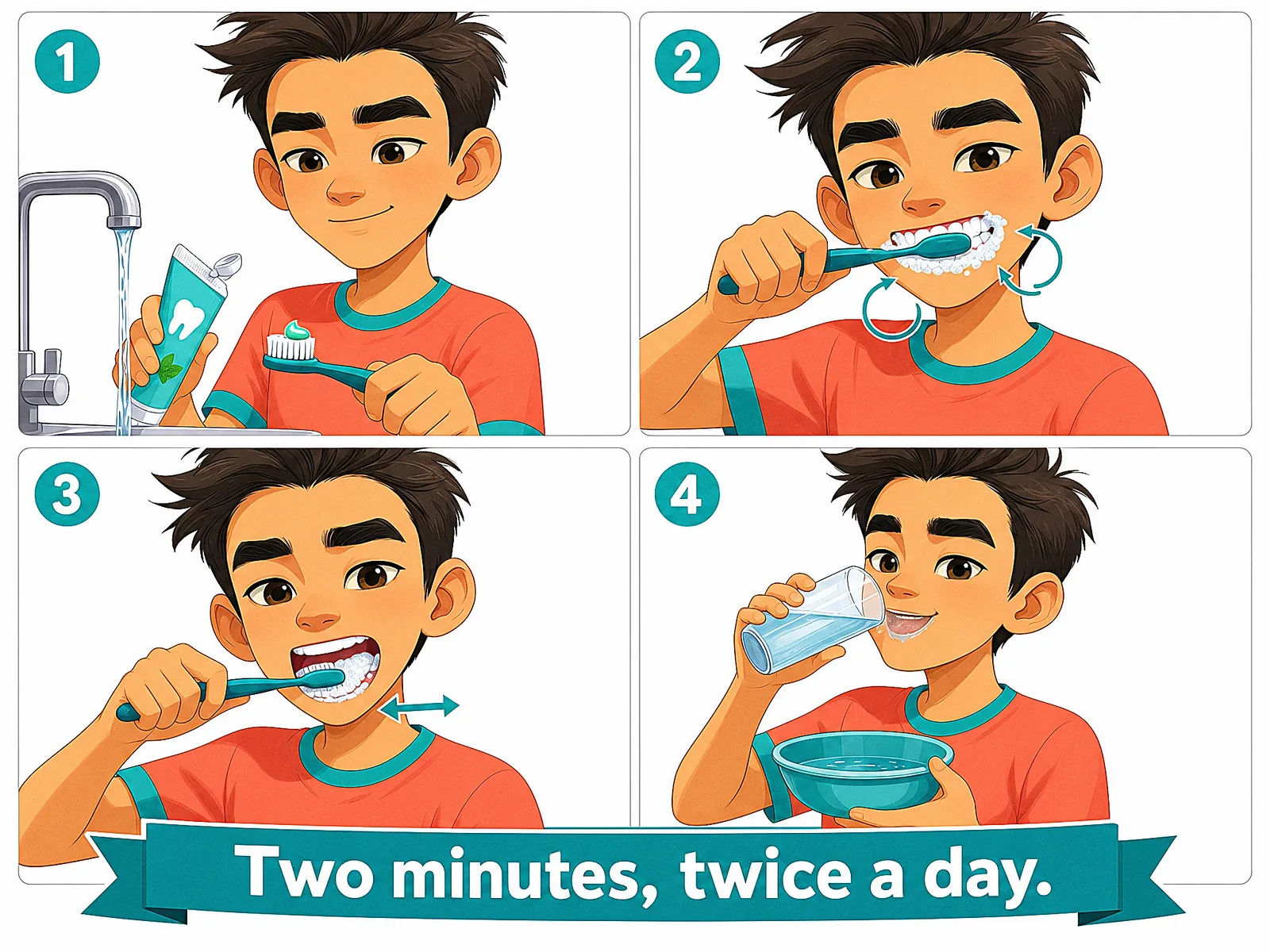
The right way to brush — keeping teeth clean and healthy every day.
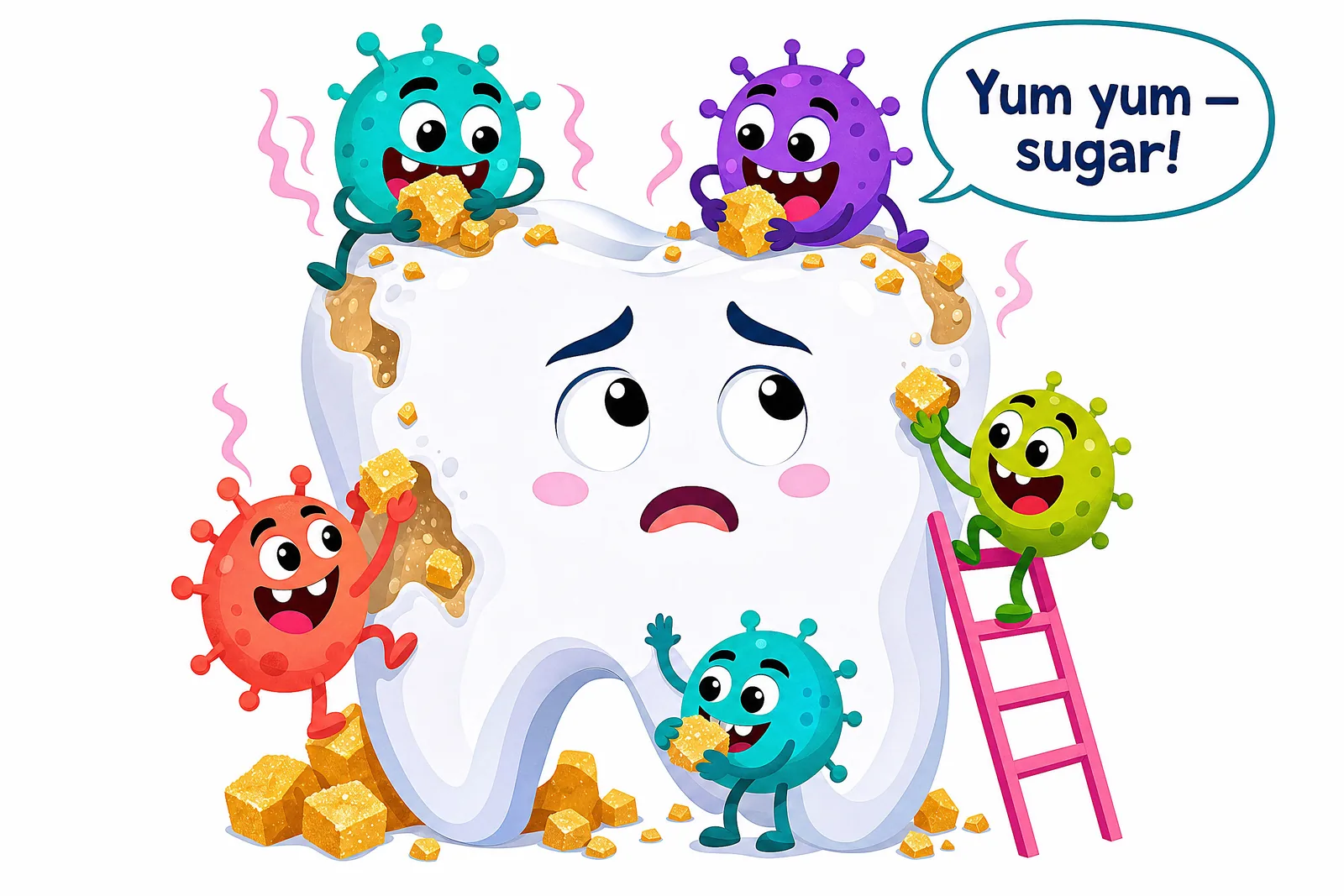
The tiny bacteria that attack teeth when sugar is left behind — the reason we brush.

Chapter 13 — How Do We Know What Is True?
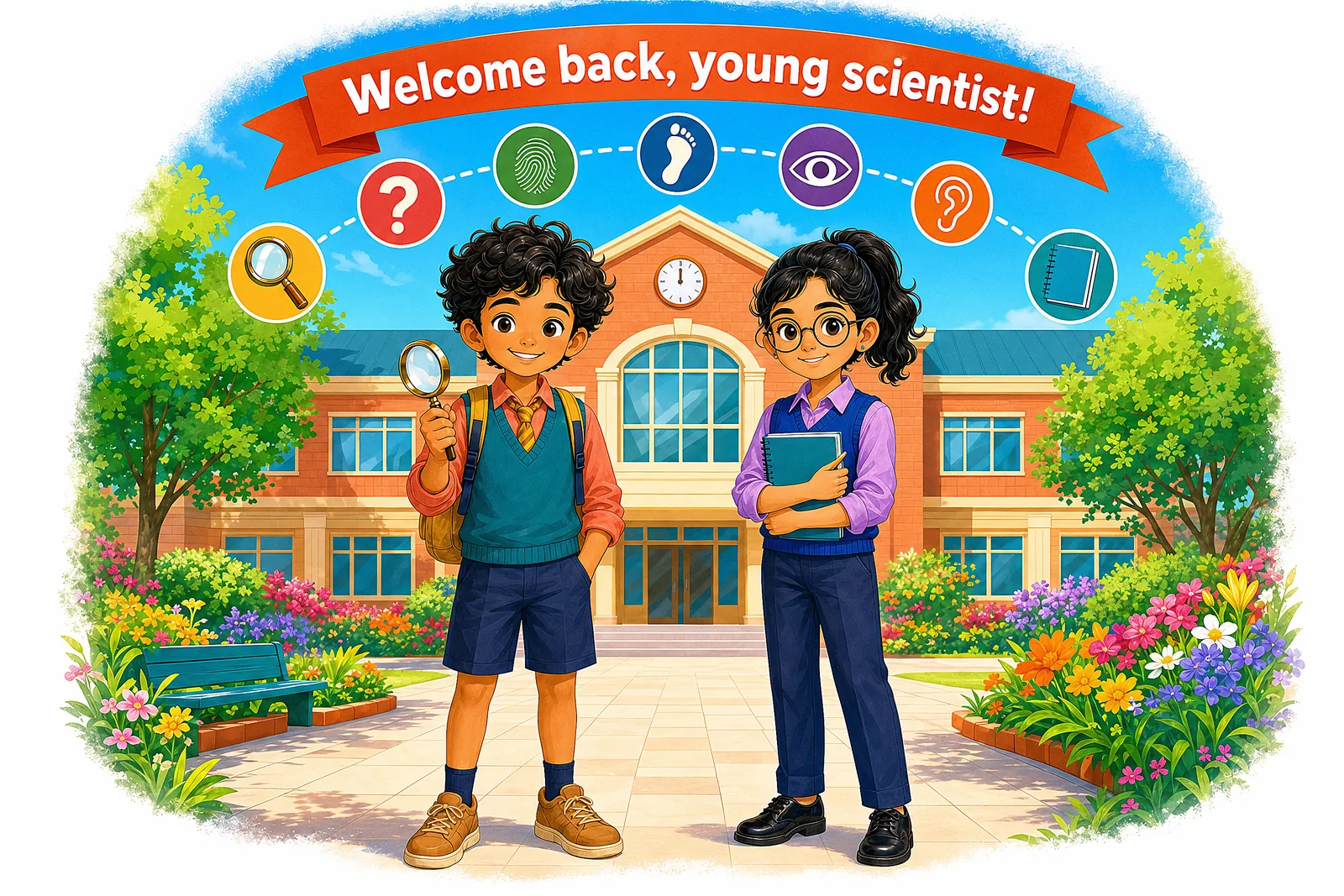
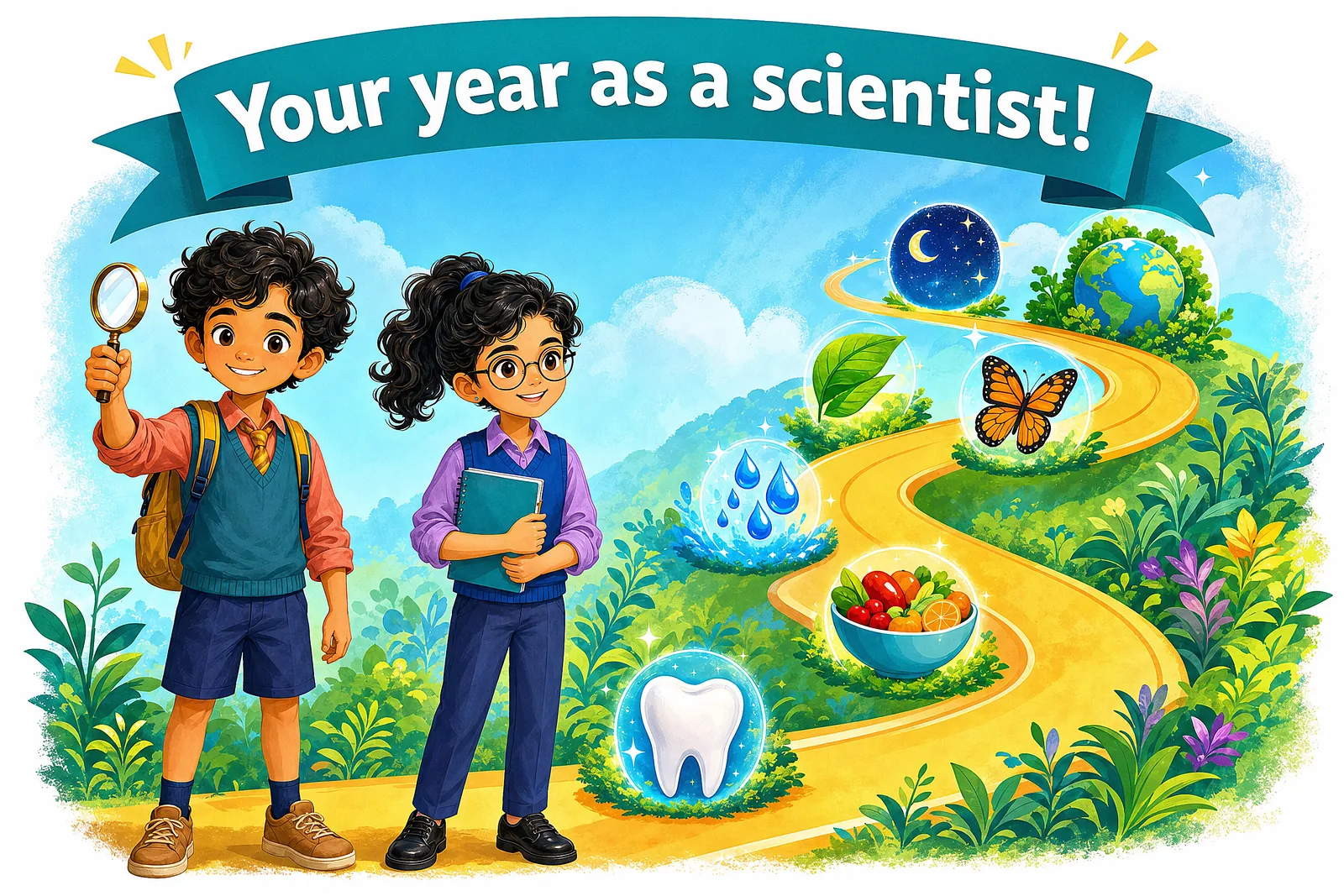
Chapter opener: a young scientist steps onto the path of finding out what is real and what is not.
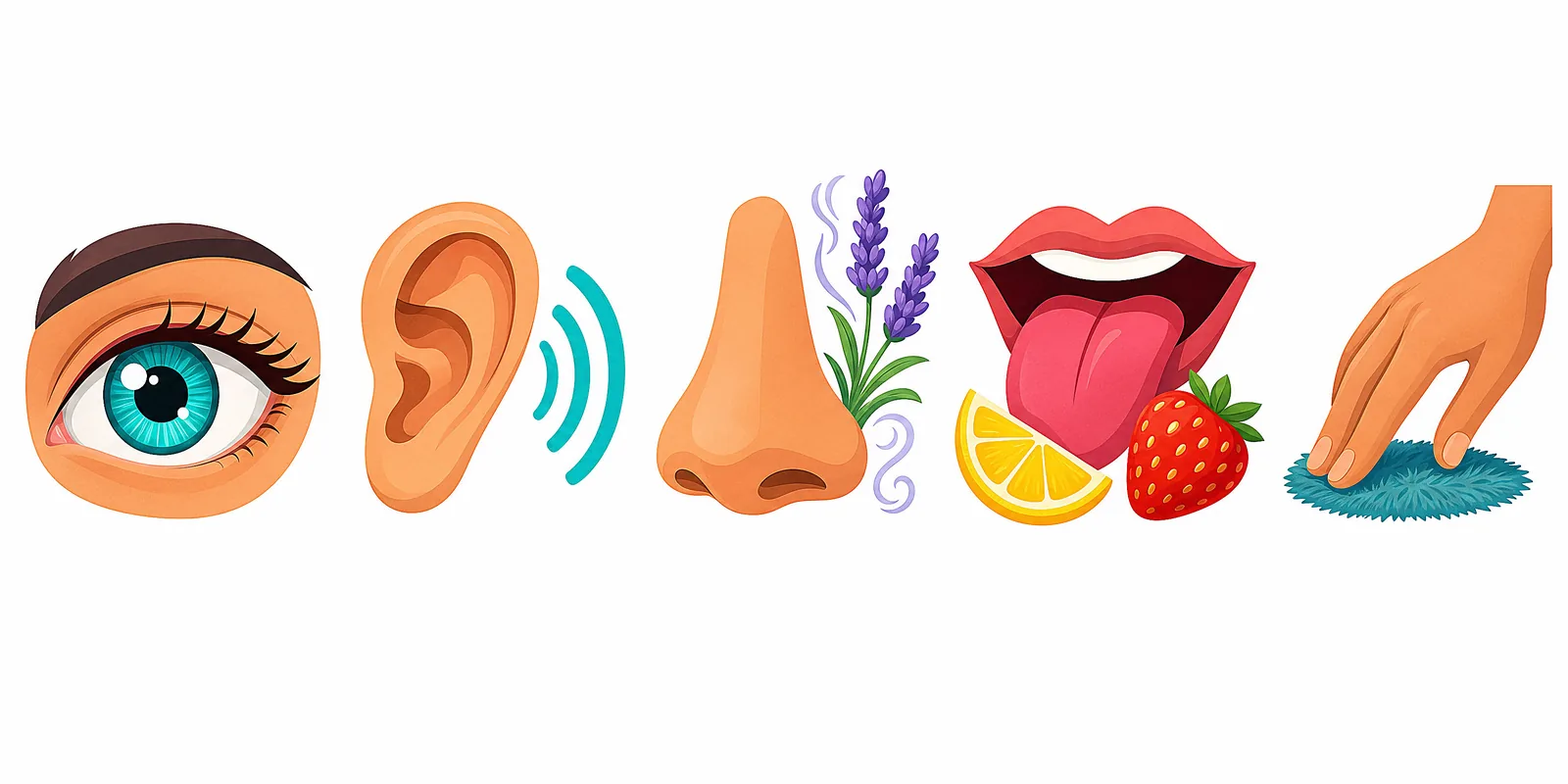
Our five senses shown as a scientist's basic tools for observing the world — eyes, ears, nose, tongue, hands.
Fact vs opinion: how a real fact can hide behind a personal opinion, and how to tell them apart.
A kid-detective gathering clues — thinking like a scientist means asking questions and checking evidence.
A warm send-off scene closing the chapter, inviting the reader to keep exploring.